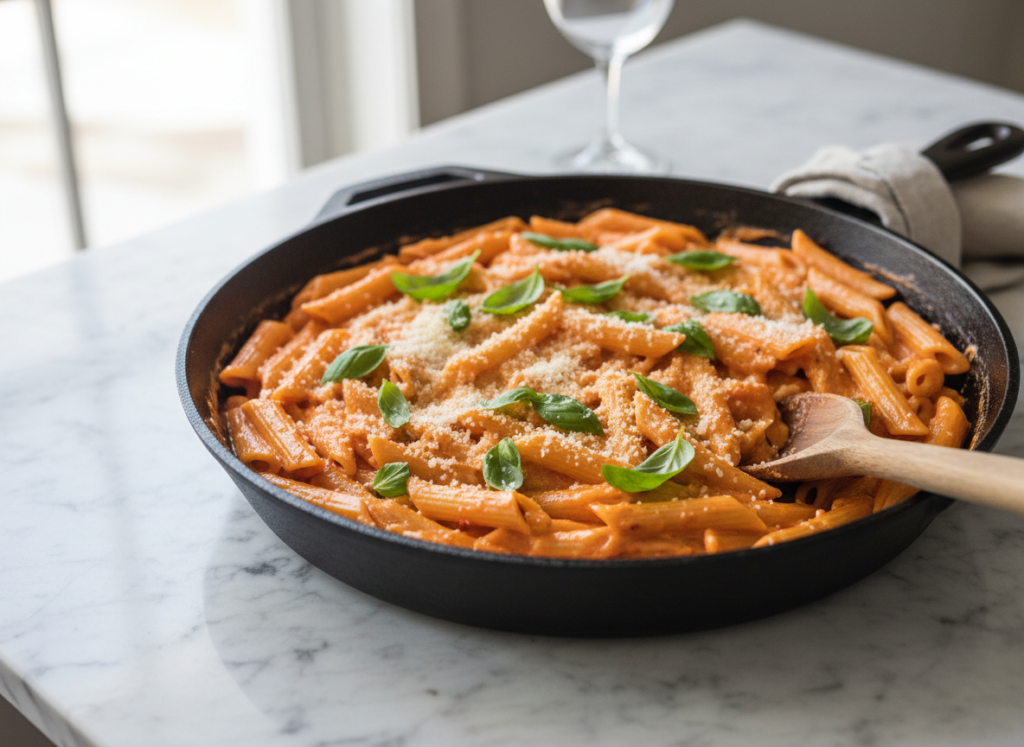
This creamy tomato basil pasta takes about 15 minutes once your water is boiling, and it answers the question most cooks run into with a tomato cream sauce: why does it sometimes turn grainy, pink-and-white, or greasy right before dinner? The fix comes down to three choices: the right dairy, the right heat, and the right moment to add the cheese. Get those right in a wide pan like a 12-inch tri-ply skillet and the sauce stays glossy, smooth and orange-pink from the first bite to the last.
At a Glance
- Time: 5 minutes prep (while the water heats), 10 minutes cooking
- Servings: 4
- Difficulty: Easy, one pot plus one skillet
- The one thing that makes it work: heavy cream added over low heat, and Parmesan stirred in off the heat
Recipe
Prep: 5 minutes · Cook: 10 minutes · Total: 15 minutes, plus about 10 minutes to bring the pasta water to a boil · Servings: 4
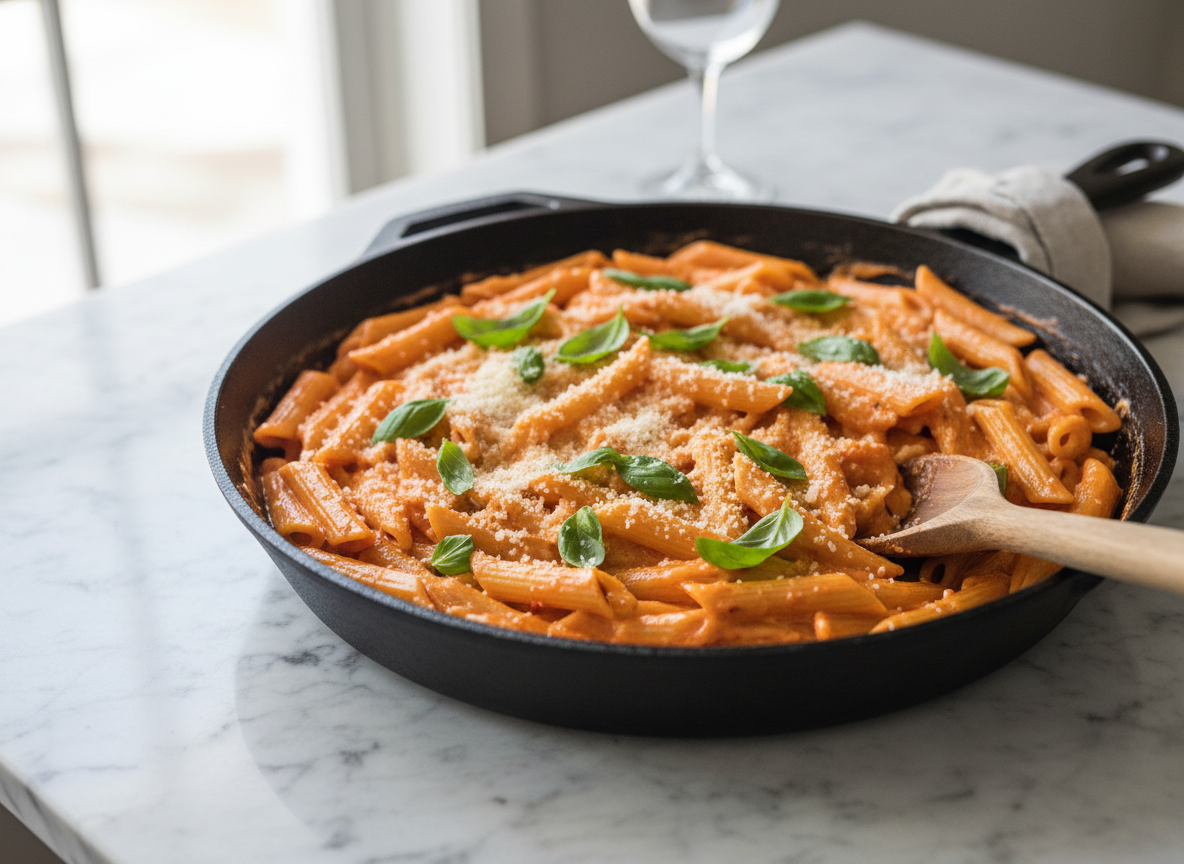
Creamy Tomato Basil Pasta
Ingredients
Method
- Boil the water. Bring 4 quarts of water and 1 tablespoon kosher salt to a rolling boil in a large pot. While it heats, mince the garlic, grate the Parmesan, tear the basil and set the cream on the counter.
- Cook the pasta. Add the pasta, stir for the first 30 seconds so it doesn’t stick, and cook 1 minute less than the package’s al dente time. Before draining, scoop out 1 cup (240 ml) of the starchy cooking water.
- Bloom the garlic. As soon as the pasta goes in, heat the olive oil and butter in a 12-inch skillet over medium heat until the butter foams. Add the garlic and pepper flakes and stir for 30 to 60 seconds, until fragrant and just turning pale gold at the edges. Don’t let it brown.
- Toast the tomato paste. Stir in the tomato paste and cook for about 1 minute, until it darkens from bright red to brick red and starts to stick lightly to the pan.
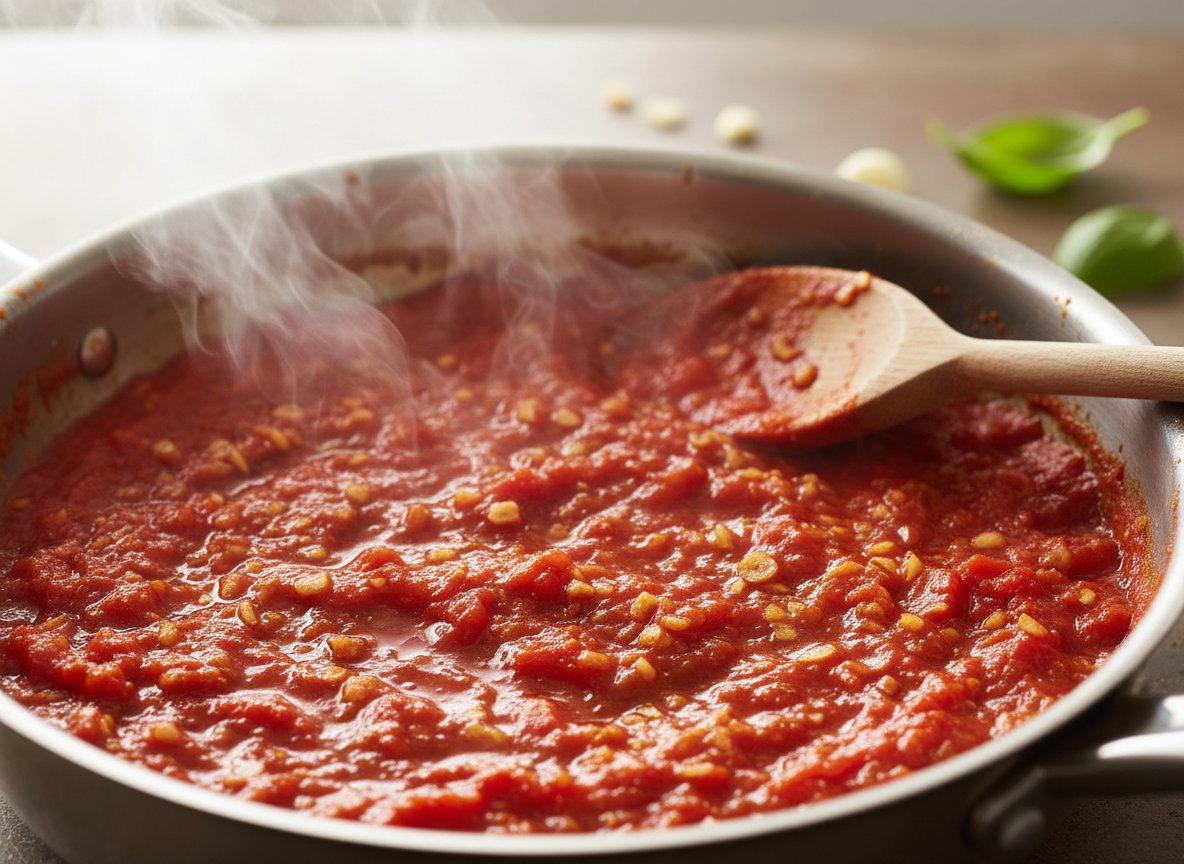
- Simmer the tomatoes. Add the crushed tomatoes, 1/2 teaspoon salt and the black pepper. Bring to a lively simmer and cook for 5 minutes, stirring now and then, until the sauce thickens and a spoon dragged through it leaves a trail that fills in slowly.
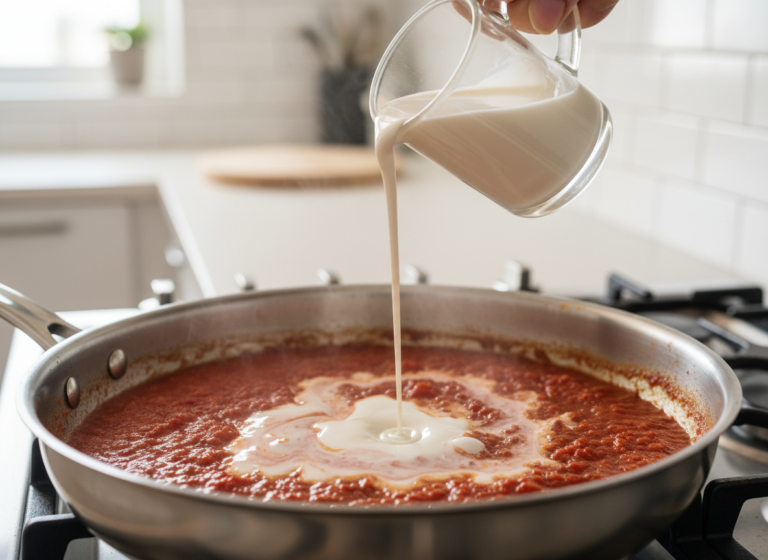
- Add the cream gently. Turn the heat to low and wait about 30 seconds for the bubbling to calm down. Pour in the cream in a slow stream while stirring. Heat for 1 to 2 minutes, until the sauce is steaming with only small bubbles at the edges. It should look evenly orange-pink, with no white streaks or flecks. Don’t let it boil hard from here on.
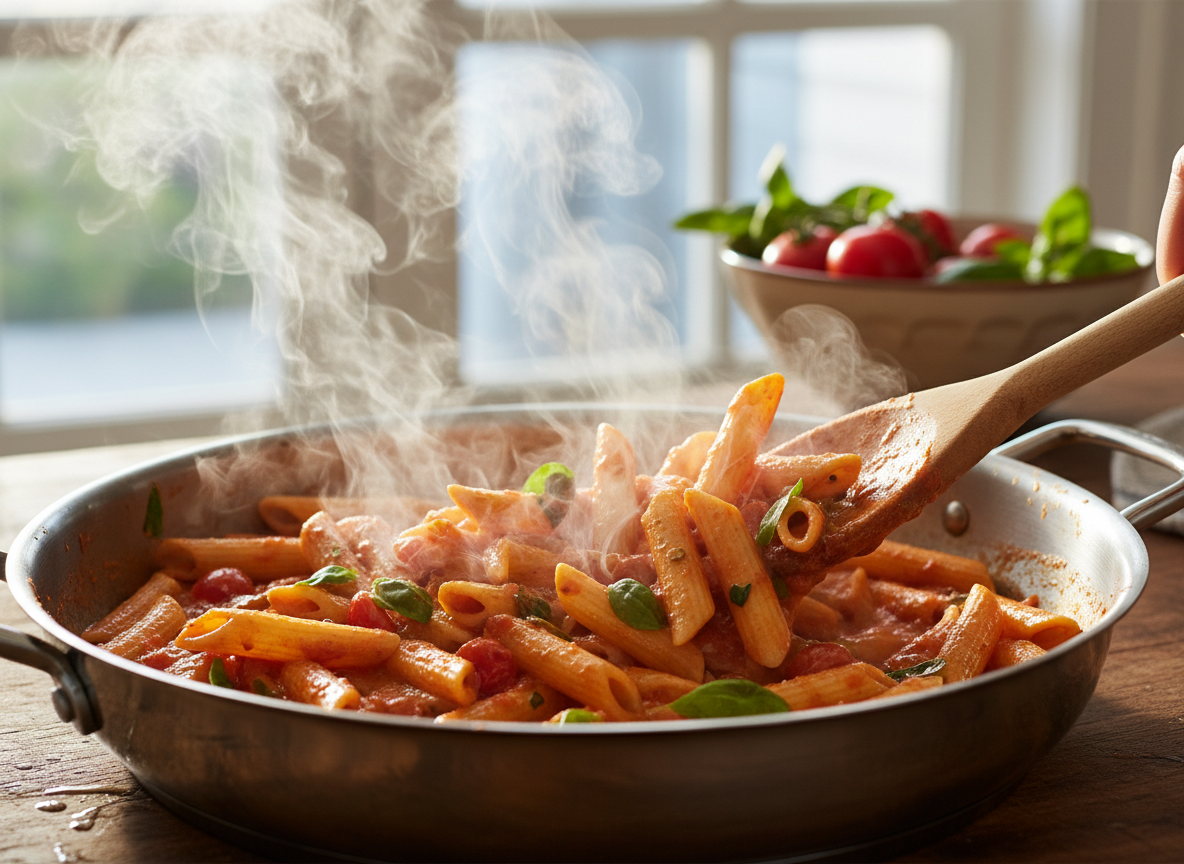
- Toss the pasta. Add the drained pasta and 1/4 cup (60 ml) of the reserved water to the skillet. Toss with tongs over low heat for about 1 minute, until every piece is coated.
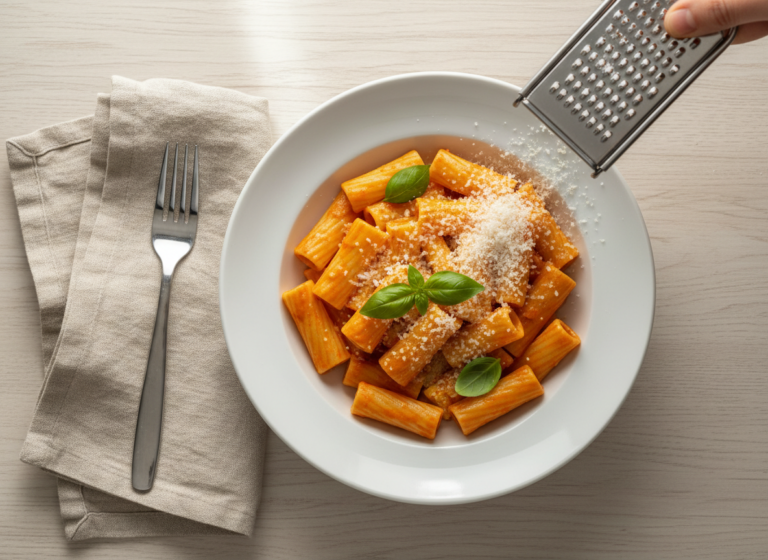
- Finish off the heat. Take the pan off the burner. Add the Parmesan in two handfuls, tossing between each, and loosen with more pasta water, 1 to 2 tablespoons at a time, until the sauce is glossy and clings loosely to the pasta. Fold in the torn basil, taste and add salt if needed.
- Serve right away with extra Parmesan and a few small basil leaves on top.
✓ Kitchen-tested · Nicole cooked this recipe in our kitchen on October 27, 2026. What this means
Why This Creamy Tomato Basil Pasta Sauce Stays Smooth
- Heavy cream, not milk. Heavy cream carries at least 36 percent milk fat, so there is far less protein free to clump when it meets acidic tomatoes. Lighter dairy is what usually curdles.
- The tomatoes cook first. Five minutes of simmering before the cream goes in thickens the sauce and rounds out the raw, sharp edge of canned tomatoes.
- Low heat once the dairy is in. A hard boil after the cream is added is the most common reason a tomato cream sauce breaks. Steaming hot is enough.
- Cheese off the heat, with pasta water. Parmesan melts smoothly at a gentle temperature. The starch in the pasta water helps the fat and liquid hold together as one glossy sauce.
Why Does Cream Curdle in Tomato Sauce?
Milk proteins called casein float freely in dairy. Add acid and heat, both of which a tomato sauce has plenty of, and those proteins tighten and clump into the small white specks you see in a broken sauce. Fat gets in their way, which is why heavy cream holds up well while milk and half-and-half split far more easily.
Cheese can cause a second kind of split. Dropped into a bubbling pan, Parmesan seizes into stringy lumps and leaves an oily slick on top. That’s a temperature problem, not a curdling one, and it’s the reason the cheese goes in off the heat.
| What you see | Likely cause | Fix |
|---|---|---|
| Grainy sauce with white flecks | Low-fat dairy, or a hard boil after the cream went in | Pull the pan off the heat, whisk in 2 tablespoons heavy cream and a splash of pasta water |
| Oily surface, stringy cheese | Parmesan added over high heat | Off the heat, toss hard while adding hot pasta water, 1 tablespoon at a time |
| Thick, pasty sauce | Over-reduced, or the pasta sat too long | Loosen with pasta water until glossy |
| Sharp, sour taste | Tomatoes not simmered long enough | Simmer 1 to 2 minutes more before the cream, or stir in another pat of butter |
Ingredient Notes
- Crushed tomatoes: they give a sauce with some body but no big chunks. Tomato purée or passata works too and makes it smoother.
- Heavy cream: look for “heavy cream” or “heavy whipping cream” on the label. Plain “whipping cream” is a little leaner but still works if you keep the heat low.
- Parmesan: grate it from a wedge. Pre-shredded cheese is coated with anti-caking starch and tends to melt into clumps.
- Basil: tear it by hand just before it goes in, so the leaves stay green instead of turning dark at the cut edges.
A tomato cream sauce rarely fails because of the recipe. It fails in the last two minutes, when the heat stays too high.
Tips for a Silky Sauce
- Start the water first. Everything else fits inside the time it takes the pasta to cook.
- Use a wide pan. A 12-inch skillet reduces the tomatoes quickly and leaves room to toss the pasta without spilling.
- Save more pasta water than you think you need. One cup covers the toss, the cheese and a loose reheat.
- Serve within a few minutes. The pasta keeps absorbing sauce, so the dish tightens as it sits.
Mistakes to Avoid
- Browning the garlic. Once it turns brown it tastes bitter, and no amount of cream hides it. Pull it at pale gold.
- Pouring in the cream at a rolling boil. Lower the heat and let the bubbles settle first.
- Fully cooking the pasta in the pot. It finishes in the sauce, so drain it a minute early or it turns soft.
- Salting heavily before the cheese. Parmesan is salty. Taste after it goes in, then adjust.
Substitutions
| Swap | Result |
|---|---|
| Half-and-half for heavy cream | Lighter, but much more likely to curdle. Add it off the heat and never let it boil. |
| Whole milk for heavy cream | Not recommended: it splits easily in an acidic sauce. |
| 1/4 cup (2 oz / 60 g) mascarpone for the cream | Very stable and rich. Stir it in off the heat. |
| Full-fat coconut milk for the cream | Dairy-free and smooth, with a mild coconut flavor. |
| Pecorino Romano for Parmesan | Sharper and saltier. Halve the added salt. |
| 1 teaspoon dried basil for fresh | Works in a pinch. Add it with the tomatoes so it softens. |
Variations
- With shrimp: sear 8 oz (225 g) peeled shrimp in the skillet for 1 to 2 minutes per side, set them aside, then build the sauce in the same pan and return them at the end.
- With greens: wilt 2 big handfuls of baby spinach into the sauce just before the pasta goes in.
- Vodka-style: after the tomato paste, add 2 tablespoons vodka and let it bubble for 30 seconds before the tomatoes.
- Spicier: double the red pepper flakes, or stir in 1 tablespoon chopped Calabrian chiles with the tomato paste.
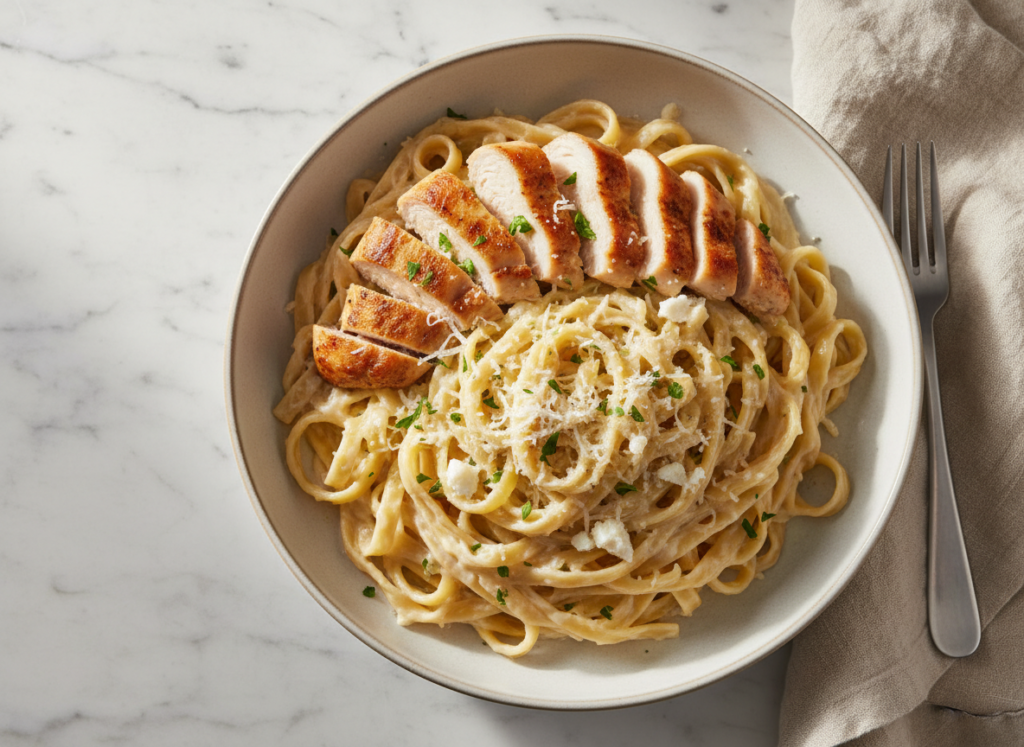
For a richer dinner in the same family, our restaurant-style creamy chicken Alfredo uses the same off-the-heat cheese trick, and our pantry staples guide covers the canned tomatoes and dry pasta worth keeping on hand for nights like this. Find more quick ideas in our Weeknight Dinners collection.
Equipment for This Recipe
You need only a large pot, a wide skillet and something to toss with. These three picks fit the job well:
- Tramontina Signature Tri-Ply Clad 12-Inch Fry Pan: a fully clad stainless skillet, wide enough to reduce the sauce fast and toss 8 oz of pasta, and induction-ready. Around $50.
- Cuisinart Chef’s Classic 12-Quart Pasta/Steamer Set: a stainless pot with a strainer insert, so you lift the pasta out and keep all the starchy water. Around $120.
- OXO Good Grips 12-Inch Locking Tongs: a long-standing reference for tossing pasta in a hot pan, and dishwasher-safe. Around $18.
Product picks are research-based: manufacturer specs, verified buyer feedback and independent reviews such as America’s Test Kitchen’s tongs testing. We haven’t tested these specific models ourselves. Last verified: October 9, 2026. How we work.


As an Amazon Associate, we earn from qualifying purchases. Prices are approximate and may change — please verify on Amazon before buying.
Frequently Asked Questions
Can I fix a tomato cream sauce that already split?
Often, yes. Take the pan off the heat, add 2 tablespoons of heavy cream and a splash of hot pasta water, and whisk hard. Small flecks usually smooth out. Large curds of casein won’t fully disappear, but tossing with the pasta and cheese hides most of them.
Can I use dried basil instead of fresh?
Yes. Use about 1 teaspoon of dried basil and add it with the tomatoes, so it has time to soften in the simmering sauce. The flavor is flatter, so a little extra Parmesan or lemon zest at the end helps.
How do I store and reheat leftovers?
Refrigerate in an airtight container for up to 3 days. Reheat gently in a skillet over low heat with a splash of milk, cream or water, stirring until loose and hot. High heat in the microwave is what tends to make the sauce oily.
Make It Tonight
Creamy tomato basil pasta is the kind of dinner you can make from a can of tomatoes, a carton of cream and a wedge of Parmesan. Keep the heat low once the cream goes in, add the cheese off the burner, and keep that pasta water nearby. Do those three things and the sauce stays smooth every time.
Get Our Free Dessert Recipe eBook
Join the Kitchen Unveiled newsletter and get our free dessert recipe eBook when you sign up. Subscribe now and get your free eBook →
You might also like: Ultimate Mac and Cheese and 30-Minute One-Pan Chicken and Veggies.