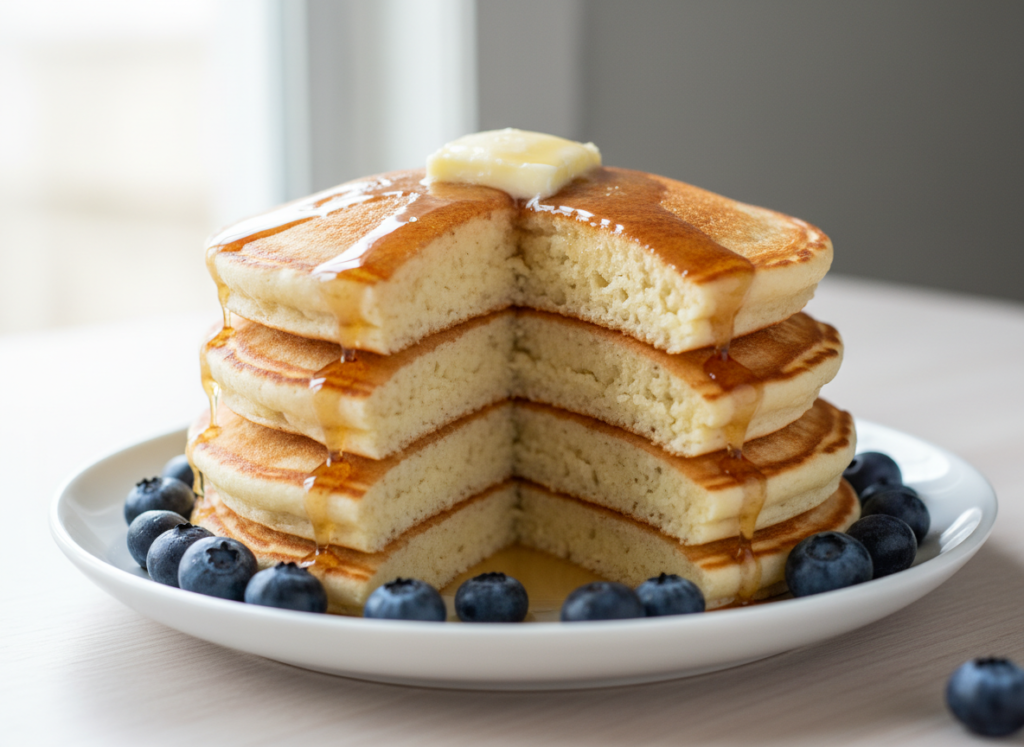
Why are my pancakes flat when the recipe promised a tall, fluffy stack? Nine times out of ten the culprit is one of four things: batter that was beaten smooth, a leavener that has lost its punch, batter that is too thin, or a griddle that is not hot enough. Below you’ll find a buttermilk pancake recipe built to rise, followed by a troubleshooting table that matches each kind of flat pancake to its cause and its fix.
At a Glance
- Time: 10 min prep, 10-15 min rest, about 16 min on the griddle
- Yield: 12-14 four-inch pancakes (serves 4)
- Difficulty: Easy
- The one thing that makes it work: stop stirring while the batter is still lumpy, then let it rest so it thickens before it hits a 350-375°F griddle.
Recipe
This is a classic buttermilk batter: thick enough to hold its shape on the griddle, with an acid (buttermilk) to power the baking soda and a dose of baking powder for a second lift once the heat hits it.
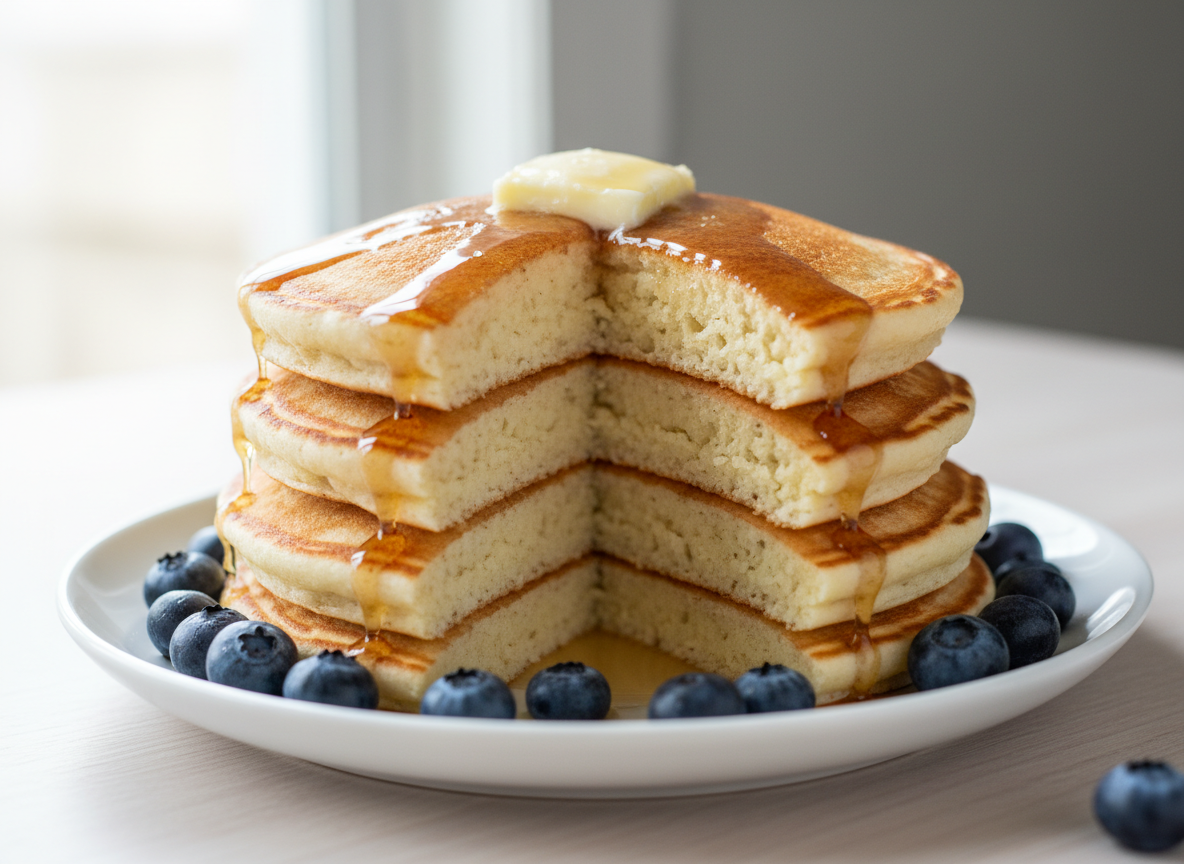
Buttermilk Pancakes
Ingredients
Method
- Mix the dry ingredients. In a large bowl, whisk the flour, sugar, baking powder, baking soda and salt until no streaks of leavener remain.
- Mix the wet ingredients. In a second bowl or a large measuring cup, whisk the buttermilk and egg until smooth, then whisk in the melted butter and vanilla. If the butter firms into small flecks, that’s fine.
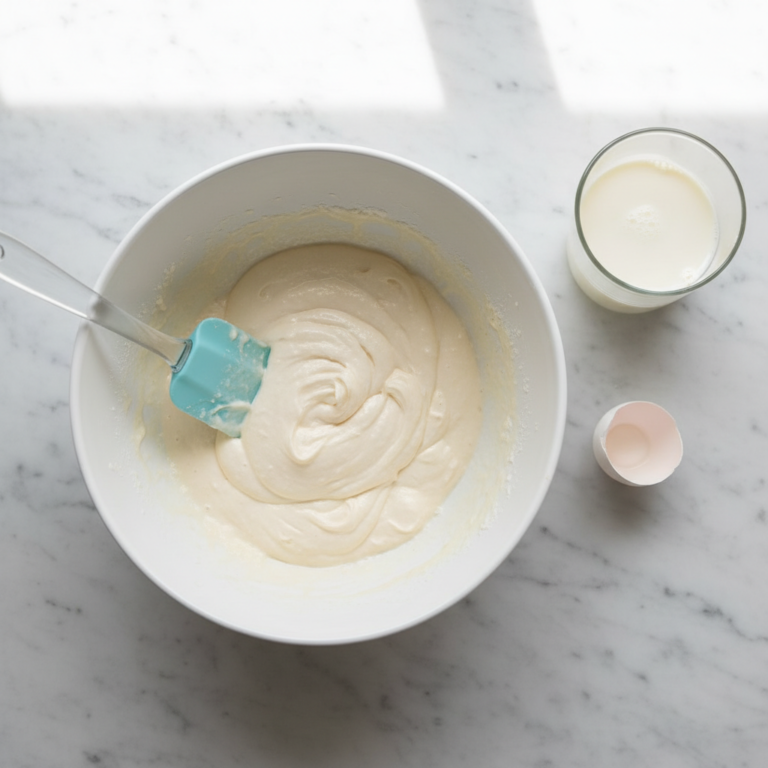
- Combine briefly. Pour the wet mixture into the dry and fold with a spatula, about 10-15 strokes, just until no dry flour is visible. The batter should be thick and lumpy, with pea-size lumps. Do not whisk it smooth.
- Rest the batter. Leave it uncovered for 10-15 minutes. It will thicken and look slightly puffy, with a few bubbles on the surface. Don’t stir it again.
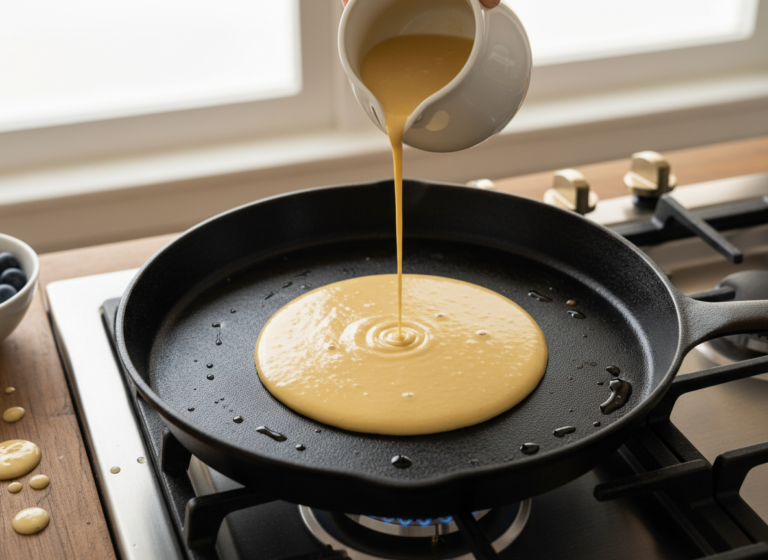
- Preheat the griddle. While the batter rests, heat an electric griddle to 350-375°F (175-190°C), or a large skillet over medium heat for 3-5 minutes. It’s ready when a few drops of water skitter and dance before evaporating.
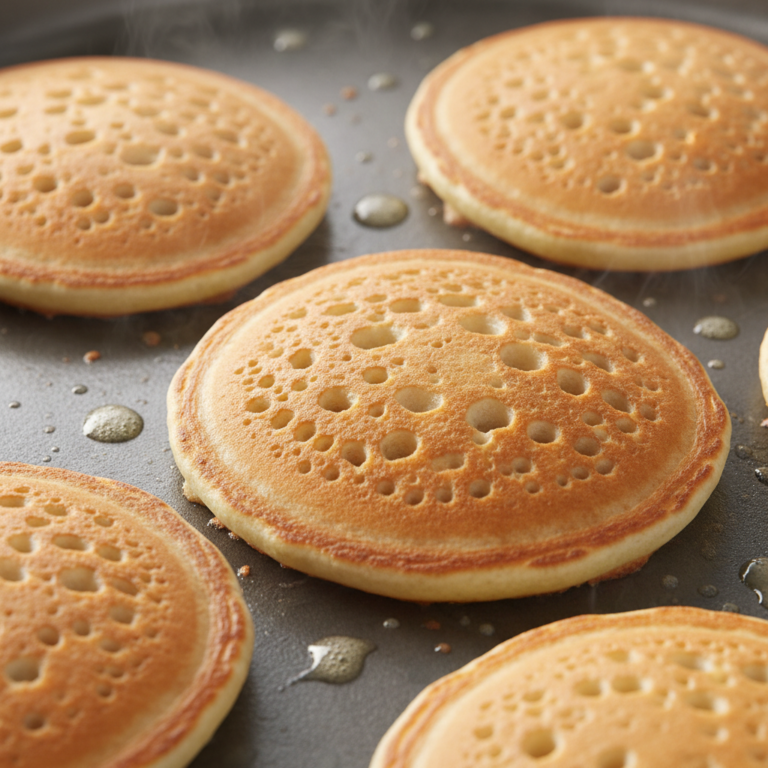
- Cook the first side. Lightly butter the surface. Scoop 1/4 cup of batter per pancake, leaving 2 inches between them. Cook 2-3 minutes, until bubbles have risen to the surface and popped, leaving open holes, and the edges look matte and set. The underside should be golden brown.
- Flip once. Slide a thin turner under each pancake and flip in one confident motion. Cook 1-2 minutes more, until the second side is golden and the center springs back when lightly pressed. Never press down on the pancake.
- Keep warm and repeat. Hold finished pancakes on a sheet pan in a 200°F (95°C) oven while you cook the rest, buttering the griddle lightly between batches.
✓ Kitchen-tested · Nicole cooked this recipe in our kitchen on October 29, 2026. What this means
Why This Works
- Two leaveners, two jobs. Baking soda reacts with the buttermilk’s acid as soon as the batter is mixed, and double-acting baking powder releases a second burst of gas on the hot griddle. That second lift is what makes a pancake puff instead of spread.
- A thick batter. Two cups of liquid to two cups of flour gives a batter that mounds on the griddle. Thin batter spreads into a wide, flat disk before it has time to set.
- Lumps on purpose. Minimal mixing keeps gluten weak, so the bubbles can expand the crumb rather than being squeezed out by a tight, elastic batter.
- A short rest. Ten to fifteen minutes lets the flour absorb liquid and the batter thicken, and it relaxes any gluten you did develop.
Why Are My Pancakes Flat? 7 Causes and Fixes
Look closely at your flat pancake before you change anything. A thin, wide pancake points to a different problem than a dense, rubbery one, or one that rose and then sank. Match what you see to the table below.
| What you see | Likely cause | Fix |
|---|---|---|
| Thin, wide pancakes that spread across the pan | Batter too thin: too much liquid, or flour measured short | Weigh the flour (240 g) or spoon and level it. Stir in 1-2 tablespoons of flour if the batter pours like cream. |
| Flat, dense and chewy | Overmixed batter (strong gluten) | Fold 10-15 strokes and stop while lumps remain. |
| Flat, few or no bubbles on top | Old baking powder or baking soda | Test both (see the tips box below) and replace if they barely fizz. |
| Flat with regular milk, odd metallic taste | Baking soda with no acid to react with | Use buttermilk, or switch to the milk version in the substitutions table. |
| Pale, flat and greasy | Griddle not hot enough | Preheat to 350-375°F and do the water-drop test before the first scoop. |
| Dark outside, raw and sunken in the middle | Griddle too hot | Lower the heat; aim for 2-3 minutes on the first side. |
| Rose, then deflated after flipping | Flipped too early, flipped twice, or pressed with the turner | Wait for popped bubbles and set edges, flip once, never press. |
One more cause hides in plain sight: batter that sat too long. Once wet, the baking soda starts reacting right away, so a batter mixed the night before has spent much of its lift by morning. The same leavening logic explains why cookies come out flat, where tired leaveners and the wrong heat are also the usual suspects.
Lumpy batter, a short rest and a properly hot griddle fix most flat pancakes before you change a single ingredient.
Quick Checks Before You Cook
- Baking powder test: stir 1/2 teaspoon into 1/4 cup hot water. It should fizz vigorously right away.
- Baking soda test: add a few drops of vinegar or lemon juice to 1/4 teaspoon. Strong bubbling means it’s still good.
- Batter check: it should fall from a spoon in thick ribbons and hold a soft mound, not run like heavy cream.
- Heat check: cook one test pancake first. If it browns in under a minute, turn the heat down; if it takes more than 4 minutes, turn it up.
Griddle Heat and Timing
Heat is the step most cooks guess at. An electric griddle with a thermostat removes the guesswork: set it to 350-375°F and the first pancake behaves like the last. On the stove, give a skillet a full 3-5 minutes over medium heat, and a cast iron pan a little longer, then nudge the heat down to medium-low if the second batch browns faster than the first.
For a precise read on a stovetop pan, an infrared thermometer shows the surface temperature in a second and makes hot spots obvious. If you cook in cast iron, wipe it out and re-oil it afterward; our guide on how to clean a cast iron skillet covers the routine.
Substitutions That Work (and One That Doesn’t)
| Swap | How to do it | Result |
|---|---|---|
| Regular milk instead of buttermilk | Use 1 3/4 cups (420 ml) whole milk, omit the baking soda and use 1 tablespoon baking powder | Tall and fluffy, milder flavor |
| Soured milk | 1 tablespoon lemon juice or white vinegar plus milk to make 1 cup; rest 5 minutes (make 2 cups) | Works in a pinch; slightly thinner batter, a little less height |
| Oil instead of butter | 3 tablespoons neutral oil | Same rise, less buttery flavor |
| Half whole wheat flour | Replace 1 cup (120 g) all-purpose with whole wheat | Nuttier and a bit denser; thin with 1-2 tablespoons buttermilk if very thick |
| Regular milk with the baking soda left in | Not recommended | Flat pancakes with a soapy, metallic aftertaste |
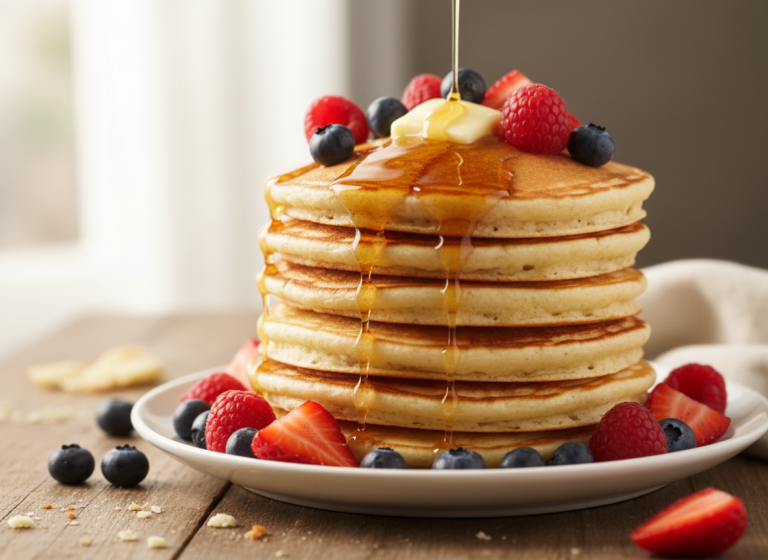
Variations and Make-Ahead Tips
- Blueberry: drop 6-8 berries onto each pancake right after scooping, rather than stirring them into the batter, so the batter stays thick and the berries don’t bleed.
- Chocolate chip: scatter a tablespoon of mini chips over each pancake on the griddle.
- Cinnamon: add 1 teaspoon ground cinnamon to the dry ingredients.
- Make ahead: mix the dry ingredients the night before and keep the wet ingredients in the fridge; combine in the morning. Cooked pancakes freeze well for up to 2 months; reheat from frozen in the toaster or a 350°F oven for about 10 minutes.
Once the griddle is out, it’s worth knowing that crispy French toast cooks on the same surface at the same medium heat.
Our Top Picks for Taller Pancakes
Steady heat and a gentle flip matter more than any gadget, but these three tools make both easier.
- Presto 16-Inch Cool Touch Electric Griddle — a thermostat dial you can set to 350-375°F and room for 6-8 pancakes per batch, around $35-40. Buyers most often praise the even heat and easy cleanup; the most common complaint is slightly cooler edges.
- Etekcity Lasergrip 774 Infrared Thermometer — reads a skillet’s surface temperature instantly, so you know when the pan is truly ready, around $18-22.
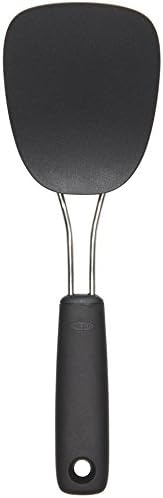
- OXO Good Grips Nylon Flexible Turner — a thin, flexible edge that slides under a pancake without tearing it and is safe on nonstick, around $10-13.
Product picks are research-based: manufacturer specs, verified buyer feedback and independent roundups such as Tasting Table’s electric griddle guide. We haven’t tested these specific models ourselves. Last verified: October 9, 2026. How we work.


As an Amazon Associate, we earn from qualifying purchases. Prices are approximate and may change — please verify on Amazon before buying.
Frequently Asked Questions
Can I make pancake batter the night before?
It’s not a good idea with this recipe. The baking soda starts reacting as soon as it meets the buttermilk, so an overnight batter has lost much of its lift and cooks up flat. Mix the dry and wet ingredients separately the night before and combine them in the morning.
Why do my pancakes go flat when I use milk instead of buttermilk?
Baking soda needs an acid to produce carbon dioxide, and regular milk isn’t acidic enough. Baking powder carries its own acid, so for a milk batter, drop the soda and use 1 tablespoon of baking powder instead.
Is pancake batter supposed to be lumpy?
Yes. Small lumps of flour hydrate during the rest and disappear on the griddle. Whisking until smooth develops gluten, which makes pancakes tough and flat.
The Bottom Line
Flat pancakes are almost always a technique problem, not a recipe problem. Keep the batter thick and lumpy, give it a short rest, check that your leaveners still fizz, and cook on a griddle that is properly preheated. For more easy everyday cooking, browse our Weeknight Dinners collection.
Get Our Free Dessert Recipe eBook
Join the Kitchen Unveiled newsletter and get our free dessert recipe eBook when you sign up. Subscribe now and get your free eBook →
You might also like: Crispy French Toast and Gluten-Free Banana Bread.