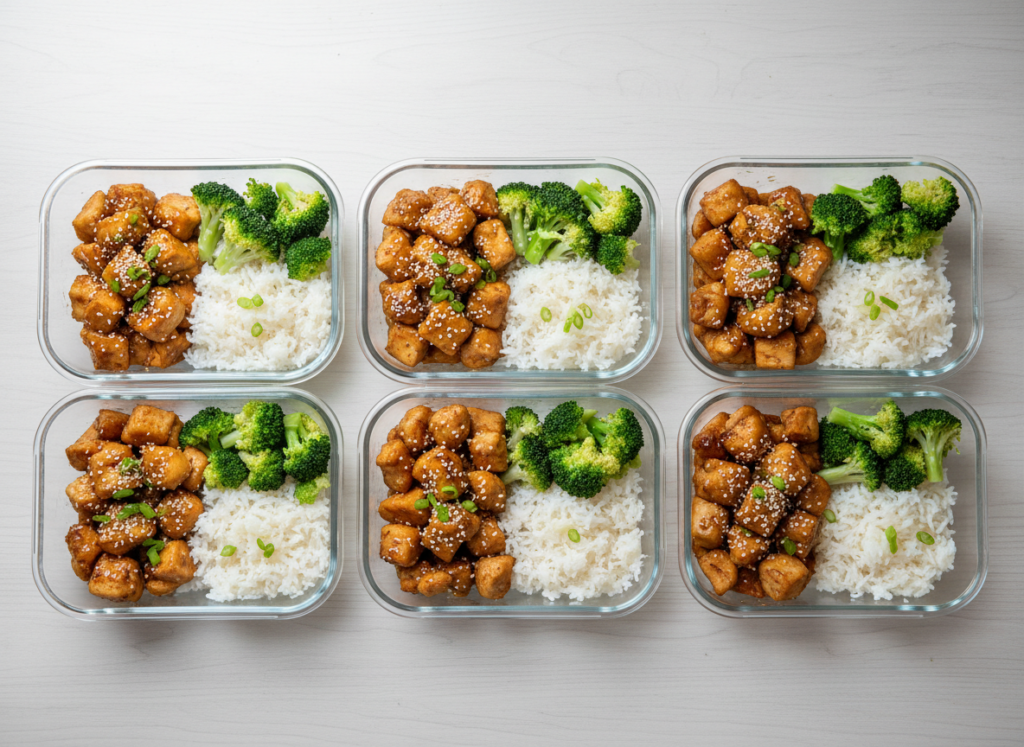
This high-protein chicken meal prep turns one skillet of honey garlic chicken, a pot of rice and a pound of broccoli into five lunches with roughly 59 grams of protein each. It is one dish, cooked once, with exact quantities you can shop for. The part most meal prep recipes skip is the calendar: three containers go in the fridge and two go straight into the freezer, so Thursday and Friday’s lunches are as safe as Monday’s.
At a Glance
- Time: about 1 hour (15 min prep, 30 min cooking, 15 min cooling)
- Difficulty: Easy, one skillet plus a rice pot
- Makes: 5 lunches
- Per serving (approx.): 620 calories, 59 g protein, 64 g carbs, 14 g fat
- The trick: sear the chicken in two batches, then refrigerate 3 containers and freeze 2
Recipe
Prep: 15 minutes · Cook: 30 minutes · Cool: 15 minutes · Total: 1 hour · Servings: 5 lunches
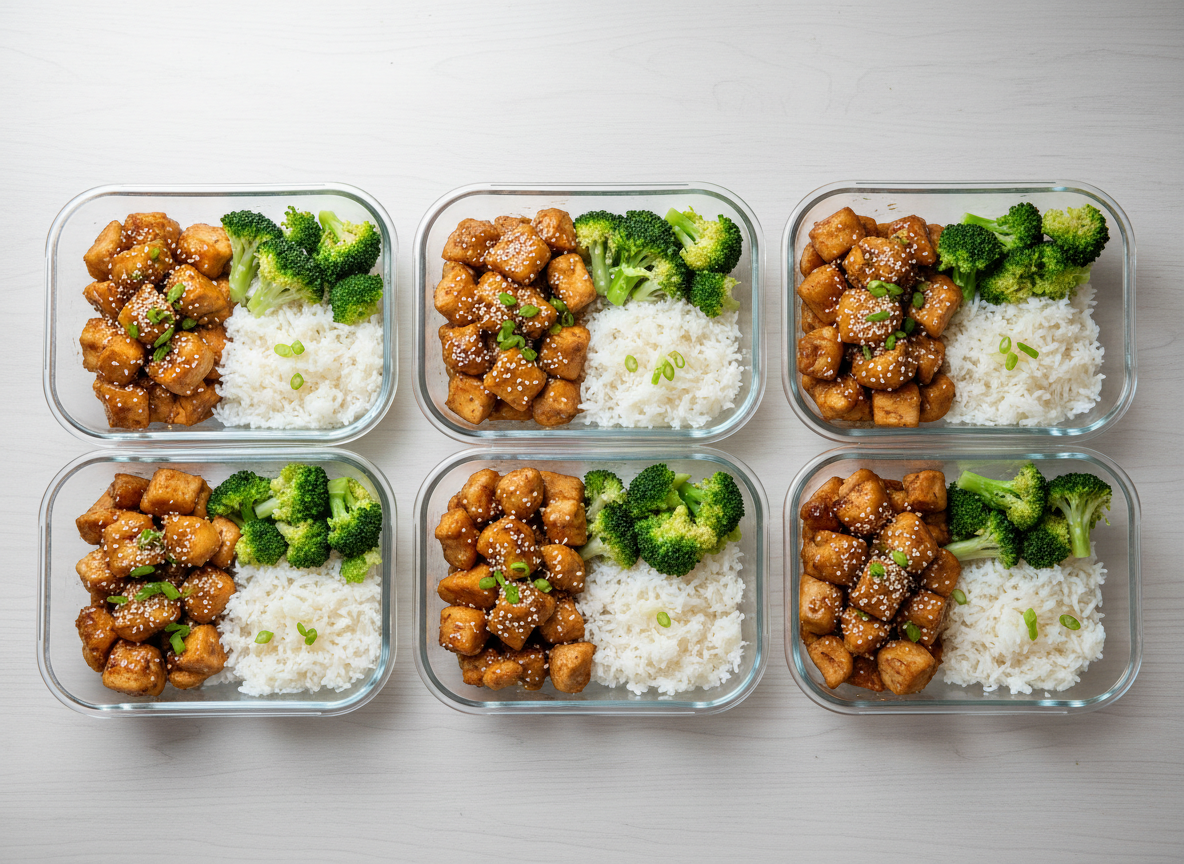
High-Protein Honey Garlic Chicken Meal Prep
Ingredients
Method
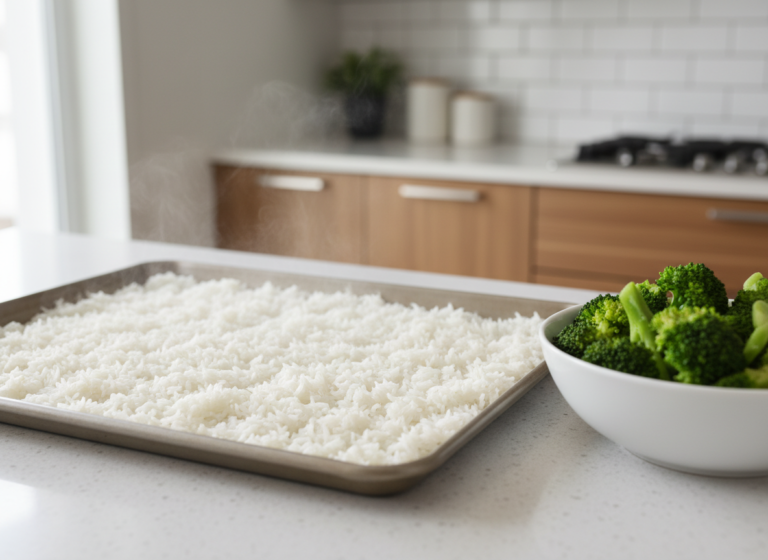
- Start the rice. Combine the rinsed rice, 2 1/4 cups water and 1/2 tsp salt in a medium saucepan. Bring to a boil, cover, reduce the heat to low and cook 18 minutes. Take the pot off the heat and let it stand, covered, 10 minutes. Fluff with a fork and spread the rice in a thin layer on a rimmed sheet pan to cool.
- Mix the sauce. While the rice cooks, whisk the soy sauce, honey, water, rice vinegar and cornstarch in a small bowl until no lumps of starch remain. Set the minced garlic and ginger aside separately.
- Season the chicken. Pat the chicken pieces dry with paper towels, then toss with 1/4 tsp salt and the pepper. Dry chicken browns; wet chicken steams.
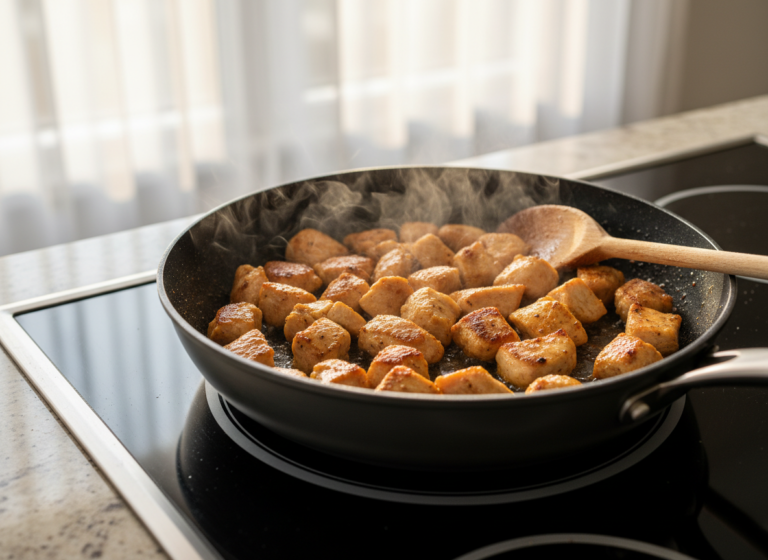
- Sear the first batch. Heat 1 tbsp olive oil in a 12-inch skillet over medium-high heat until it shimmers. Add half the chicken in a single layer and leave it alone for 2 to 3 minutes, until golden underneath. Stir and cook 3 to 4 minutes more, until no pink remains in the thickest piece and an instant-read thermometer reads 165°F (74°C). Move to a plate.
- Sear the second batch. Add the remaining 1 tbsp oil and repeat with the rest of the chicken. Transfer it to the plate.
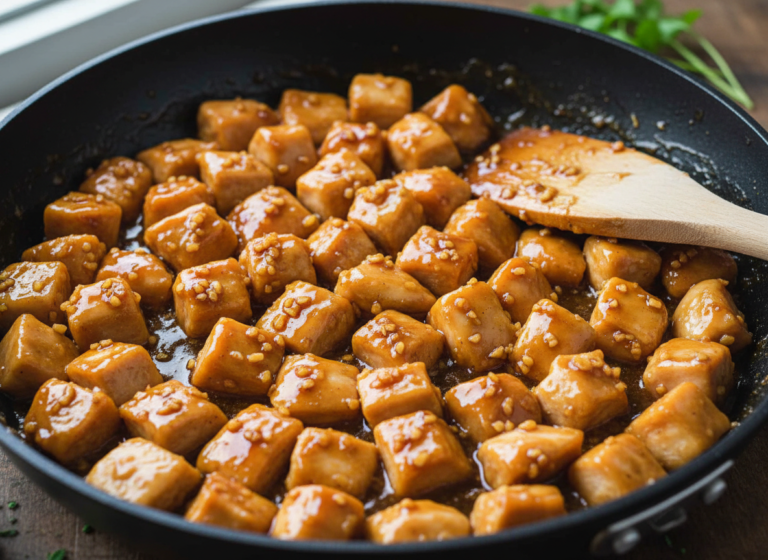
- Build the glaze. Lower the heat to medium. Add the sesame oil, garlic and ginger to the empty skillet and stir about 30 seconds, just until fragrant and before the garlic browns. Re-whisk the sauce (the starch settles), pour it in and stir constantly for 1 to 2 minutes, until it bubbles and turns thick and glossy enough to coat a spoon.
- Coat the chicken. Return the chicken and any juices from the plate to the skillet. Toss for 1 minute, until every piece is lacquered. Take the pan off the heat.
- Steam the broccoli. Set a steamer basket over 1 inch of simmering water in a covered pot and steam the florets 3 to 4 minutes, just until bright green and crisp-tender. Stop here: they will soften again when you reheat. Spread them out to cool.
- Portion. Divide the rice among 5 containers (a generous 3/4 cup each), then the chicken and glaze (about 1 heaping cup each), then the broccoli (about 1 cup each). A kitchen scale makes the portions even: weigh the cooked chicken and divide by five.
- Cool and store. Leave the containers uncovered for 10 to 15 minutes so steam escapes, then seal. Refrigerate 3 containers and freeze the other 2 right away. Everything should be in the fridge or freezer within 2 hours of cooking. Add sesame seeds and green onion when you eat.
✓ Kitchen-tested · Nicole cooked this recipe in our kitchen on October 30, 2026. What this means
Why This Works
- Small pieces, two batches. One-inch cubes of breast reach 165°F in about 6 minutes, before they have time to dry out. Splitting 2 1/2 pounds into two batches keeps the pan hot enough to brown instead of stew.
- A glaze that clings. One tablespoon of cornstarch turns 3/4 cup of liquid into a sauce that coats the chicken instead of pooling in the bottom of the container and soaking the rice.
- Undercooked on purpose. The broccoli comes off the heat crisp-tender because reheating cooks it a second time. The same logic keeps the rice from turning to mush.
- A storage plan, not a hope. Food safety guidance gives cooked leftovers 3 to 4 days in the fridge, so the last two lunches are frozen on day zero instead of pushed past that window.
Ingredient Notes for High-Protein Chicken Meal Prep
Chicken breast carries almost all of the protein here, about 51 of the 59 grams per serving. Two and a half pounds raw works out to 8 ounces per lunch, which is why the portions look generous. Buy breasts of similar thickness so the cubes cook evenly.
Low-sodium soy sauce matters more than it seems. Regular soy sauce in this amount, reduced into a glaze, gets aggressively salty by day three. Honey gives the glaze its body and shine; a quarter cup split five ways is about a tablespoon per lunch.
Long-grain white rice reheats more evenly than brown rice and stays separate after freezing. Rinse it until the water runs mostly clear to wash off surface starch, which is what makes refrigerated rice clump.
Macros Per Serving (Approximate)
We calculated these numbers from the ingredient list above using nutrient values from USDA FoodData Central (SR Legacy entries for raw chicken breast, cooked long-grain white rice, raw broccoli, honey, olive oil, low-sodium soy sauce, cornstarch, garlic and sesame seeds). They are estimates, not a lab analysis. Brands, trimming and portion accuracy will move them a few grams either way.
| Per serving (1 of 5) | Approximate amount |
|---|---|
| Calories | about 620 |
| Protein | about 59 g |
| Carbohydrates | about 64 g |
| Fat | about 14 g |
Where the protein comes from: roughly 51 g from the chicken, 4 g from the rice, 2.5 g from the broccoli and about 1 g from the sauce and sesame seeds. Want a lighter lunch? Cut the rice to 1 cup uncooked and each serving drops by about 70 calories and 15 g of carbs, with the protein almost unchanged.
How It Holds Up for 5 Days
Here’s the honest version: five lunches do not all belong in the fridge. The USDA’s leftovers guidance gives cooked food 3 to 4 days refrigerated, and recommends freezing anything you won’t eat in that time. So this recipe is built around a split.
| Container | Store it | Eat it |
|---|---|---|
| 1, 2, 3 | Fridge (40°F or below) | Days 1, 2 and 3 |
| 4 | Freezer; move to the fridge on the morning of day 3 | Day 4 |
| 5 | Freezer; move to the fridge on the morning of day 4 | Day 5 |
A frozen container needs about 24 hours in the fridge to thaw. Forgot to move it? Microwave it from frozen on the defrost setting, then heat it through as below. Frozen portions keep their best texture for up to 3 months.
Cook once, refrigerate three, freeze two: that is how Friday’s lunch stays as safe as Monday’s.
Storing and Reheating
Cool fast. Spreading the rice on a sheet pan and leaving the filled containers open for 10 to 15 minutes gets the food cool enough to seal without trapping steam. Then into the fridge or freezer, well within the 2-hour limit.
Reheat with a splash of water. Sprinkle 1 to 2 teaspoons of water over the rice, set the lid on loosely or vent it, and microwave 2 to 3 minutes. Stir halfway so the center isn’t cold. The food should reach 165°F (74°C) all the way through, which you can check with an instant-read thermometer.
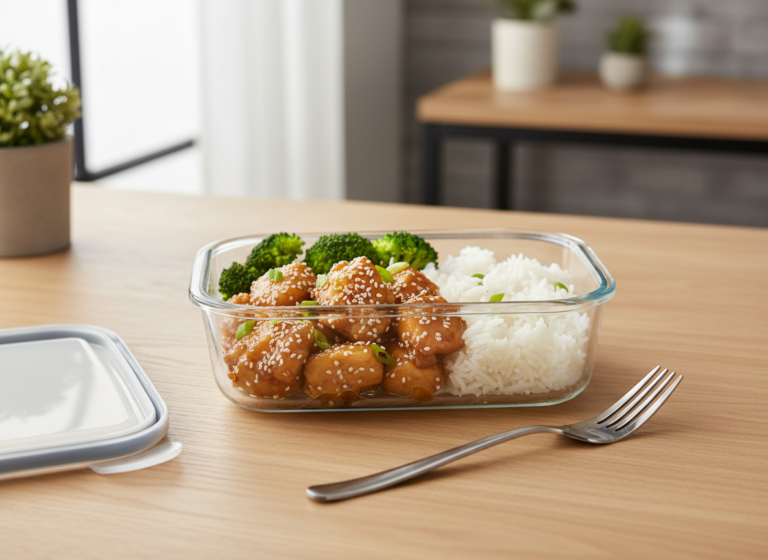
Glass goes cold to hot gently. Thaw frozen glass containers in the fridge rather than moving them straight from the freezer into a hot oven, and never set a hot glass dish on a wet or cold surface.
Mistakes to Avoid
- Crowding the pan. All 2 1/2 pounds at once releases more liquid than the pan can evaporate, and the chicken turns gray and rubbery.
- Adding garlic to a ripping-hot pan. It burns in seconds and turns the whole glaze bitter. Drop the heat to medium first.
- Skipping the re-whisk. Cornstarch sinks to the bottom of the bowl within minutes. Pour it unstirred and the glaze stays thin.
- Sealing hot containers. Trapped steam drips back onto the rice and makes it soggy, and a hot mass cools slowly in the fridge.
- Putting all five in the fridge. Days 4 and 5 sit at or past the 3-to-4-day window. Freeze them.
Substitutions
| Swap | What changes |
|---|---|
| Boneless, skinless thighs for breast | Juicier and more forgiving; more fat and slightly less protein per serving. Cook to 165°F; thighs stay tender even a bit past it. |
| Brown rice for white | Chewier; simmer 40 to 45 minutes with about 3 cups water. Adds a little fiber. |
| Cauliflower rice for rice | Cuts most of the carbs, but it releases water when reheated. Store it in the fridge rather than the freezer. |
| Tamari for soy sauce | Same flavor; choose a tamari labeled gluten-free if that matters to you. |
| Maple syrup for honey | Works well, with a slightly thinner glaze and a woodier sweetness. |
| Green beans for broccoli | Steam 4 to 5 minutes; they hold their snap after reheating. |
Variations
- Spicy: whisk 1 to 2 tsp sriracha or 1/2 tsp red pepper flakes into the sauce.
- Orange ginger: replace the water in the sauce with fresh orange juice and use the full teaspoon of ginger.
- Sheet pan version: if you’d rather roast than sear, our sheet pan teriyaki chicken with pineapple uses the same sweet-salty glaze idea in the oven.
New to batch cooking? Our guide on how to meal prep like a pro covers planning, shopping and container setup, and you’ll find more quick ideas in our weeknight dinners collection.
Gear That Makes This Easier
You don’t need special equipment for this recipe, but three tools make batch cooking smoother. These are our top picks:
- Tramontina Professional 12-Inch Nonstick Fry Pan — wide enough to sear half the chicken in one layer; a long-standing budget pick among independent cookware reviewers. Like any nonstick pan, its coating lasts longer on medium-high heat than on high.
- Rubbermaid Brilliance Glass 3.2-Cup Containers (Set of 4) — the 3.2-cup size fits one portion of rice, chicken and broccoli, and the glass base won’t stain from soy sauce. For five lunches you’ll need one extra container.
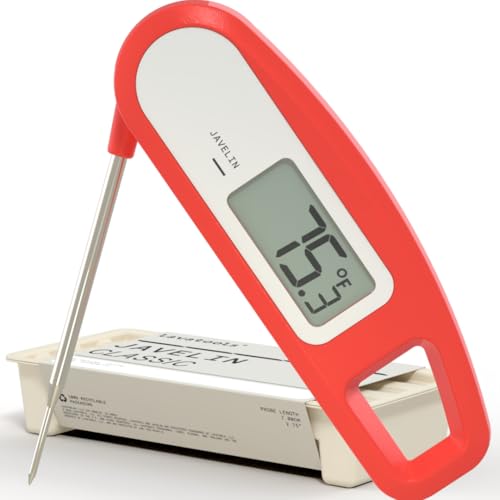
- Lavatools Javelin Instant-Read Thermometer — a quick way to confirm 165°F, both when the chicken comes out of the pan and when a lunch comes out of the microwave.


Product picks are research-based: manufacturer specs, verified buyer feedback and independent reviews such as Wirecutter’s nonstick pan guide. We haven’t tested these specific models ourselves. Last verified: October 9, 2026. How we work.
As an Amazon Associate, we earn from qualifying purchases. Prices are approximate and may change — please verify on Amazon before buying.
FAQ
Can I keep all five containers in the fridge?
We don’t recommend it. USDA guidance gives cooked leftovers 3 to 4 days in the refrigerator, so lunches 4 and 5 would land at or past that limit. Freezing them on cooking day and thawing each one in the fridge a day ahead keeps the whole week inside safe guidelines.
How do I reheat the chicken without drying it out?
Add a teaspoon or two of water, cover loosely and microwave in 1-minute bursts, stirring between them, until it reaches 165°F in the center. The glaze loosens as it warms and keeps the chicken coated. Avoid one long blast on high, which overheats the edges first.
Why does the rice need to cool so quickly?
Cooked rice can carry spores of Bacillus cereus, a bacterium that survives cooking and can multiply when rice sits warm for hours. Spreading it thin on a sheet pan and refrigerating it promptly keeps it out of that warm zone.
Final Thoughts
One skillet, one pot and an hour on Sunday buys you five lunches with real protein and a glaze worth looking forward to. The fridge-and-freezer split is the detail that makes it work all week. Once the routine clicks, swap the sauce or the vegetable and keep the same plan.
Get Our Free Dessert Recipe eBook
Join the Kitchen Unveiled newsletter and get our free dessert recipe eBook when you sign up. Subscribe now and get your free eBook →
You might also like: 30-Minute One-Pan Chicken and Veggies and Sheet Pan Teriyaki Chicken with Pineapple.