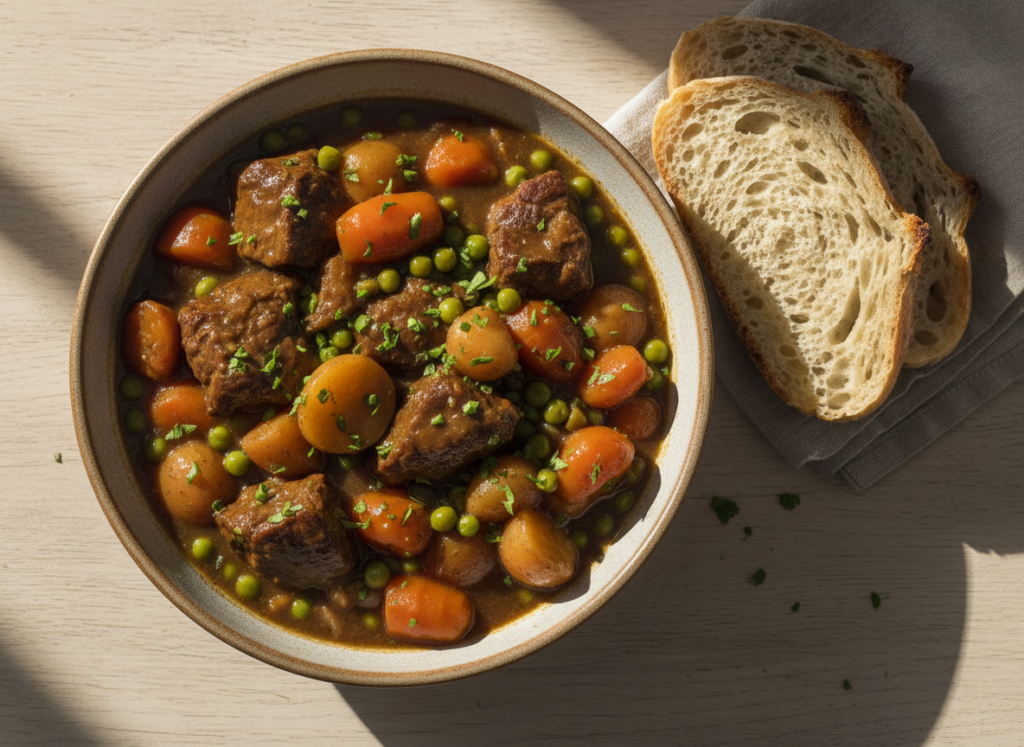
If your slow cooker beef stew comes out chewy after eight hours, the fix is usually counterintuitive: the beef needs more time, not less. Chuck goes through a tough, squeaky stage before its connective tissue melts into gelatin, and many recipes stop the clock right in the middle of it. Below are the five real reasons stew beef stays tough, then a complete, minimal-prep recipe built to get past that stage, with LOW and HIGH times, a simple cornstarch finish and an Instant Pot version.
- Recipe
- Slow Cooker Beef Stew
- Why This Slow Cooker Beef Stew Turns Fork-Tender
- Why Is My Slow Cooker Beef Stew Tough? 5 Causes and Fixes
- Choosing the Right Beef for Stew
- Instant Pot Version (About 1 Hour 20 Minutes)
- Tips and Mistakes to Avoid
- How to Thicken Beef Stew Gravy
- Substitutions and Variations
- Storage and Reheating
- Equipment and Our Top Picks
- FAQ
- The Bottom Line
At a Glance
- Short answer: tough stew beef is almost always undercooked chuck. Test a cube with a fork and keep cooking until it twists apart.
- Time: 25 min prep · 8-9 hours on LOW or 5-6 hours on HIGH · 20 min to thicken
- Serves: 6 · Difficulty: easy
- The one thing that makes it work: a whole chuck roast cut into big 2-inch cubes, cooked until fork-tender rather than until the timer ends.
Recipe
Fork-Tender Slow Cooker Beef Stew · Serves 6 · Prep 25 min · Cook 8-9 hours on LOW (or 5-6 hours on HIGH) · Thicken 20 min · Rest 10 min · Total about 9 hours 15 minutes on LOW. Made for a 6- to 7-quart slow cooker.
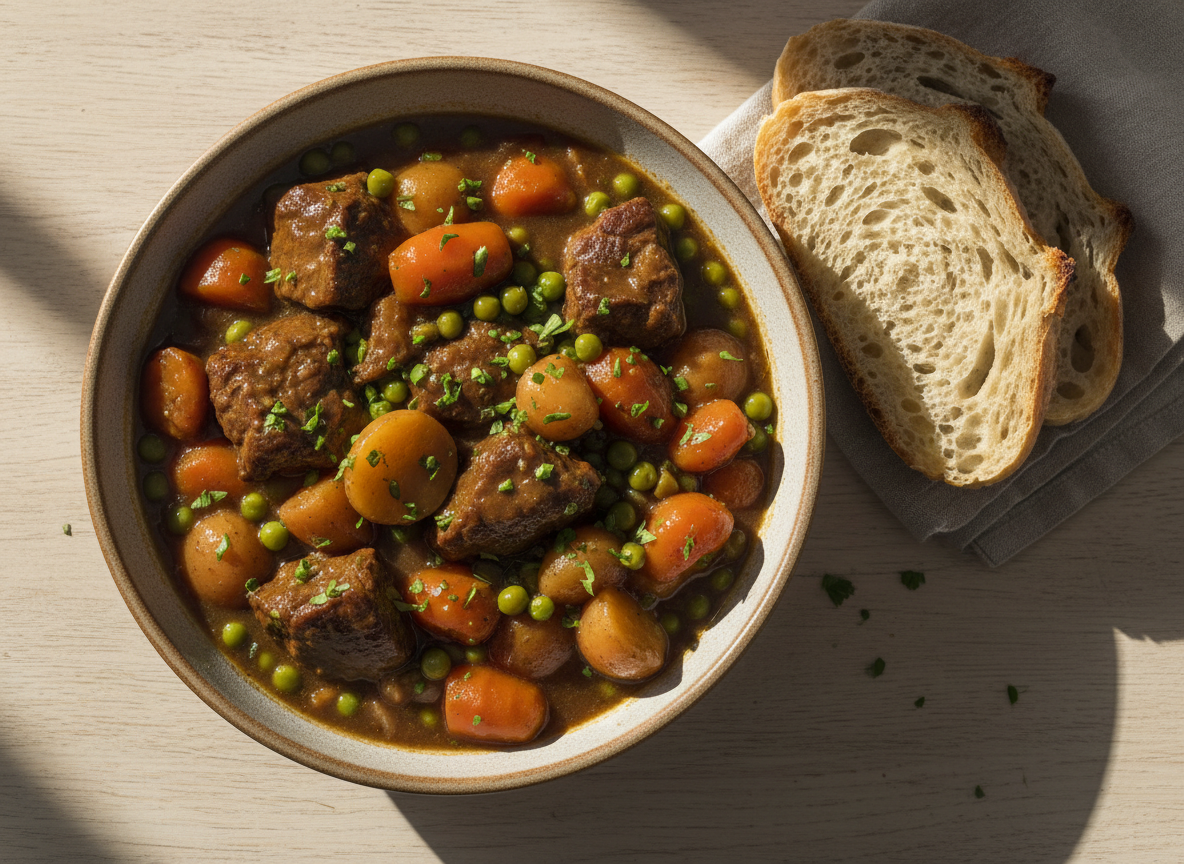
Slow Cooker Beef Stew
Ingredients
Method
- Season and coat the beef. Pat the cubes dry with paper towels, then toss them in a large bowl with the salt, pepper and flour until every piece has a thin, dusty coat.
- Sear (optional, 10 minutes). Heat the oil in a large skillet over medium-high heat until it shimmers. Brown the beef in 2 batches, 3-4 minutes per side, until a deep brown crust forms; don’t crowd the pan or the meat will steam. Skip this step on a true lazy day: the stew will be lighter in color and flavor, but just as tender.
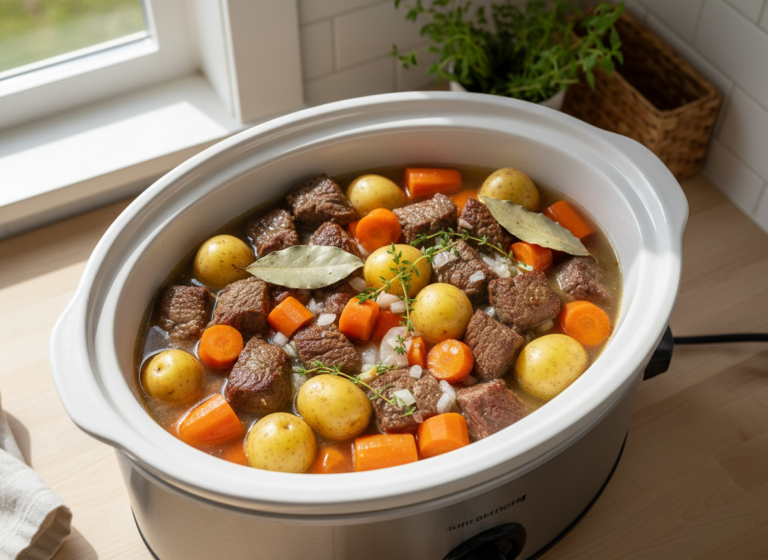
- Load the slow cooker. Spread the potatoes, carrots and onion in the bottom of a 6- to 7-quart slow cooker. Set the beef on top and add the thyme and bay leaves.
- Build the liquid. Whisk the garlic, tomato paste, Worcestershire, wine and broth together. If you seared, pour this into the hot skillet instead and simmer 1-2 minutes, scraping up the browned bits. Pour it over the beef; the liquid should come about three-quarters of the way up the ingredients, not cover them.
- Cook low and slow. Cover and cook on LOW for 8-9 hours or on HIGH for 5-6 hours. Keep the lid closed for at least the first 6 hours on LOW (4 on HIGH).
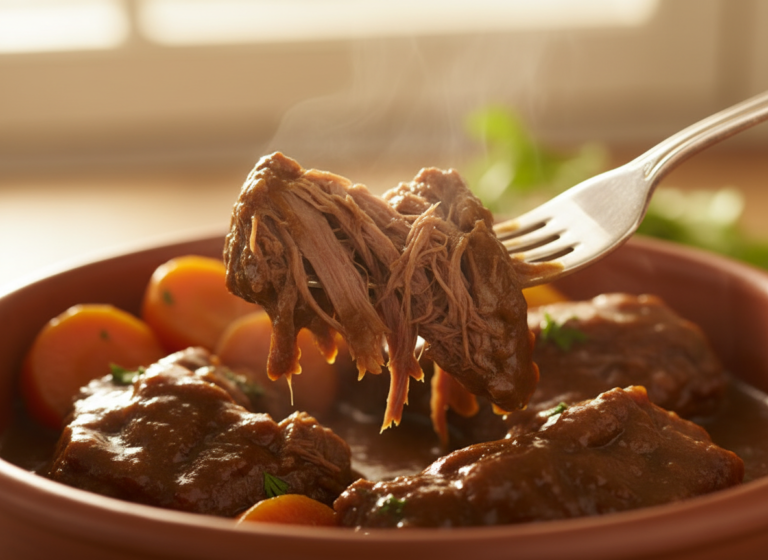
- Test, don’t trust the clock. Press the largest cube with a fork and twist. It’s ready when it splits apart with almost no resistance. If it feels springy or squeaks between your teeth, cover and cook 45-60 minutes more, then test again.
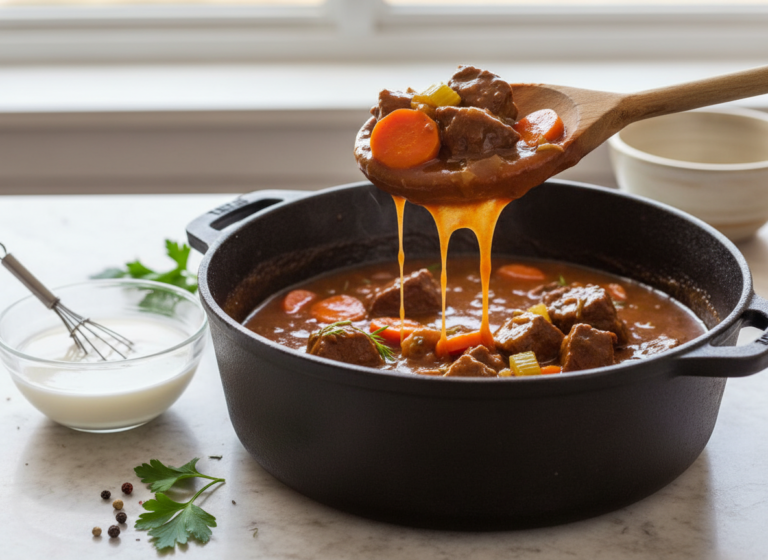
- Thicken. Discard the bay leaves and skim off the fat pooled on top. Stir in the cornstarch slurry and the frozen peas, switch to HIGH, cover and cook 15-20 minutes, until the gravy turns glossy and coats the back of a spoon.
- Rest and serve. Turn the cooker off, taste and add salt as needed, stir in the parsley and let the stew stand 10 minutes so the gravy settles.
Why This Slow Cooker Beef Stew Turns Fork-Tender
- Chuck, not lean stew meat. Chuck is full of collagen, the connective tissue that slowly melts into gelatin during long, moist cooking. That gelatin is what makes braised beef feel juicy and silky.
- Big 2-inch cubes. Large pieces have enough mass to stay moist through 8 hours. Small 1-inch cubes overcook on the outside before the center has fully broken down.
- LOW heat and a doneness test. Gentle heat gives collagen time to dissolve without squeezing the muscle fibers dry, and the fork test replaces guesswork.
- Thicken at the end. A light flour coat gives body from the start; a small cornstarch slurry at the end lets you adjust the gravy once you can see how much juice the beef released.
Why Is My Slow Cooker Beef Stew Tough? 5 Causes and Fixes
Tough stew beef has a short list of causes, and most of them come down to cut, size or time. Find the one that matches your last batch:
| Problem | Likely cause | Fix |
|---|---|---|
| Chewy, springy cubes after the recipe time | Collagen hasn’t finished breaking down yet | Cook 45-60 minutes more and fork-test again |
| Dry, stringy beef even after hours | Lean cut (round, sirloin) or mixed pre-cut “stew meat” | Buy a whole chuck roast and cut it yourself |
| Edges dry, centers tough | Cubes cut too small or uneven | Cut even 2-inch cubes |
| Tough beef cooked on HIGH | Harder simmer and too short a cook | Use LOW when you can, or add the full HIGH time |
| Instant Pot beef still firm | Too little pressure time or a quick release | 35 minutes at high pressure plus a 15-minute natural release |
The first row is by far the most common. Chuck gets firmer during the first hours as its muscle fibers tighten, then softens once the collagen gives way. Pull it out in that middle window and it tastes like a mistake, when it only needed another hour.
Choosing the Right Beef for Stew
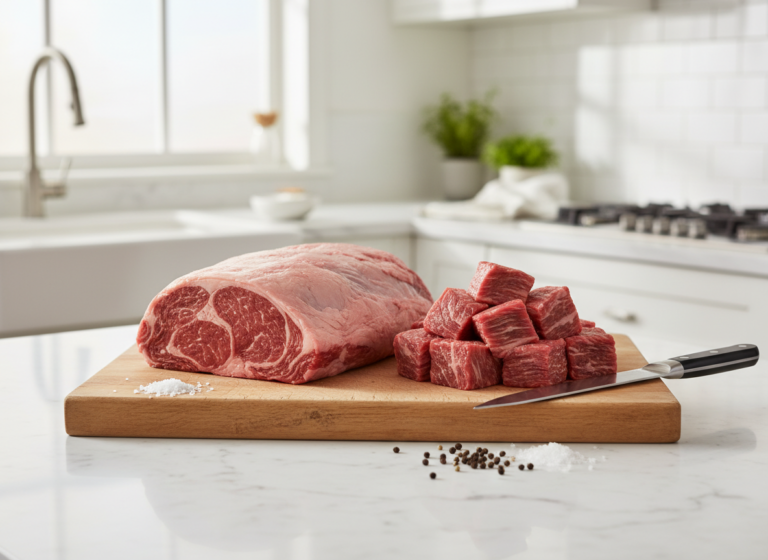
Look for a boneless chuck roast (also sold as chuck eye, shoulder roast or blade roast) with visible white marbling. Packages labeled “stew meat” are convenient, but they often mix trimmings from several cuts that cook at different speeds, so some pieces turn tender while others stay tough.
Cutting a 3-pound roast takes about 10 minutes. Trim off the thick, hard fat cap and any silverskin, but leave the thin seams of fat inside the meat: they baste the beef as it cooks. Bottom round and sirloin are leaner and tend to turn dry and grainy in a long braise.
If stew beef is tough, it isn’t overcooked. It’s almost always undercooked: give it another hour before you give up on it.
Instant Pot Version (About 1 Hour 20 Minutes)
Same ingredients, with two changes: skip the flour on the beef (it can stick and scorch under pressure) and use 3 tbsp cornstarch with 3 tbsp cold water at the end. This version is written for a 6-quart model such as the Instant Pot Duo 6 Qt. For the general rules behind the conversion, see our slow cooker to Instant Pot conversion guide.
- On Sauté (high), brown the salted and peppered beef in the oil in 2 batches, 3-4 minutes per side. Set aside.
- Cook the onion 3 minutes, add the garlic for 30 seconds, then pour in the wine and scrape the bottom completely clean. Leftover browned bits are the main cause of the Instant Pot burn message.
- Add the broth, Worcestershire, thyme, bay leaves and beef. Spoon the tomato paste on top without stirring, then pile the potatoes and carrots (cut into 2-inch pieces) on top.
- Lock the lid, set the valve to Sealing and cook 35 minutes at high pressure. Let the pressure release naturally for 15 minutes, then vent the rest.
- Fork-test the beef. If it’s still firm, seal and cook 5-10 minutes more. Then switch to Sauté, stir in the slurry and peas and simmer 2-3 minutes until thickened.
Tips and Mistakes to Avoid
- Don’t drown the beef. A slow cooker barely evaporates anything, and the meat releases its own juices. Too much broth gives you a thin soup and a bland gravy.
- Don’t keep lifting the lid. Each peek lets heat escape, and the cooker needs time to recover, which stretches the cooking time.
- Fill the cooker one-half to two-thirds full. An overfilled pot heats unevenly; a nearly empty one runs hot and can dry the beef.
- Add peas and fresh herbs at the end. After 8 hours they turn gray and mushy.
- Know your cooker. Newer models often run hotter on LOW than older ones, so start fork-testing at the early end of the time range.
How to Thicken Beef Stew Gravy
Cornstarch is the easiest finish because it thickens in minutes and stays glossy. Always mix it with cold water first; added straight to hot liquid, it clumps. Start with 2 tbsp, give it 15 minutes on HIGH, and add another tablespoon of slurry only if the gravy still runs off the spoon.
No cornstarch? Mash a few potato chunks against the side of the cooker and stir them in, or whisk 2 tbsp flour into 1/4 cup of the hot cooking liquid and simmer it on HIGH for 20-30 minutes so the raw flour taste cooks out.
Substitutions and Variations
| Swap | Result |
|---|---|
| Red wine → extra beef broth + 1 tsp red wine vinegar | Works well; slightly less depth |
| Yukon Gold → red potatoes | Works; holds shape a little better |
| Flour coat → skip it | Works; use 3 tbsp cornstarch at the end |
| Chuck → boneless short ribs | Works; richer and pricier |
| Chuck → bottom round or sirloin | Not recommended; turns dry and grainy |
| Russet potatoes | Breaks down more; thickens the stew on its own |
For a variation, add 8 oz (225 g) halved cremini mushrooms with the vegetables, or swap the wine for a dark beer and add 1 tsp brown sugar for a pub-style stew.
Storage and Reheating
Cool the stew, then refrigerate it in airtight containers for up to 4 days; the flavor deepens overnight. It freezes for up to 3 months, though potatoes turn a little grainy after thawing. Reheat gently on the stove over medium-low heat with a splash of broth, since the gelatin-rich gravy sets firm when cold.
Equipment and Our Top Picks
A 3-pound chuck roast plus vegetables needs a 6- to 7-quart slow cooker; anything smaller ends up overfilled. A fat separator is optional, but chuck releases a lot of fat and it makes skimming quick.
- Crock-Pot 7-Quart Manual Slow Cooker — simple LOW, HIGH and Warm dial with room for a 3-lb roast and vegetables. Buyers praise its even heating; the most common complaint is a stoneware insert cracking, so avoid moving it straight from the fridge to a hot base.
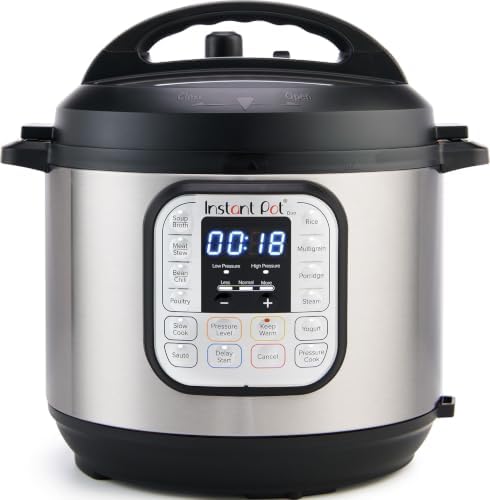
- Instant Pot Duo 6 Qt — a long-standing reference among electric pressure cookers; it handles the pressure version and also has a slow cook mode.
- OXO Good Grips 4 Cup Fat Separator — pour off the cooking liquid, let the fat rise, and pour the clear juices back for a cleaner gravy.
Product picks are research-based: manufacturer specs, verified buyer feedback and independent reviews such as Wirecutter’s electric pressure cooker guide. We haven’t tested these specific models ourselves. Last verified: October 9, 2026. How we work.


As an Amazon Associate, we earn from qualifying purchases. Prices are approximate and may change — please verify on Amazon before buying.
FAQ
Can you overcook beef stew in a slow cooker?
Yes, but it takes a long time. Well past the fork-tender point, chuck turns mushy and stringy rather than tough, and the vegetables fall apart. That’s why the recipe gives a range and asks you to start testing at the low end.
Do I have to brown the beef first?
No. Browning adds deeper, roasted flavor through the Maillard reaction, but it doesn’t make the beef more tender. Tenderness comes from the cut and the cooking time, so unseared stew is a fine lazy-day option.
Is it safe to put raw beef in the slow cooker?
Yes, as long as the beef is fully thawed before it goes in. Slow cookers take a while to heat up, so frozen chunks would linger too long at unsafe temperatures; Clemson Cooperative Extension’s slow cooker food safety guide says to always defrost meat first.
The Bottom Line
Fork-tender slow cooker beef stew comes from three choices: a whole chuck roast, big 2-inch cubes and the patience to cook until a fork, not a timer, says it’s done. Get those right and the rest of the recipe can stay as lazy as you like. For more hands-off dinners, browse all our pressure and slow cooker recipes.
Get Our Free Dessert Recipe eBook
Join the Kitchen Unveiled newsletter and get our free dessert recipe eBook when you sign up. Subscribe now and get your free eBook →
You might also like: Dump-and-Go Slow Cooker Chili and Instant Pot Butter Chicken.