How long does meal prep last in the fridge? For most cooked dishes, 3 to 4 days at 40°F (4°C) or below, according to the USDA. A few foods break that rule in both directions: hard-cooked eggs get a full week, while gravy and meat broth get only 1 to 2 days. The chart below lists each type of prepped dish with its official fridge and freezer times, then covers how to cool, store and reheat it so a Sunday batch is still safe on Wednesday.
- Meal Prep Storage Chart: Fridge and Freezer
- How to Cool and Store Meal Prep, Step by Step
- Keep Your Fridge at 40°F or Below
- When to Freeze Meal Prep (and How to Thaw It)
- How to Reheat Meal Prep to 165°F
- Meal Prep Storage Do's and Don'ts
- Warning Signs and Troubleshooting
- Storage Gear That Makes It Easier
- Meal Prep Recipes That Keep Well
- FAQ
- The Short Version
Quick Answer
- Most cooked meal prep: 3 to 4 days in a fridge set to 40°F (4°C) or below.
- Exceptions: hard-cooked eggs keep 1 week; gravy and meat broth only 1 to 2 days.
- Anything for day 5 or later: freeze it on prep day and thaw it in the fridge the night before.
- Before you eat it: reheat to 165°F (74°C), and bring soups and sauces to a rolling boil.
Meal Prep Storage Chart: Fridge and Freezer
Every number below comes from a U.S. government food safety chart or a university extension service. Fridge times are about safety. Freezer times are about quality: food held at 0°F (-18°C) stays safe indefinitely, but it slowly dries out and loses flavor.
| Prepped dish | Fridge (40°F or below) | Freezer (0°F, best quality) |
|---|---|---|
| Cooked chicken, beef or pork | 3 to 4 days | 2 to 6 months |
| Cooked fish | 3 to 4 days | 4 to 6 months |
| Cooked rice and grains | 3 to 4 days | About 2 months (rice) |
| Roasted or cooked vegetables | 3 to 4 days | 3 to 4 months (texture softens) |
| Soups, stews and chili | 3 to 4 days | 2 to 3 months |
| Casseroles and baked pasta | 3 to 4 days | 2 to 3 months |
| Chicken, tuna, egg or pasta salad | 3 to 4 days | Does not freeze well |
| Hard-cooked eggs | 1 week | Do not freeze |
| Gravy and meat broth | 1 to 2 days | 2 to 3 months |
Sources: FoodSafety.gov Cold Food Storage Chart (cooked meat and poultry, soups and stews, casseroles, salads, hard-cooked eggs); USDA FSIS, Leftovers and Food Safety (3 to 4 days in the fridge and 3 to 4 months in the freezer for leftovers in general, which covers cooked vegetables); University of Minnesota Extension (cooked fish, gravy and meat broth); University of Nebraska-Lincoln Extension (cooked rice).
How Long Does Meal Prep Last in the Fridge? Reading the Chart
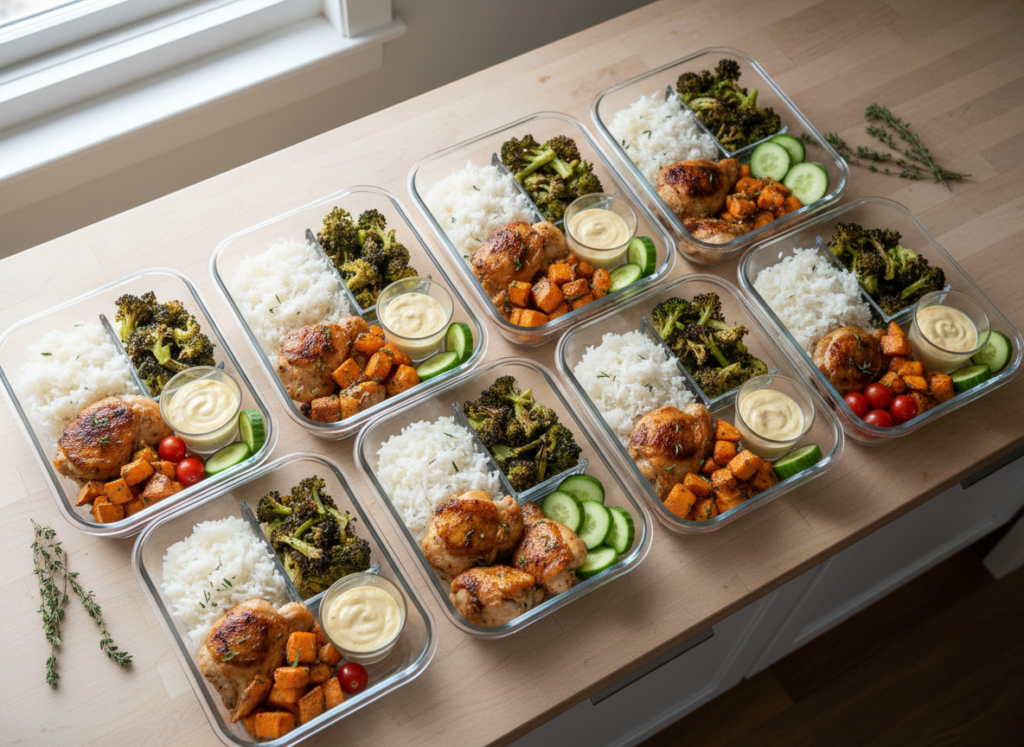
- Count from the day you cooked it. A chicken-and-rice bowl cooked Sunday is in its 3-to-4-day window through Wednesday or Thursday.
- A mixed container follows its shortest item. A bowl with gravy over the chicken is a 1-to-2-day bowl. Pack the gravy separately or freeze it.
- The clock assumes a cold fridge. All of these times depend on 40°F (4°C) or below, and a busy fridge door can run warmer than you’d think.
How to Cool and Store Meal Prep, Step by Step
The days on the chart only count if the food got cold quickly. The USDA’s limit is 2 hours from the stove (or from a warming appliance) to the fridge, cut to 1 hour when the room is above 90°F. Our 2-hour plan for a week of lunches covers the cooking order. The steps here cover what happens after the burners go off.
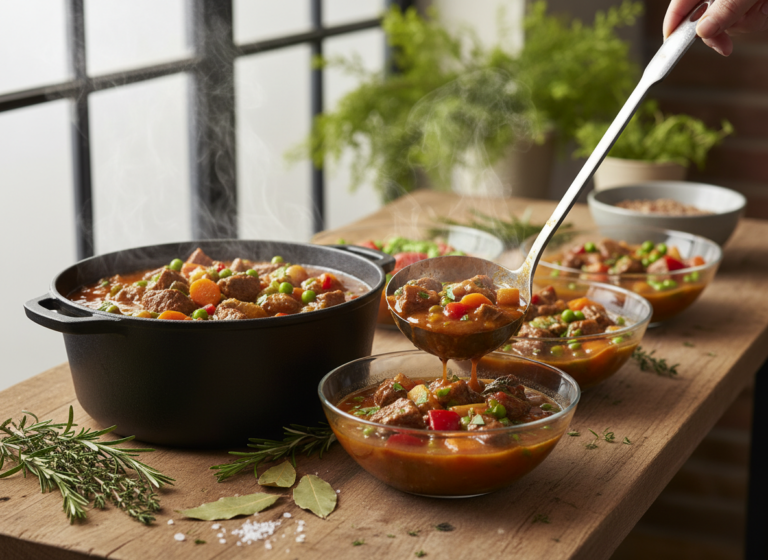
- Divide big batches right away. Ladle soups, stews and chili into wide, shallow containers instead of chilling the whole pot. University of Nebraska-Lincoln Extension suggests containers no more than 3 inches deep.
- Cut large pieces down. Slice roasts and whole chicken breasts before chilling. Smaller pieces lose heat much faster than a whole cut.
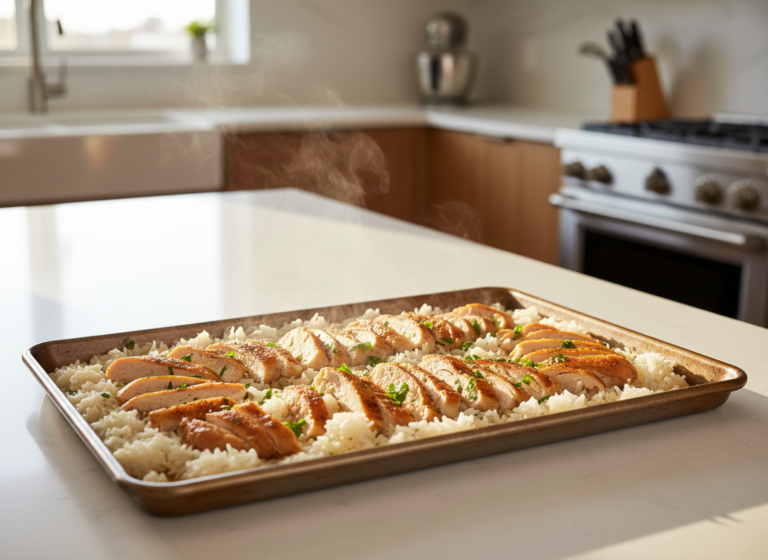
- Spread grains thin. Spread rice and grains in a shallow layer on a sheet pan or in flat containers so the steam escapes and the center cools.
- Use an ice bath for a pot you can’t divide. Set it in a sink of ice water and stir. The USDA also says hot food can go straight into the fridge, so there’s no need to wait for it to reach room temperature.
- Cover, label and date. Close each container and write the dish and the cook date on the lid. Anything marked for day 4 or later goes straight into the freezer.
- Leave space on the shelf. Cold air has to move around containers to chill them, so don’t stack hot boxes tightly together on prep day.
Keep Your Fridge at 40°F or Below
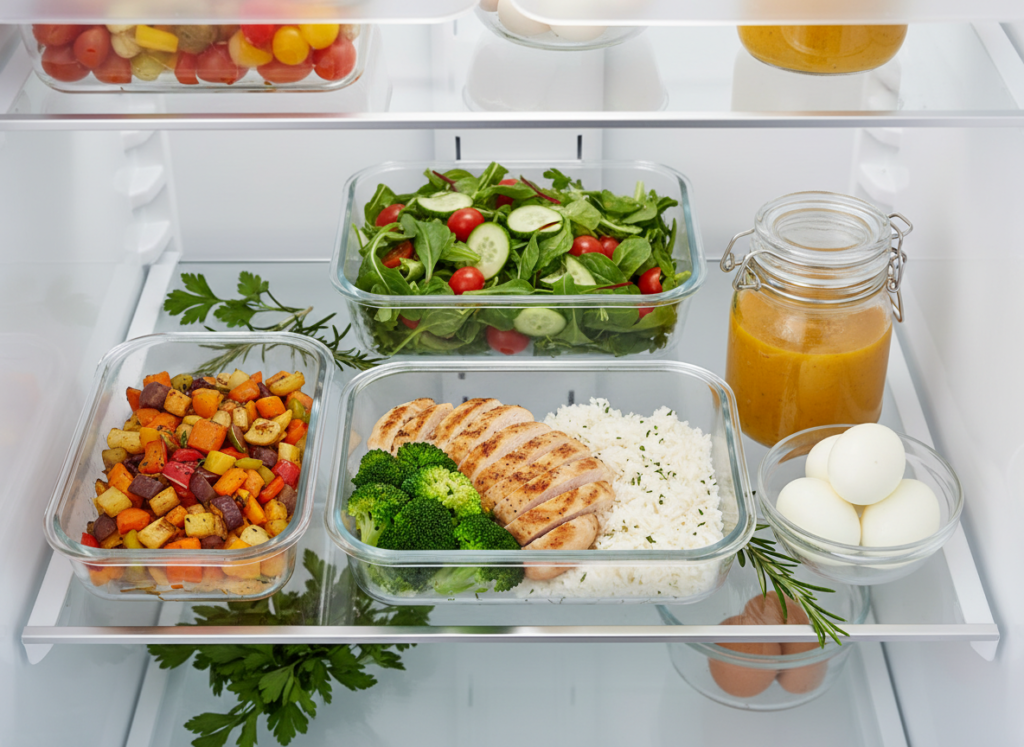
The USDA sets the refrigerator target at 40°F (4°C) or below and the freezer at 0°F (-18°C). It also recommends an appliance thermometer, because the dial inside most fridges shows a setting, not a temperature. A simple fridge and freezer thermometer on the middle shelf tells you whether your 3-to-4-day clock is accurate.
Keep meal prep on the main shelves rather than in the door, which warms up every time the fridge opens. On a big prep day, check the thermometer an hour after loading: a fridge packed with warm containers can drift above 40°F for a while.
When to Freeze Meal Prep (and How to Thaw It)
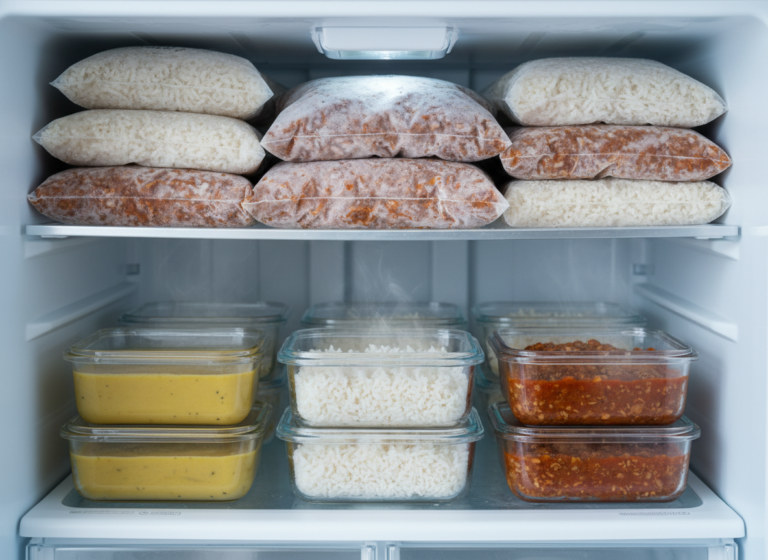
Freeze anything you won’t eat within the 3-to-4-day window, and freeze it on prep day, not on day 3. Freezing pauses bacteria, it doesn’t kill them, so a container frozen on its last good day comes out of the freezer at the end of its window.
- Freezes well: soups, stews, chili, cooked meat and poultry, casseroles, cooked rice.
- Skip the freezer: hard-cooked eggs and mayonnaise-based salads (chicken, tuna, egg, pasta). Raw salad vegetables also turn limp once thawed.
- Thaw safely: the USDA lists three methods. The fridge (slowest, safest, plan for overnight), cold water in a leak-proof bag, or the microwave. Food thawed in cold water or the microwave should be heated right away.
- Refreezing: food thawed in the fridge can go back in the freezer without reheating, and the USDA says leftovers that were frozen, thawed and reheated can be refrozen. Expect drier texture each time.
The fridge buys you 3 or 4 days. The freezer buys you the rest of the week, as long as you use it on prep day, not on day 3.
How to Reheat Meal Prep to 165°F
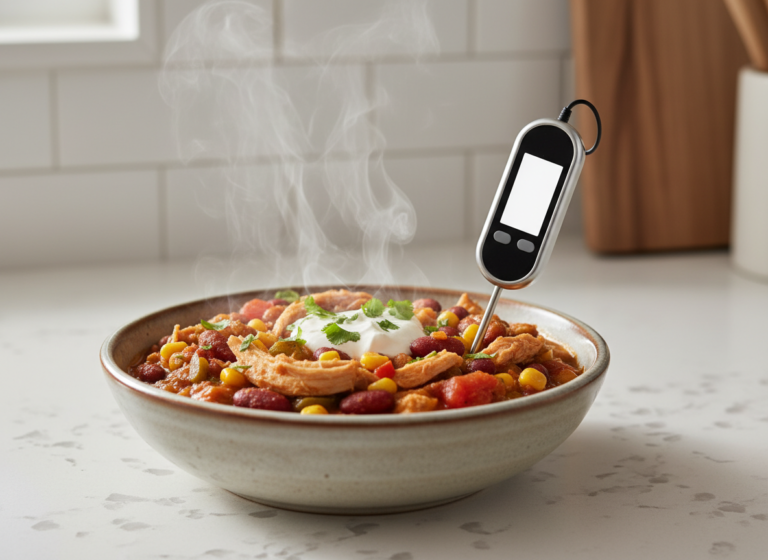
The USDA’s target for reheated leftovers is 165°F (74°C), checked with a food thermometer. “Steaming on top” isn’t the same thing: microwaves heat unevenly, and the middle of a dense container of rice or stew can still be cold.
- Microwave: cover the container loosely, stir or rotate halfway, then let it stand for a minute before checking the temperature in a few spots.
- Soups, sauces and gravy: bring them to a rolling boil on the stove.
- Dry rice and grains: sprinkle on a spoonful of water before covering so the steam softens the grains while they heat.
- Reheat once: take out only the portion you’ll eat, so the rest of the batch isn’t warmed and chilled again and again.
Meal Prep Storage Do’s and Don’ts
Do
- Get cooked food into the fridge within 2 hours (1 hour above 90°F).
- Use shallow containers and date every lid.
- Freeze day-4-and-later portions on prep day.
- Pack gravy and sauces in their own small cups.
Don’t
- Leave a full pot of chili on the stove overnight to cool.
- Trust the smell test to decide if day-6 chicken is safe.
- Freeze hard-cooked eggs or mayo-based salads.
- Store meal prep in the fridge door.
Warning Signs and Troubleshooting
Spoilage bacteria are the ones you can notice: the USDA says they cause an off odor, a change in color, or a sticky or slimy surface. The bacteria that cause foodborne illness are different. They don’t change how food looks or smells, which is why a container that seems fine on day 6 is still past its window.
| What you notice | Likely cause | What to do |
|---|---|---|
| Sour or off smell, slimy chicken or rice | Spoilage bacteria have grown | Throw it out; don’t try to rescue it by reheating |
| Visible mold on any part | Spoilage | Discard the whole container |
| Looks and smells fine, but it’s day 5 or later | Past the 3-to-4-day window | Discard; next time freeze those portions on prep day |
| Food spoils by day 2 or 3 | Fridge above 40°F or food cooled too slowly | Check with a fridge thermometer; use shallow containers |
| Frozen portions taste dry or have pale, icy patches | Freezer burn from air exposure (a quality issue) | Press out air and use within the freezer times above |
| Not sure when it was cooked | No label | When in doubt, throw it out, and date every lid from now on |
Storage Gear That Makes It Easier
Three inexpensive things cover the whole storage routine: a thermometer to prove the fridge is cold, containers in several sizes so you can portion shallow, and labels so you always know the cook date.
- Rubbermaid Commercial Fridge/Freezer Monitoring Thermometer: a stainless dial thermometer that reads from -20°F to 80°F, hangs from a wire shelf or stands on its own. Buyers most often praise the large, easy-to-read dial and its accuracy. It’s analog, so there’s no alarm if the fridge warms up.
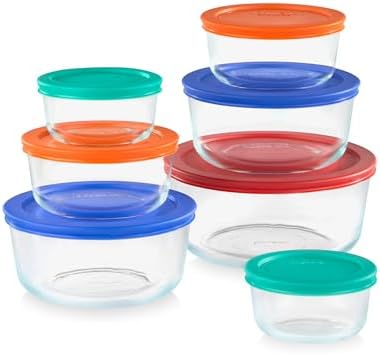
- Pyrex Simply Store Glass Food Storage Set (1-, 2-, 4- and 7-cup): a long-standing reference in glass storage, with nesting sizes that make shallow portioning easy and glass that doesn’t hold stains. The most common complaint is the plastic lids, which can leak if a container tips over, so keep soups upright.
- Yoget Removable Freezer Labels (1 x 3 inch, 300 count): write-on labels that hold up in the fridge and freezer and peel off glass without residue. Buyers like the size for dish names and dates; some report ink smearing, so use a permanent marker.


Product picks are research-based: manufacturer specs, verified buyer feedback and independent reviews such as Reviewed’s food storage container tests. We haven’t tested these specific models ourselves. Last verified: October 9, 2026. How we work.
As an Amazon Associate, we earn from qualifying purchases. Prices are approximate and may change — please verify on Amazon before buying.
Meal Prep Recipes That Keep Well
Dishes that hold together in liquid or sauce reheat best and freeze cleanly. These three fit the chart above:
- Dump-and-Go Slow Cooker Chili: 3 to 4 days in the fridge, and it freezes flat in bags for later weeks.
- Lazy Day Beef Stew with Minimal Prep: portion it into shallow containers while it’s still hot.
- Cheesy Keto Zucchini Lasagna: a casserole-style dish that slices into neat lunch portions.
For more batch-friendly ideas, browse our weeknight dinner recipes.
FAQ
Is meal prep still good after 5 days in the fridge?
For most cooked dishes, no. The USDA and FoodSafety.gov give cooked leftovers 3 to 4 days at 40°F or below. Hard-cooked eggs, at 1 week, are the main exception. For a five-day plan, freeze lunches 4 and 5 on prep day.
Do I have to let food cool before putting it in the fridge?
No. The USDA says hot food can go straight into the refrigerator. What matters is moving it quickly through the temperature danger zone of 40-140°F, so divide it into shallow containers and get it chilled within 2 hours.
Does freezing reset the 3-to-4-day clock?
No. Freezing pauses bacteria; once the food thaws, they become active again. Count the days it spent in the fridge before freezing, which is why the best time to freeze extra portions is on prep day.
The Short Version
Plan on 3 to 4 days in the fridge for almost every cooked dish, 1 week for hard-cooked eggs, and 1 to 2 days for gravy. Chill food within 2 hours in shallow containers, freeze anything for later in the week on prep day, and reheat to 165°F. With a fridge thermometer and a dated lid on every container, you won’t have to guess.
Get Our Free Dessert Recipe eBook
Join the Kitchen Unveiled newsletter and get our free dessert recipe eBook when you sign up. Subscribe now and get your free eBook →
You might also like: How to Meal Prep a Week of Lunches in 2 Hours and Dump-and-Go Slow Cooker Chili.