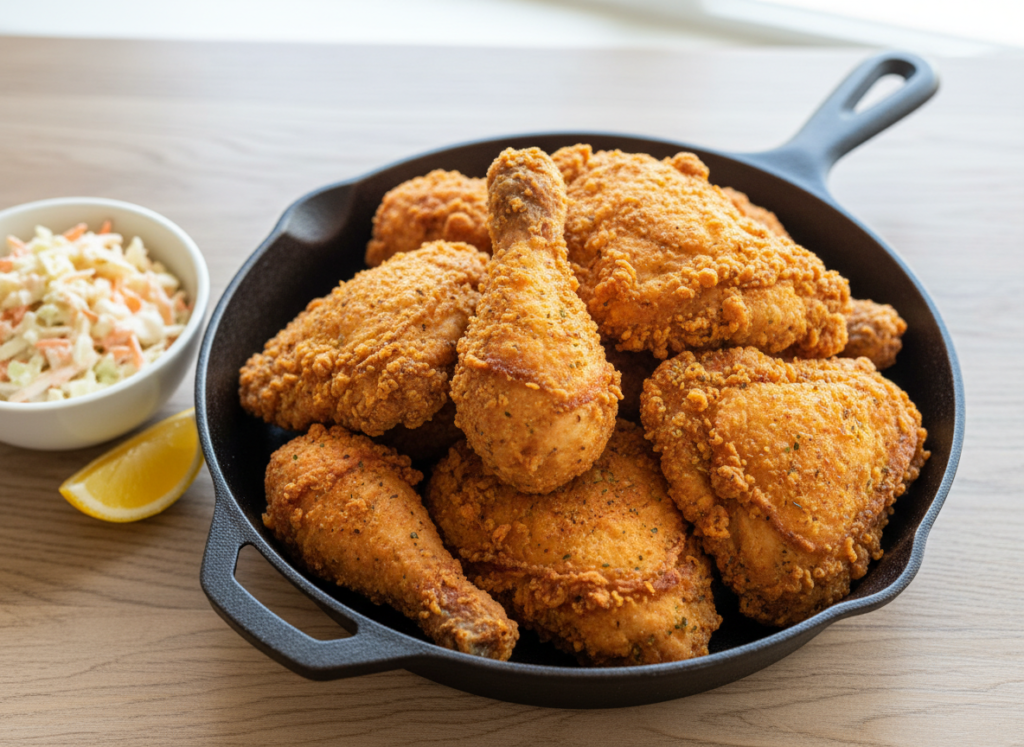
Southern fried chicken made in a cast iron skillet lives or dies by one number: the temperature of the oil once the chicken goes in. Start at 350°F, hold it between 300°F and 325°F while the pieces fry, and pull each one only when a thermometer reads at least 165°F in the thickest part. Do that, and a double-dredged crust turns deep golden and shatter-crisp while the meat stays juicy, with no guessing and no pale, greasy pieces. Here is the full recipe, the temperatures that matter at every stage, and what to do when the crust browns faster than the inside cooks.
- Recipe
- Cast Iron Southern Fried Chicken
- Why This Works
- Oil Temperature for Southern Fried Chicken, Stage by Stage
- The 165°F Check: How to Know It's Done
- Common Mistakes with Southern Fried Chicken
- Substitutions That Work (and One That Doesn't)
- Variations
- Serving, Storing and Reheating
- Our Top Picks for Skillet Frying
- Frequently Asked Questions
- The Bottom Line
At a Glance
- Time: 30 min prep, 4 to 12 hours brining, about 45 min frying (two batches)
- Serves: 4 (one 3½ to 4 lb chicken, cut into 10 pieces)
- Difficulty: Medium. The only real skill is managing the heat.
- Pan: 12-inch cast iron skillet with sides at least 2 inches tall
- What makes it work: oil heated to 350°F, held at 300-325°F while frying, every piece pulled at 165°F or above
Recipe
Prep: 30 min · Brine: 4 to 12 hours · Coating rest: 20 min · Cook: 45 min · Rest: 10 min · Total: about 5 hours 45 min (mostly hands-off) · Servings: 4
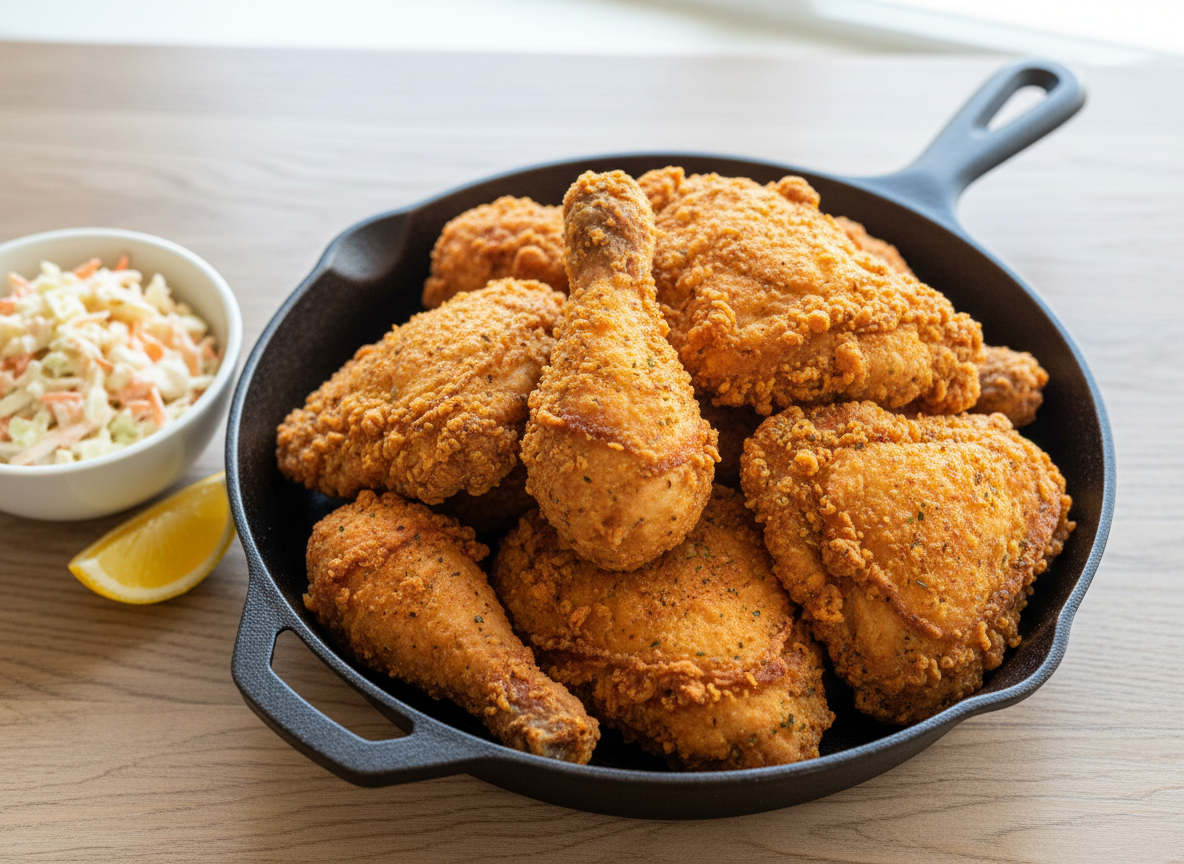
Cast Iron Southern Fried Chicken
Ingredients
Method
- Brine. Whisk the buttermilk, salt and hot sauce in a large bowl or zip-top bag. Add the chicken, turn to coat, cover and refrigerate for at least 4 hours and up to 12 hours.
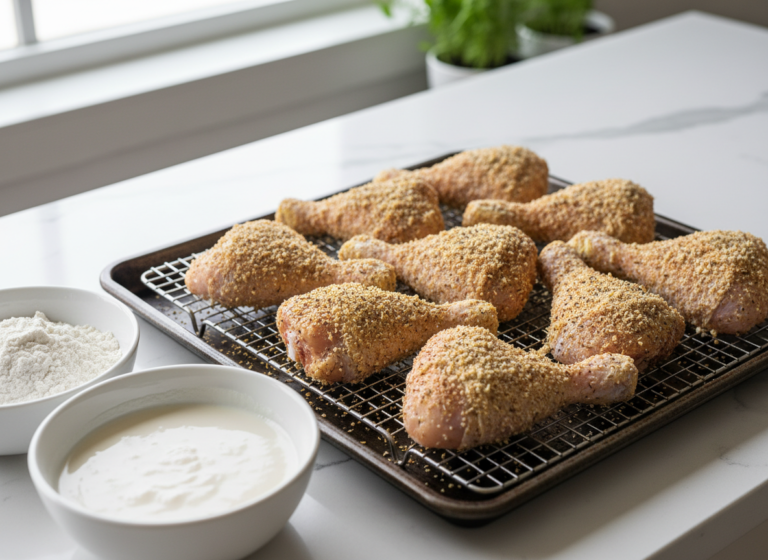
- Mix the seasoned flour. In a wide, shallow dish, whisk together the flour, cornstarch, baking powder, paprika, garlic powder, onion powder, salt, black pepper and cayenne. Set a wire rack inside a rimmed baking sheet next to it.
- Double dredge. Lift one piece from the buttermilk, let the excess drip off and press it into the flour on all sides. Dip it back into the buttermilk for a second, then press it into the flour again until it looks shaggy and fully covered. Set it on the rack and repeat with the rest.
- Rest the coating. Leave the pieces on the rack for 15 to 20 minutes. The flour turns slightly damp and paste-like in spots, which means it will cling in the oil instead of sliding off.
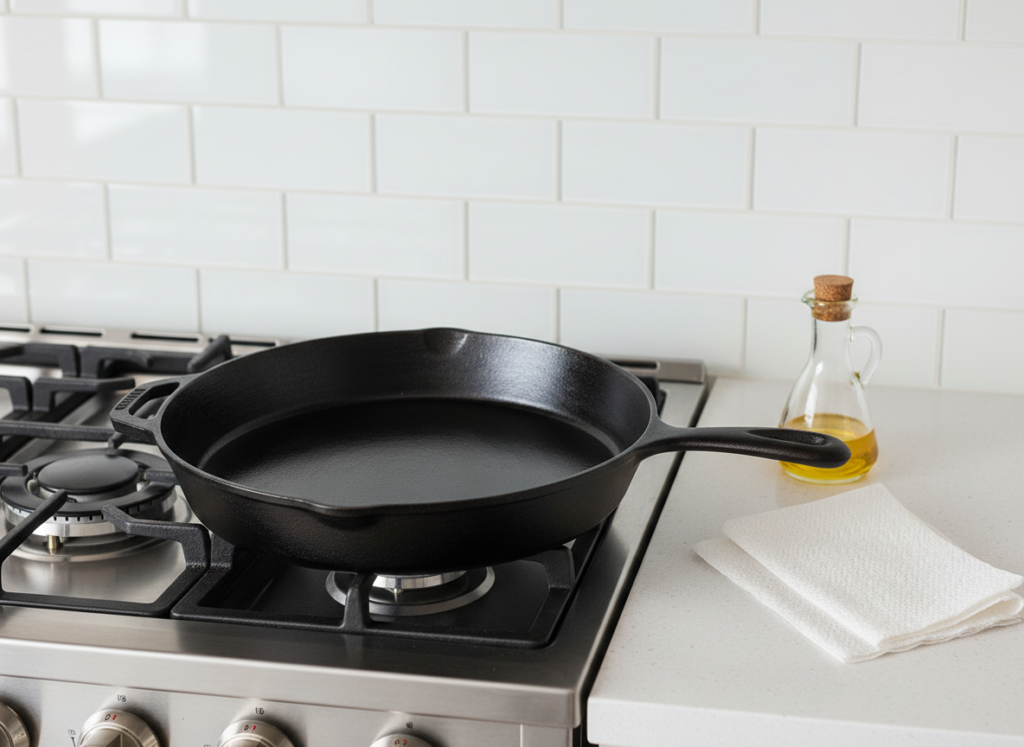
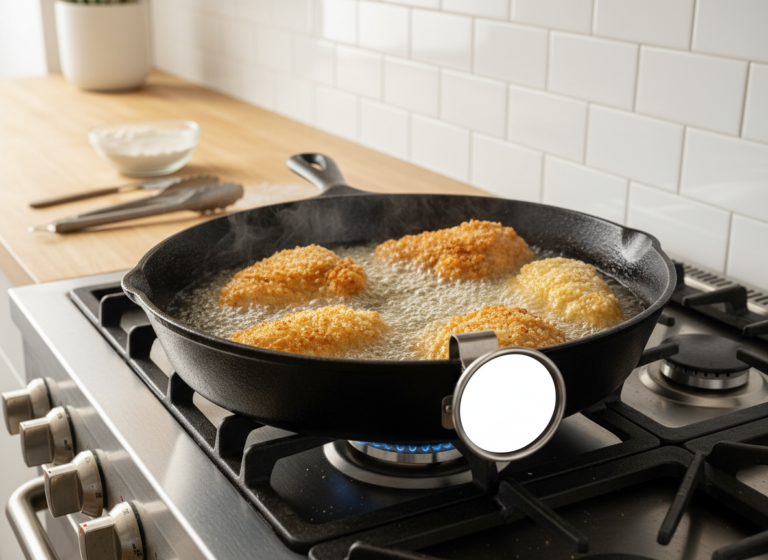
- Heat the oil. Pour the oil into a 12-inch cast iron skillet with sides at least 2 inches tall; it should never come more than halfway up the sides. Clip a deep-fry thermometer to the pan and heat over medium to medium-high until it reads 350°F (175°C), about 10 to 15 minutes.
- Fry the dark meat. Gently lay the thighs and drumsticks in the oil skin side down, thighs toward the center, without crowding. The temperature will drop to around 300°F; adjust the burner so it stays between 300°F and 325°F (150-165°C). Fry until the underside is deep golden brown, 6 to 7 minutes, then turn with tongs and fry 6 to 7 minutes more.
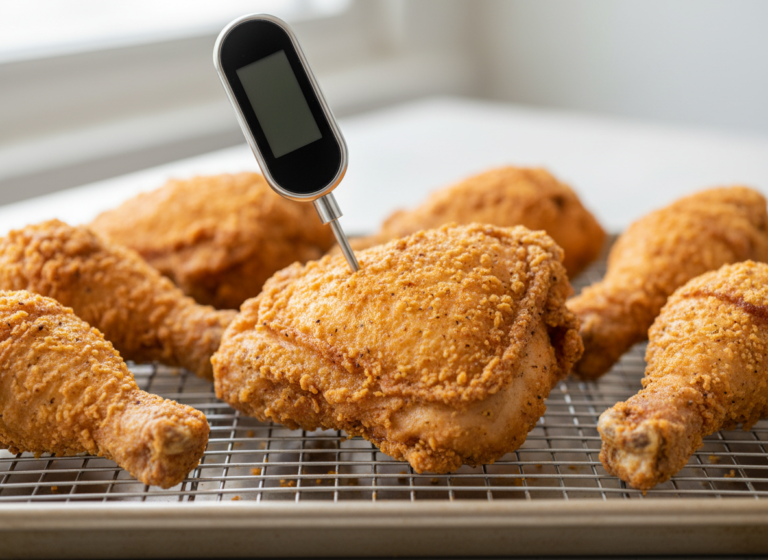
- Check the temperature. Insert an instant-read thermometer into the thickest part of each piece without touching the bone. Thighs and drumsticks must read at least 165°F (74°C); 175°F (79°C) gives the most tender dark meat. Transfer finished pieces to the clean wire rack.
- Fry the white meat. Bring the oil back to 350°F, then add the breast pieces and wings and hold the oil at 300-325°F again. Fry the breast pieces 5 to 6 minutes per side and the wings 4 to 5 minutes per side, until deep golden and at least 165°F (74°C) in the thickest part.
- Finish in the oven if needed. If any piece is deep brown outside but still under 165°F, move it on the rack and baking sheet to a 350°F (175°C) oven for 5 to 10 minutes and check again.
- Rest and serve. Let the chicken rest on the rack for 10 minutes so the crust sets and the juices settle. Serve hot or at room temperature.
Why This Works
- Cast iron holds its heat. A heavy skillet loses fewer degrees when cold chicken goes in and recovers faster, so the oil spends less time in the greasy zone below 300°F.
- Shallow oil, controlled temperature. Three-quarters of an inch of oil fries the pieces halfway up, and turning them once cooks both sides. Holding 300-325°F gives the bone-in pieces time to cook through before the crust goes too dark.
- The double dredge builds craggy layers. Flour, a quick dip back into buttermilk, then flour again creates ridges and flakes that fry into a thick, crunchy shell. Cornstarch and a little baking powder keep it light rather than bready.
- A thermometer replaces guesswork. Color tells you about the crust, not the meat. An instant-read reading of 165°F is the only reliable sign that a bone-in piece is safe to eat.
Oil Temperature for Southern Fried Chicken, Stage by Stage
The reading on your thermometer will move a lot during a batch, and that is normal. What matters is knowing which number you are aiming for at each moment and nudging the burner before the oil drifts too far. A clip-on deep-fry thermometer lets you watch it without lifting anything out of the pan.
| Stage | Oil temperature | What you see |
|---|---|---|
| Before the chicken goes in | 350°F (175°C) | Oil shimmers; a pinch of flour sizzles at once |
| First minute of frying | Drops to about 300°F (150°C) | Strong, steady bubbling around every piece |
| Rest of the batch | 300-325°F (150-165°C) | Crust goes from blond to deep golden in 6-7 minutes per side |
| Too cold | Below 290°F (145°C) | Lazy bubbles, pale and oily crust |
| Too hot | Above 350°F (175°C) with chicken in | Crust darkens in under 4 minutes, meat still raw near the bone |
Cast iron reacts slowly, so make small burner adjustments and give them a minute to show up on the thermometer. Between batches, always let the oil climb back to 350°F before adding more chicken.
The 165°F Check: How to Know It’s Done
The USDA’s safe minimum internal temperature for all poultry, white or dark meat, is 165°F (74°C), as listed on the federal safe minimum internal temperatures chart. On bone-in fried chicken, a golden crust and clear juices are not proof, so check every piece.
- Push the probe of an instant-read thermometer into the thickest part of the piece, parallel to the bone, without touching it. Bone reads hotter than the meat.
- Breast pieces: pull at 165°F. Going much higher dries them out.
- Thighs and drumsticks: 165°F is safe, but 175°F melts more connective tissue and tastes better.
- Wash the probe between pieces that were under temperature and ones that are done.
Skillet Frying Tips
- Halve the breasts crosswise so they cook in about the same time as the thighs.
- Use one “wet hand” for the buttermilk and one “dry hand” for the flour to avoid clumpy fingers.
- Lay each piece into the oil away from you, so any splash goes the other way.
- Drain on a wire rack, not paper towels: the bottom stays crisp instead of steaming.
- Let the oil cool completely before straining or discarding it, then clean the pan with our guide to cleaning a cast iron skillet.
Common Mistakes with Southern Fried Chicken
- Crowding the pan. Too many cold pieces at once crash the oil below 290°F and the crust soaks up grease. Fry dark and white meat in separate batches.
- Frying straight from the dredge. Skipping the 15-minute rest is the main reason the coating falls off in patches.
- Chasing color instead of temperature. Turning up the heat to brown faster gives a dark crust over undercooked meat near the bone.
- Moving the pieces too soon. Leave them alone for the first few minutes so the crust can set before you turn them.
- Using a shallow pan. A skillet with low sides invites spills and splatter. Choose one with sides at least 2 inches tall.
Color tells you about the crust. Only a thermometer tells you about the chicken.
Substitutions That Work (and One That Doesn’t)
| Swap | Result |
|---|---|
| Buttermilk → 2 cups milk + 2 tbsp lemon juice, rested 10 min | Works; slightly less tangy |
| Whole chicken → 3½ lb bone-in thighs and drumsticks | Works well; one or two batches of dark meat, same timing |
| Peanut oil → vegetable, canola or shortening | Works; shortening gives the most old-fashioned flavor |
| Cornstarch → more all-purpose flour | Works; crust is a bit less crunchy |
| Boneless breasts | Works if pounded to ½ inch; fry 3-4 min per side to 165°F |
| Olive oil | Not recommended; strong flavor and it smokes sooner |
Variations
- Spicy: raise the cayenne to 1½ teaspoons and add 2 more tablespoons of hot sauce to the brine.
- Herby: add 1 teaspoon each dried thyme and dried oregano to the seasoned flour.
- Honey drizzle: warm ¼ cup honey with 1 tablespoon hot sauce and brush it over the chicken just before serving.
- Korean-style glaze: for a sweet-spicy finish, see our Korean fried chicken with gochujang sauce.
Serving, Storing and Reheating
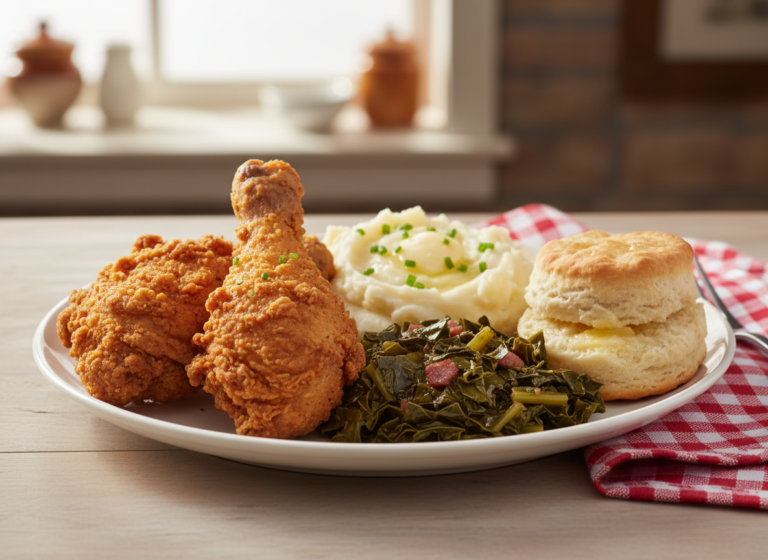
Classic partners are buttermilk biscuits, mashed potatoes with gravy, collard greens, coleslaw and corn on the cob. For a richer spread, add a pan of baked mac and cheese.
Refrigerate leftovers within 2 hours in a covered container for up to 3 to 4 days. To bring back the crunch, reheat on a wire rack set over a baking sheet in a 400°F (200°C) oven for 15 to 20 minutes, until hot all the way through (165°F). The microwave works in a pinch but softens the crust.
Our Top Picks for Skillet Frying
You only need three things to fry chicken this way with confidence: a deep, heavy pan and two thermometers, one for the oil and one for the meat.
- Lodge Pre-Seasoned Cast Iron Covered Deep Skillet, 5 Quart — a 12-inch cast iron pan with tall sides that keep oil and splatter in check, plus a lid you can use to smother a flare-up.
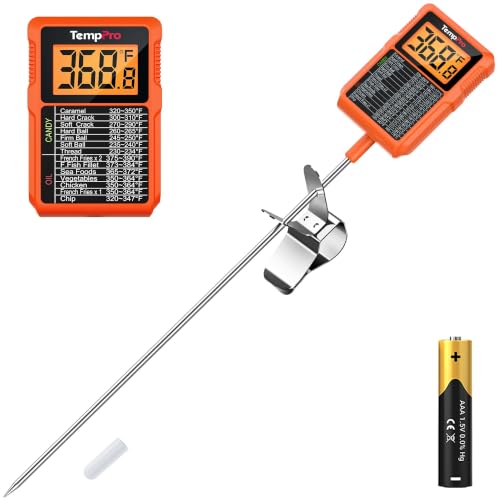
- TempPro TempDip Digital Candy Thermometer with Pot Clip — clips to the pan so you can hold 300-325°F the whole time, with a 10-inch probe that keeps your hand away from the oil and a digital readout you can see at a glance.
- ThermoWorks ThermoPop 2 Instant-Read Thermometer — a quick, compact probe for confirming that every piece has reached 165°F.


Product picks are research-based: manufacturer specs, verified buyer feedback and independent reviews such as America’s Test Kitchen. We haven’t tested these specific models ourselves. Last verified: October 9, 2026. How we work.
As an Amazon Associate, we earn from qualifying purchases. Prices are approximate and may change — please verify on Amazon before buying.
Frequently Asked Questions
What temperature should the oil be for Southern fried chicken?
Heat the oil to 350°F (175°C) before adding the chicken, then keep it between 300°F and 325°F (150-165°C) while it fries. The drop when the cold pieces go in is expected; just adjust the burner so it does not fall below about 290°F.
Why does the breading fall off my fried chicken?
Usually because the coated pieces went straight into the oil, or were turned too early. Let the double-dredged chicken rest 15 to 20 minutes so the flour hydrates, and wait until the underside is golden before flipping. Both steps are common to traditional fried chicken methods across the South.
Can I make it without a thermometer?
You can judge the oil roughly by how fast a pinch of flour sizzles, but there is no reliable way to tell whether bone-in chicken has reached 165°F without an instant-read thermometer. For a dish this thick, it is the one tool worth buying.
The Bottom Line
Great Southern fried chicken in a cast iron skillet comes down to three numbers: 350°F to start, 300-325°F while it fries, and 165°F inside every piece. Brine it, double dredge it, give the coating its rest, and let the thermometer make the calls. Browse more cast iron and Dutch oven recipes to keep that skillet busy.
Get Our Free Dessert Recipe eBook
Join the Kitchen Unveiled newsletter and get our free dessert recipe eBook when you sign up. Subscribe now and get your free eBook →
You might also like: Crispy Korean Fried Chicken with Gochujang Sauce and How to Clean a Cast Iron Skillet.