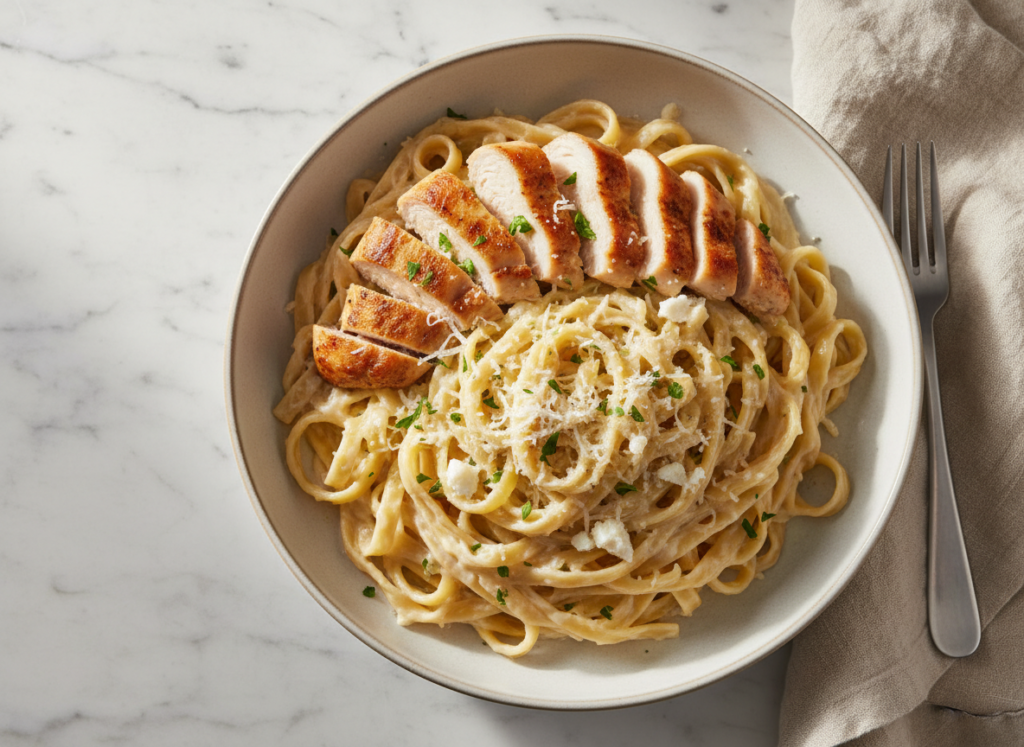
Chicken alfredo should coat every ribbon of fettuccine in a sauce that looks like warm silk, yet the most common complaint about it at home is a sauce that turns grainy, oily or clumpy in the last 60 seconds. The fix isn’t a secret ingredient: it’s heat control and a splash of starchy pasta water. This recipe walks you through a restaurant-style chicken alfredo for 4 in about 40 minutes, and explains exactly where the sauce goes wrong so you can stop it before it happens.
- Recipe
- Chicken Alfredo
- Why This Chicken Alfredo Stays Smooth
- Why Alfredo Sauce Turns Grainy (and How to Stop It)
- Ingredient Notes
- Tips for Restaurant-Style Results
- Mistakes to Avoid
- Substitutions That Work (and One That Doesn't)
- Variations to Try
- Equipment for Chicken Alfredo
- Chicken Alfredo FAQ
- Final Thoughts
At a Glance
- Time: 15 min prep + 25 min cook = 40 minutes
- Serves: 4
- Difficulty: Easy, as long as you watch the heat
- The one thing that makes it work: the cheese goes in off the heat, a handful at a time, with a little starchy pasta water. The sauce never boils once the Parmesan is in.
Recipe
Prep: 15 minutes · Cook: 25 minutes · Rest: 5 minutes (chicken, while the sauce cooks) · Total: 40 minutes · Servings: 4
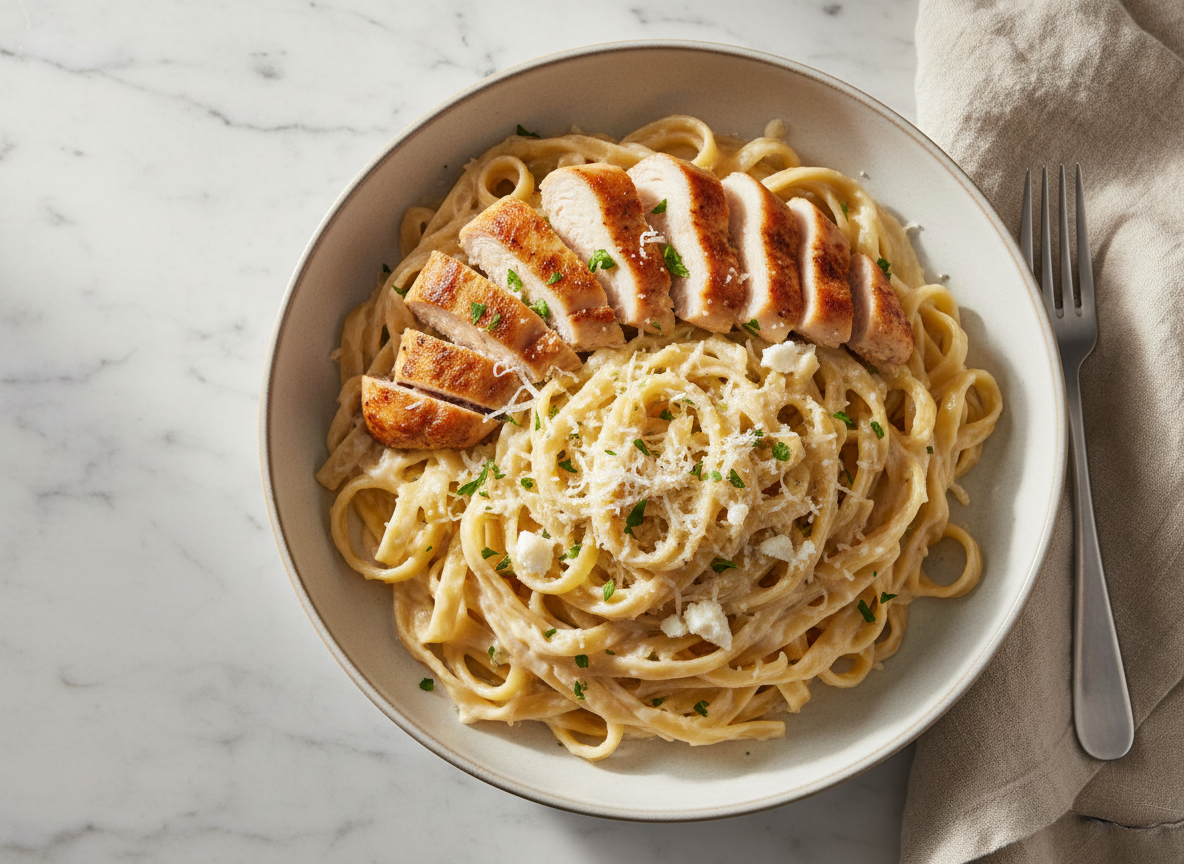
Chicken Alfredo
Ingredients
Method
- Start the water. Bring 3 quarts (2.8 liters) of water and 1 tbsp kosher salt to a boil in a large pot. Using a little less water than usual gives you starchier water for the sauce.
- Prep the chicken. Slice each breast in half horizontally into 2 thin cutlets about 1/2 inch (1.3 cm) thick. Pat dry and season both sides with the 3/4 tsp salt and 1/4 tsp pepper.
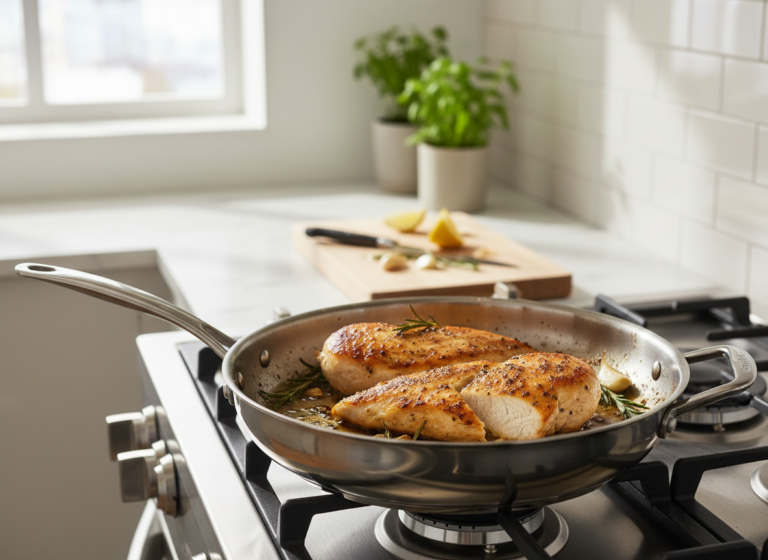
- Sear the chicken. Heat the olive oil and 1 tbsp butter in a 12-inch skillet over medium-high heat until the butter foams. Add the cutlets in one layer and cook without moving them for 3 to 4 minutes, until deep golden underneath. Flip and cook 3 to 4 minutes more, until an instant-read thermometer in the thickest part reads 165°F (74°C). Move to a cutting board and rest 5 minutes, then slice into strips.
- Cook the pasta. Drop the fettuccine into the boiling water and cook 1 to 2 minutes less than the package says, so it is still slightly firm in the center. Before draining, scoop out 1 1/2 cups of the cooking water.
- Build the cream base. While the pasta cooks, lower the skillet to medium-low. Add the 3 tbsp butter and the garlic and stir for 30 to 60 seconds, until fragrant but not browned, scraping up the browned bits from the chicken. Pour in the cream and keep it at a gentle simmer (small bubbles at the edges, never a rolling boil) for 3 to 4 minutes, until it has reduced by about a quarter and lightly coats a spoon.
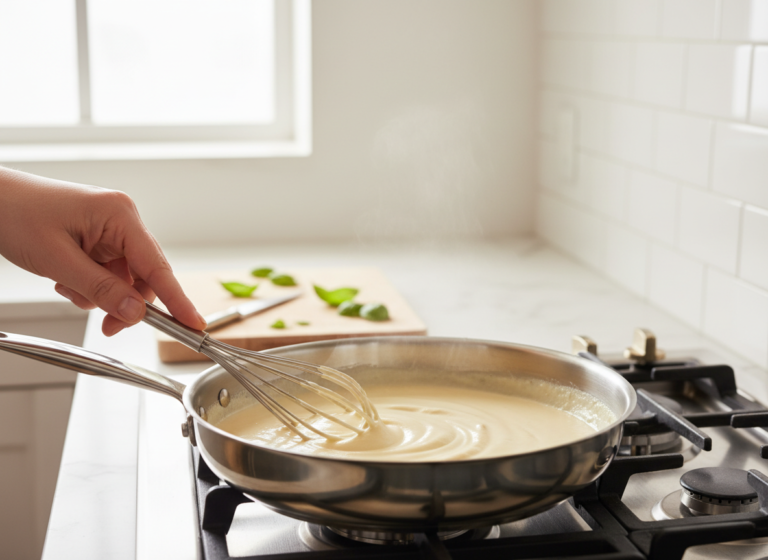
- Take it off the heat. Slide the skillet off the burner and wait about 1 minute, until the bubbling stops completely. Whisk in 1/4 cup of the reserved pasta water.
- Add the cheese in 3 batches. Whisk in the Parmesan a third at a time, letting each handful melt fully before adding the next. The sauce should look smooth and glossy, with no specks or strings. Season with the pepper and the nutmeg, if using.
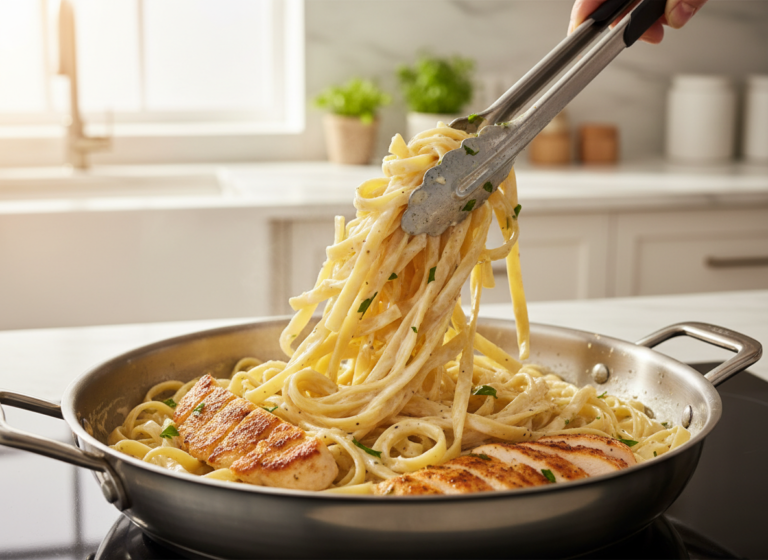
- Toss the pasta. Add the drained fettuccine to the skillet and return it to low heat. Toss with tongs for 1 to 2 minutes, adding pasta water 2 tablespoons at a time, until the sauce clings to every strand and pools slightly in the pan. It should steam gently, not bubble.
- Finish and serve. Fold in the sliced chicken and any juices from the board, plus the parsley. Taste for salt. Serve right away on warm plates with extra Parmesan, loosening with a splash more pasta water if the sauce tightens as it sits.
✓ Kitchen-tested · Nicole cooked this recipe in our kitchen on October 9, 2026. What this means
Why This Chicken Alfredo Stays Smooth
- The cream is reduced before the cheese goes in. A few minutes of gentle simmering thickens the base, so you don’t need flour or extra cheese to get body.
- The cheese never sees a boil. Adding Parmesan off the heat keeps its proteins relaxed, so it melts into the cream instead of tightening into curds.
- Starchy pasta water acts as insurance. The starch helps hold butterfat and cheese together, and it lets you adjust the thickness at the end.
- Thin cutlets cook fast and evenly. Halved breasts sear in about 7 minutes and stay juicy, and the browned bits they leave behind flavor the sauce.
Why Alfredo Sauce Turns Grainy (and How to Stop It)
A grainy or clumpy alfredo almost always comes down to the cheese getting too hot, too fast. Parmesan is mostly protein and fat. When it hits a boiling sauce, the proteins tighten and bond together into stringy clumps, squeezing out fat as they go, which is why a broken sauce looks both sandy and greasy at the same time.
Physicists studying the closely related Roman sauce cacio e pepe described the same behavior in 2025: above a certain temperature the cheese clumps into what they nicknamed a “mozzarella phase,” while enough dissolved starch in the water kept the sauce smooth even when it got hot. You can read the study, “Phase behavior of Cacio e Pepe sauce” in Physics of Fluids. That is exactly why this recipe adds the cheese off the heat and leans on starchy pasta water.
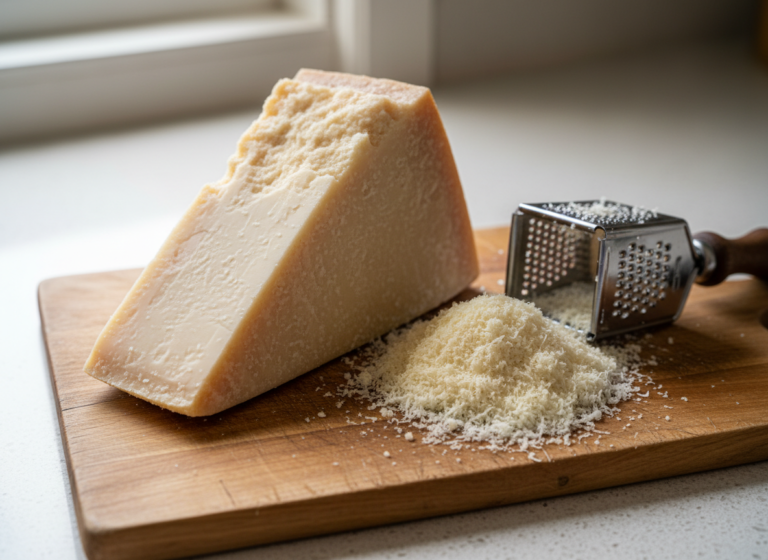
The other usual suspect is the cheese itself. Bagged, pre-shredded Parmesan is usually tossed with an anti-caking agent such as cellulose so the shreds don’t stick together, and that coating also keeps them from melting cleanly into a sauce. Grate your own from a block, as finely as you can: fine, fluffy cheese melts in seconds, while coarse shreds sit in the sauce long enough to overheat. A rotary grater like the Zyliss Classic or a rasp makes quick work of a 4-ounce wedge.
Grainy Sauce Troubleshooting
| What you see | Likely cause | Fix |
|---|---|---|
| Sandy, gritty texture | Cheese added to boiling cream, or pre-shredded cheese | Pull the pan off the heat, add 2-3 tbsp warm pasta water and whisk hard for 30 seconds |
| Oily puddles, sauce separating | Sauce boiled after the cheese went in | Off the heat, whisk in pasta water a spoonful at a time until it comes back together |
| Stringy clumps on the whisk | All the cheese added at once | Add cheese in 3 batches next time; lift out the clumps and keep whisking the rest |
| Thin and watery | Cream not reduced long enough | Simmer the cream 1-2 minutes longer before adding cheese |
| Thick and pasty on the plate | Sauce cooled and tightened | Toss with more pasta water and serve on warm plates |
Once the Parmesan is in, the sauce should steam, never bubble. That single rule prevents most grainy alfredo.
Ingredient Notes
- Parmigiano-Reggiano: the aged Italian cheese melts more smoothly and tastes nuttier than domestic “parmesan” sold in shakers. Buy a wedge; you’ll use about 4 ounces.
- Heavy cream: its high fat content (at least 36% in the US) makes it far less likely to curdle than half-and-half or milk.
- Butter: unsalted lets you control seasoning, since Parmesan is already salty.
- Fettuccine: the wide, flat ribbons hold a cream sauce better than thin spaghetti. Dried works perfectly here.
Tips for Restaurant-Style Results
- Use a thermometer for the chicken. Pull the cutlets at 165°F (74°C); thin pieces overshoot fast, and an instant-read thermometer takes the guesswork out.
- Use the same skillet for chicken and sauce. A stainless steel pan builds browned bits that dissolve into the cream for deeper flavor.
- Warm your plates. A cold plate chills the sauce and makes it tighten within a minute.
- Toss with tongs, not a spoon. Lifting and turning the pasta helps the starch and fat come together into a glossy coating.
Mistakes to Avoid
- Boiling the sauce after the cheese goes in. This is the number one cause of grainy, oily alfredo.
- Dumping in all the cheese at once. A big cold mass melts unevenly and clumps; three handfuls melt cleanly.
- Draining all the pasta water. Without it you have nothing to loosen or rescue the sauce with.
- Browning the garlic. Burnt garlic turns bitter and leaves dark flecks in a pale sauce. Keep the heat at medium-low.
- Letting it sit before serving. Alfredo thickens as it cools, so toss and serve within a few minutes.
Substitutions That Work (and One That Doesn’t)
| Swap | Result |
|---|---|
| Chicken thighs instead of breasts | Juicier and more forgiving; cook boneless thighs to 175°F (79°C) |
| Penne or rigatoni instead of fettuccine | Works well; the sauce collects inside the tubes |
| Half-and-half instead of heavy cream | Thinner sauce that breaks more easily; whisk 1 tsp cornstarch into it before simmering |
| Grana Padano instead of Parmigiano-Reggiano | Milder and slightly softer, melts just as well |
| Pecorino Romano for half the cheese | Sharper and saltier; cut the added salt and watch the heat closely |
| Pre-shredded or canned parmesan | Not recommended: the anti-caking coating keeps it from melting smoothly |
Variations to Try
- Cajun chicken alfredo: season the cutlets with 2 tsp Cajun seasoning instead of salt and pepper (most blends are salty, so taste before salting the sauce).
- Broccoli alfredo: add 3 cups of small broccoli florets to the pasta pot for the last 3 minutes of cooking.
- Mushroom alfredo: brown 8 oz (225 g) sliced cremini mushrooms in the skillet after the chicken, then build the sauce on top.
- Lemon alfredo: stir 1 tsp grated lemon zest into the finished sauce for a brighter, lighter taste.
Equipment for Chicken Alfredo
You don’t need special gear, but three tools make a smooth sauce much easier: a fine grater for the cheese, a wide skillet that can sear the chicken and hold all the pasta, and a fast thermometer.
- Zyliss Classic Rotary Grater — grates a wedge of Parmesan into fine, fluffy shreds that melt fast; the manufacturer lists it as NSF-certified and it comes apart for cleaning. It’s built for hard cheeses, not soft ones like mozzarella.
- All-Clad D3 Stainless Steel 12″ Fry Pan with Lid — a long-standing reference in tri-ply cookware, big enough to toss a full pound of pasta; it’s an investment, and food sticks if the pan isn’t preheated.
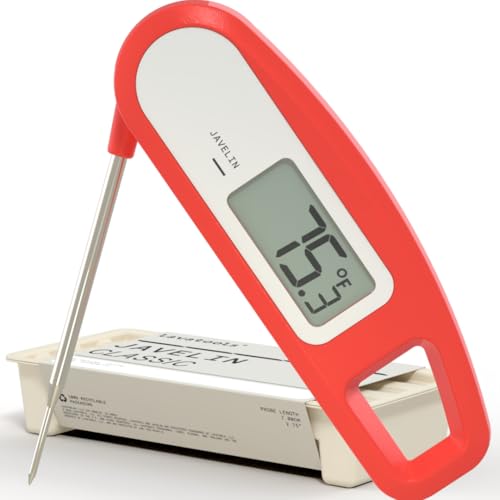
- Lavatools Javelin Instant-Read Thermometer — consistently well reviewed by thousands of verified buyers; the folding 2.75-inch probe is ideal for thin cutlets, though shorter than you’d want for deep pots of oil.
Product picks are research-based: manufacturer specs, verified buyer feedback and independent reviews such as America’s Test Kitchen’s equipment reviews and AmazingRibs. We haven’t tested these specific models ourselves. Last verified: October 9, 2026. How we work.


As an Amazon Associate, we earn from qualifying purchases. Prices are approximate and may change — please verify on Amazon before buying.
Chicken Alfredo FAQ
Can I fix alfredo sauce that has already turned grainy?
Often, yes. Take the pan off the heat right away, add 2 to 3 tablespoons of warm pasta water (or warm cream) and whisk hard for 30 seconds. A mildly grainy sauce usually smooths out; a sauce that has fully split into curds and oil can be improved but rarely becomes perfectly silky again.
Is chicken alfredo an Italian dish?
Only partly. Fettuccine Alfredo traces back to Alfredo di Lelio’s restaurant in Rome in the early 1900s, where it was simply fresh pasta, butter and Parmesan. The cream-based version with chicken is an Italian-American development that became a restaurant staple in the United States.
Can I make chicken alfredo ahead of time?
You can sear and slice the chicken up to 2 days ahead and refrigerate it, but the sauce and pasta are best made right before serving. If you do reheat leftovers, use low heat and a splash of milk or water, stirring constantly, so the sauce doesn’t separate.
Final Thoughts
Great chicken alfredo is less about the ingredient list and more about the last two minutes: reduce the cream, take the pan off the heat, add finely grated cheese in batches and loosen it with pasta water. Follow those steps and the sauce stays glossy instead of grainy. For more cheesy comfort and quick chicken dinners, browse all our weeknight dinner recipes.
Get Our Free Dessert Recipe eBook
Join the Kitchen Unveiled newsletter and get our free dessert recipe eBook when you sign up. Subscribe now and get your free eBook →
You might also like: Creamy Mac and Cheese, 30-Minute One-Pan Chicken and Veggies and Classic Meatloaf.