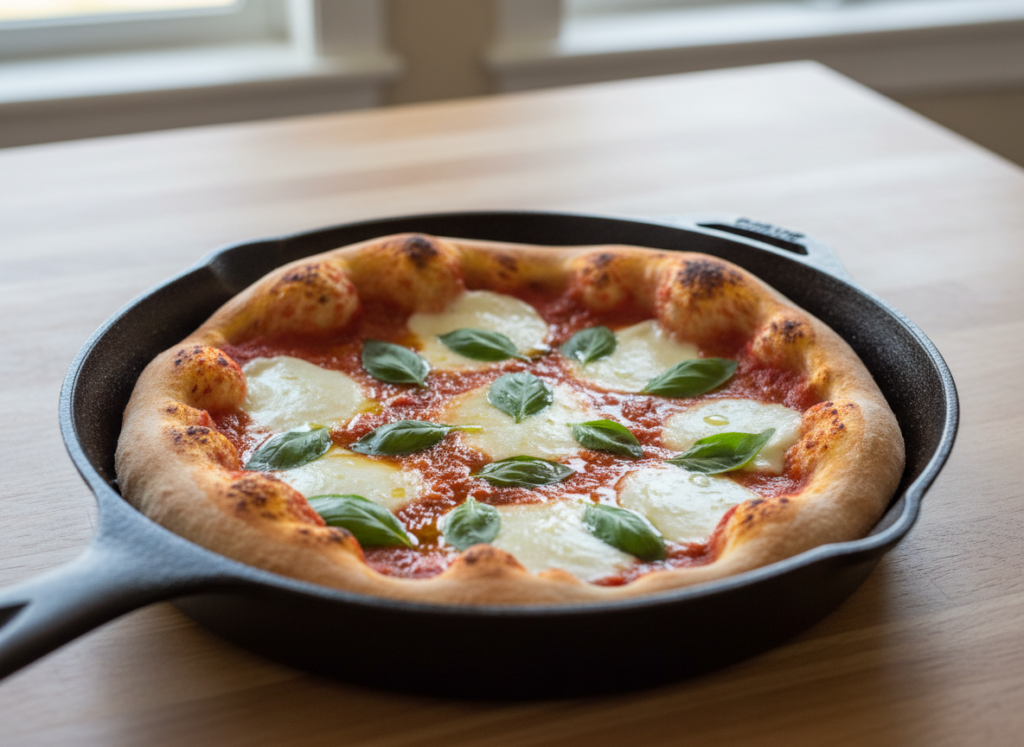
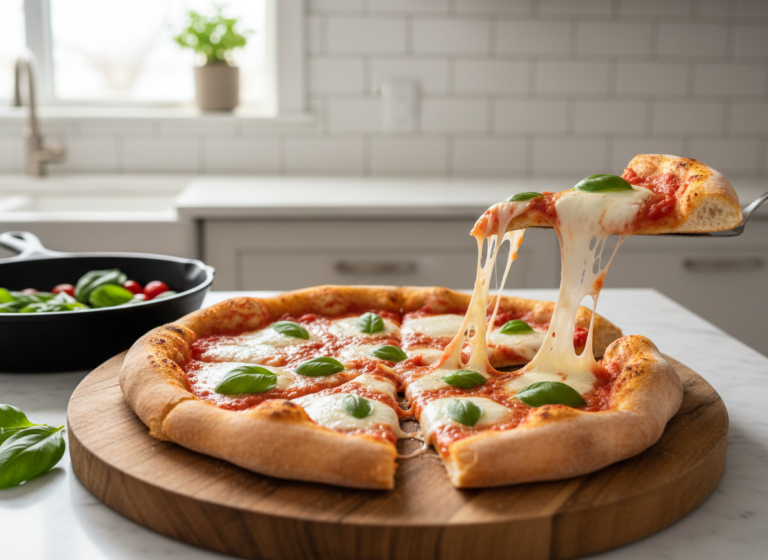
Cast iron skillet pizza is the shortcut to a crisp, browned Margherita when you don’t own a pizza stone or a 900°F oven. You heat the skillet on the burner so the bottom crust starts cooking the second it hits the pan, then slide it under the broiler to puff the edges and melt the mozzarella. The whole cook takes about 10 minutes, and the dough is a simple 4-ingredient mix you can make the same afternoon or up to three days ahead.
At a Glance
- Time: 20 minutes active, 1½–2 hours rise, 10–12 minutes cooking
- Difficulty: Easy, if you can stretch dough and watch a broiler
- Makes: one 12-inch pizza (6 slices), serves 2
- The one thing that makes it work: a preheated skillet on the stove for the bottom, then the broiler for the top
Recipe
Prep: 20 minutes · Rise: 1½–2 hours · Cook: 10–12 minutes · Total: about 2 hours 15 minutes · Servings: 2 (one 12-inch pizza, 6 slices)
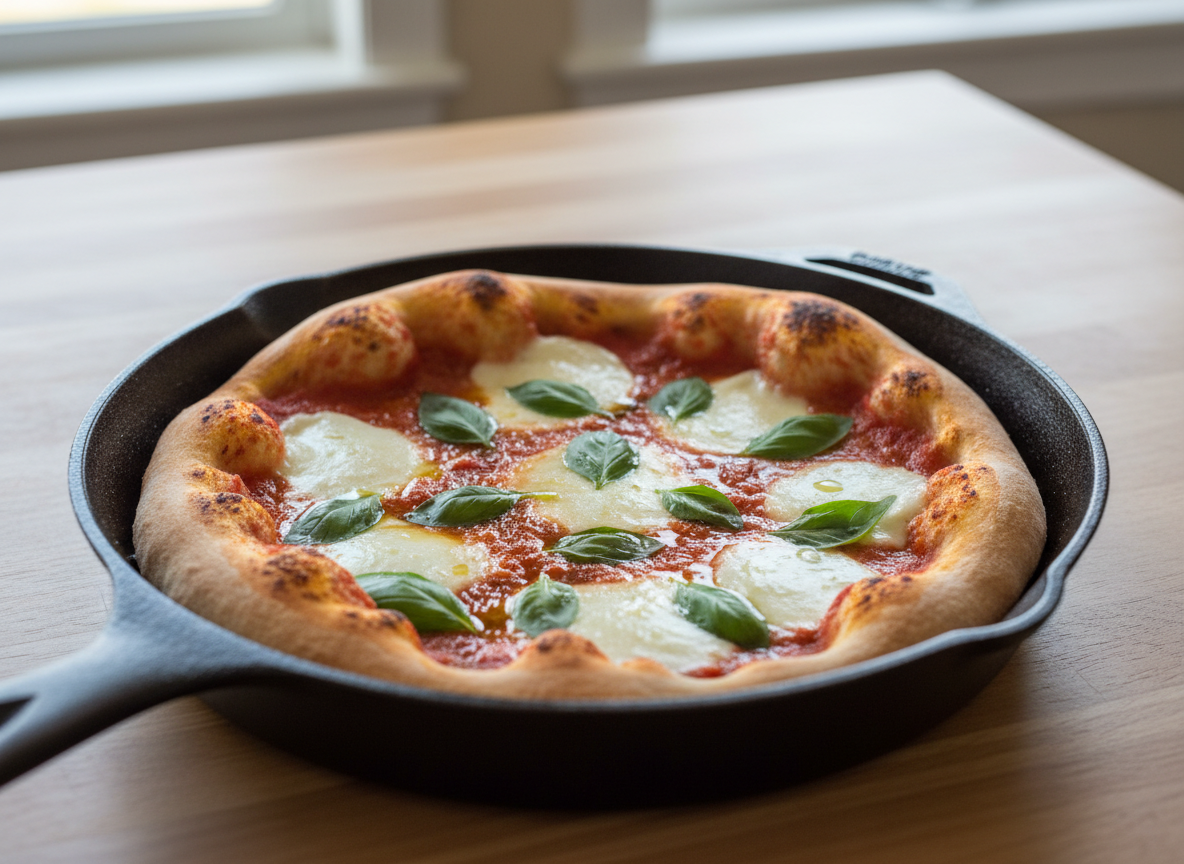
Cast Iron Skillet Pizza Margherita
Ingredients
Method
- Mix the dough. In a medium bowl, whisk the flour, yeast and salt. Add the water and 1 tbsp oil and stir until no dry flour remains. Rest 10 minutes, then knead on the counter for 3–4 minutes, until the dough is smooth and springs back slowly when poked.
- Let it rise. Place the dough in a lightly oiled bowl, cover, and let it rise at warm room temperature for 1½–2 hours, until roughly doubled and puffy. For the overnight version, use ½ tsp yeast and refrigerate the covered dough for 12–72 hours, then let it sit at room temperature for 1–2 hours before shaping.
- Prep the broiler and toppings. Set an oven rack about 6 inches below the broiler and heat the broiler on high for 10 minutes. Stir the crushed tomatoes with a pinch of salt. Pat the mozzarella pieces dry with paper towels.
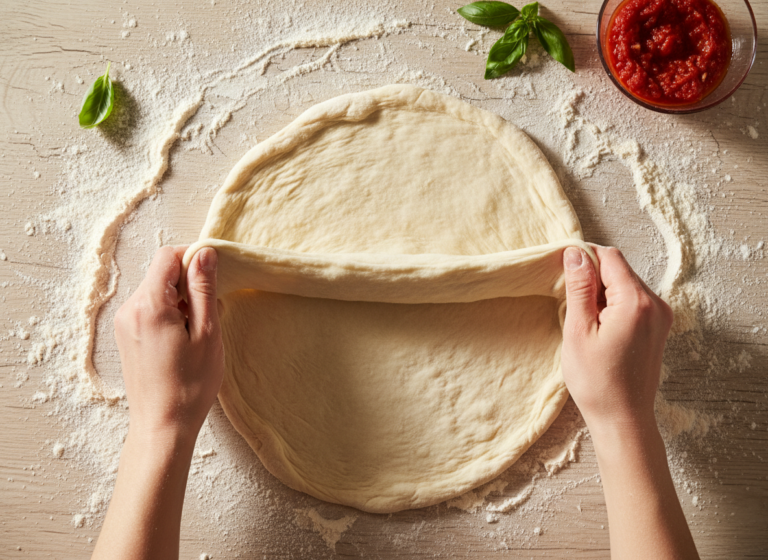
- Shape. On a lightly floured counter, press the dough into a flat disk with your fingertips, then stretch it into a 10- to 11-inch round, leaving the outer ½ inch slightly thicker. If it keeps shrinking back, cover it and rest 5 minutes, then stretch again.
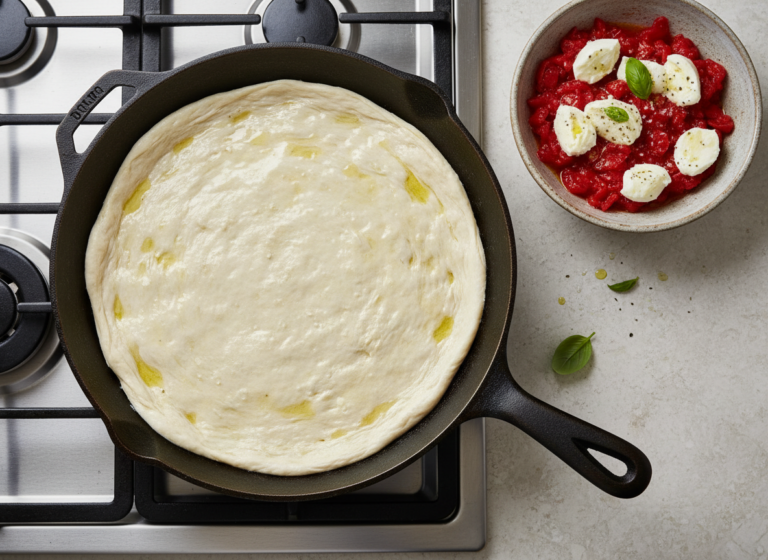
- Heat the skillet. Add 1 tbsp oil to the cast iron skillet and set it over medium heat for about 3 minutes, until the oil shimmers but doesn’t smoke.
- Add the dough and top it fast. Take the skillet off the heat. Drape the dough over your knuckles and lay it in the pan away from you, then nudge the edges flat with a spatula (the pan is very hot). Spread the tomatoes to within ½ inch of the edge, scatter the mozzarella and Parmesan, and return the skillet to medium heat.
- Cook the bottom. Cook for 4–6 minutes, popping any large bubbles with a fork, until the underside is golden brown with darker spots when you lift an edge with the spatula.
- Broil the top. Move the skillet to the rack under the broiler and broil for 3–5 minutes, until the rim is puffed and browned with a few charred spots and the cheese is melted and bubbling. Check after 2 minutes; broilers vary a lot. No broiler? Bake at 500°F (260°C) on the upper rack for 6–8 minutes instead.
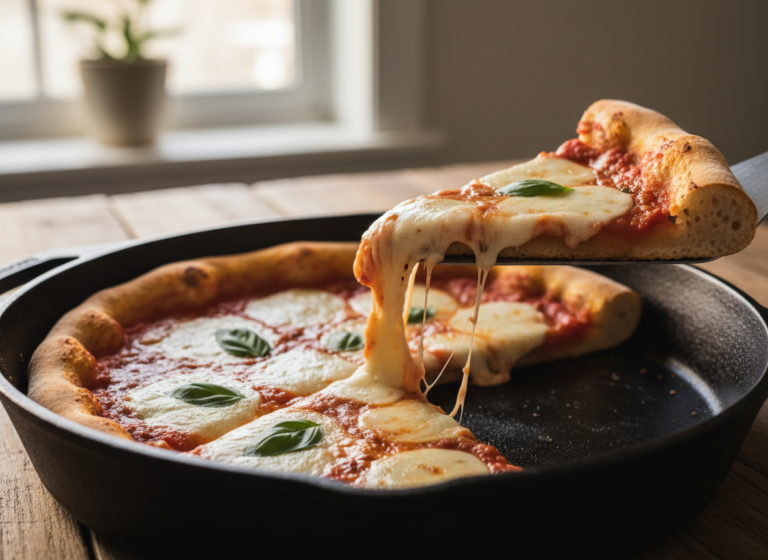
- Finish and slice. With an oven mitt on the handle, set the skillet on the stove. Scatter the basil, drizzle with 1 tsp oil, and rest 2 minutes. Slide the pizza onto a cutting board and cut into 6 wedges with kitchen shears or a pizza wheel.
✓ Kitchen-tested · Nicole cooked this recipe in our kitchen on November 3, 2026. What this means
Why This Cast Iron Skillet Pizza Works
- The burner does the stone’s job. Cast iron holds a lot of heat, so a preheated skillet starts browning the bottom crust immediately instead of slowly warming up with the dough.
- The broiler does the pizza oven’s job. Intense heat from above puffs the rim and blisters the cheese in minutes, before the bottom has time to burn.
- A thin film of oil fries the crust. One tablespoon of oil turns the underside crisp and golden, the signature of a pan pizza.
- Drained tomatoes and dry mozzarella. Less water on top means a crust that stays crisp instead of turning soggy in the center.
Ingredient Notes
Flour. All-purpose flour gives a tender, slightly crisp crust; bread flour makes it chewier. Weighing the flour matters more than which one you pick, because a scooped cup can easily hold 20% too much and turn the dough stiff.
Tomatoes. A classic Margherita uses uncooked crushed tomatoes, not a long-simmered sauce. Canned whole peeled tomatoes, San Marzano style or not, crushed by hand and drained of loose juice, give a bright, fresh flavor and keep excess liquid off the dough.
Mozzarella. Fresh mozzarella melts into creamy pools but carries a lot of water, so tear it, then press it between paper towels for a few minutes. If you prefer an even, stretchy layer and a crisper center, use 4 oz (113 g) shredded low-moisture whole-milk mozzarella instead.
Tips for a Crisp Bottom and Bubbly Top
- Have everything ready before the dough goes in. Once the dough touches hot cast iron, the clock is running; topping it should take under a minute.
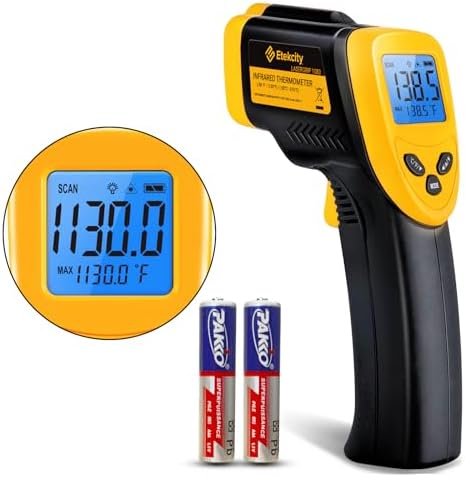
- Read the pan, not just the timer. If the oil smokes, the pan is too hot; pull it off the heat for a minute. An infrared thermometer takes the guessing out: aim for about 400°F (205°C) on the pan surface.
- Lift and look. The underside is ready when it’s golden brown with darker freckles, not pale and not black.
- Stay at the oven door. Under the broiler, cheese goes from bubbling to scorched in about a minute.
Let the burner build the crust and the broiler finish the top: that split is what makes a skillet behave like a pizza oven.
Common Mistakes to Avoid
- Cold dough straight from the fridge. It fights back when you stretch it and cooks unevenly. Give it 1–2 hours on the counter.
- Too much sauce or wet cheese. The center turns gummy. Stick to ⅓ cup of drained tomatoes and dry the mozzarella.
- Grabbing the handle bare-handed. After the broiler, the whole skillet is well above 400°F. Keep a mitt or handle holder on it the entire time.
- Adding basil before broiling. It blackens and turns bitter. Add it once the pizza is out.
Substitutions and Variations
| Swap | Result |
|---|---|
| Bread flour for all-purpose | Chewier crust; you may need 1 extra tsp of water |
| Low-moisture mozzarella for fresh | Even melt, crisper center, less milky flavor |
| Store-bought dough (12 oz / 340 g) | Works well; skip straight to shaping once it’s at room temperature |
| 10-inch skillet instead of 12-inch | Thicker, fluffier crust; add 1–2 minutes on the stove |
| Jarred pizza sauce for crushed tomatoes | Fine, but use only ¼ cup; it’s sweeter and wetter |
Once the basic method feels easy, keep the technique and change the toppings. Add thin slices of pepperoni before broiling, finish with a drizzle of hot honey, or swap the basil for arugula dressed in lemon juice after the pizza comes out. Keep wet toppings like mushrooms or peppers to a single layer, or sauté them first so they don’t flood the crust.
Caring for Your Skillet After Pizza Night
Let the skillet cool until it’s warm, not scorching, then scrape off any stuck cheese with a pan scraper and rinse with hot water. Dry it on the burner for a minute and wipe in a few drops of oil. Our step-by-step guide on how to clean a cast iron skillet covers burnt-on cheese and what to do if a spot of rust appears.
Gear That Helps
You don’t need special pizza equipment for this recipe, just a heavy skillet and a way to handle it safely. These three picks fit the stovetop-to-broiler method:
- Lodge 12-Inch Cast Iron Skillet with Silicone Handle Holder — a long-standing reference in its category, sized for a 6-slice pizza, with a sleeve for the stovetop stage. Buyers most often praise its heat retention; the most common complaint is its weight.
- Etekcity Infrared Thermometer (-58°F to 1130°F) — reads the pan surface in a second, so you know when the skillet is ready for the dough.
- KitchenAid All-Purpose Kitchen Shears — cut a crisp pan pizza cleanly without scratching the skillet; dishwasher-safe with a protective sheath.
Product picks are research-based: manufacturer specs and documentation (such as Lodge’s cast iron use and care pages) and verified buyer feedback, summarized in our own words. We haven’t tested these specific models ourselves. Last verified: October 9, 2026. How we work.


As an Amazon Associate, we earn from qualifying purchases. Prices are approximate and may change — please verify on Amazon before buying.
Frequently Asked Questions
Is this still a real Margherita pizza?
The toppings are the classic trio of tomato, mozzarella and basil that define a pizza Margherita. The crust is different: a true Neapolitan pizza bakes in about 90 seconds in a wood-fired oven, while this skillet version is a home-oven adaptation with a crisper, slightly thicker base.
Can I make cast iron skillet pizza without a broiler?
Yes. Preheat the oven to 500°F (260°C) with a rack in the upper third while the dough rises. After the stovetop stage, bake the skillet for 6–8 minutes, until the cheese bubbles and the rim is browned.
Will the high heat damage my cast iron’s seasoning?
No. Cast iron is made for this kind of heat, and the oil in the pan adds to the seasoning rather than stripping it. Avoid soaking the skillet or leaving it wet afterward; rust, not heat, is what damages it.
Final Thoughts
A cast iron skillet pizza turns one pan, one burner and your broiler into a crisp, bubbly Margherita in about 10 minutes of cooking. Once the dough is made, it’s an easy weeknight dinner, and the same skillet that gives you a golden crust here also handles fried chicken and one-pan suppers. Find more ideas in our Weeknight Dinners collection.
Get Our Free Dessert Recipe eBook
Join the Kitchen Unveiled newsletter and get our free dessert recipe eBook when you sign up. Subscribe now and get your free eBook →
You might also like: Southern Fried Chicken and 30-Minute One-Pan Chicken and Veggies.