
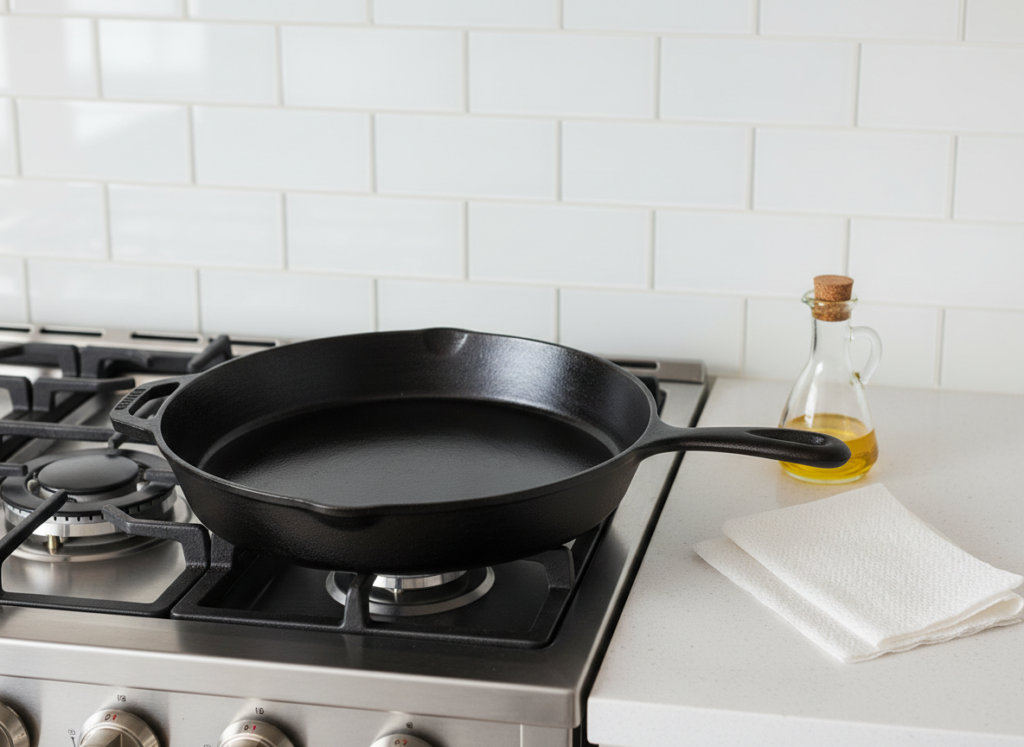
Knowing how to clean a cast iron skillet takes about five minutes to learn and saves you from the two things that ruin one: rust and a sticky, gummy surface. The routine is short (wash, dry with heat, oil lightly) and yes, a little dish soap is fine. If your pan is already orange with rust, the second half of this guide walks you through bringing it back to black.
Quick Answer
- Every time: wash while warm with a little soap and a stiff brush, dry on a burner for 2 to 3 minutes, then rub in about ½ teaspoon of oil.
- Never: soak it, put it in the dishwasher or let it air-dry.
- Rusty? Scrub to bare metal, oil it thinly and bake it upside down at 450 to 500°F (230 to 260°C) for 1 hour.
How to Clean a Cast Iron Skillet After Every Use
This is the whole daily routine. It works for a new pre-seasoned skillet and a 50-year-old hand-me-down alike.
- Clean it while it’s still warm. Food releases far more easily from a warm pan. Wait until you can hold the handle with a folded towel, not straight off high heat: cold water on a very hot pan can warp or crack it.
- Scrape out the food. Use a plastic pan scraper or a wooden spatula to push out leftover bits and wipe away excess grease with a paper towel.
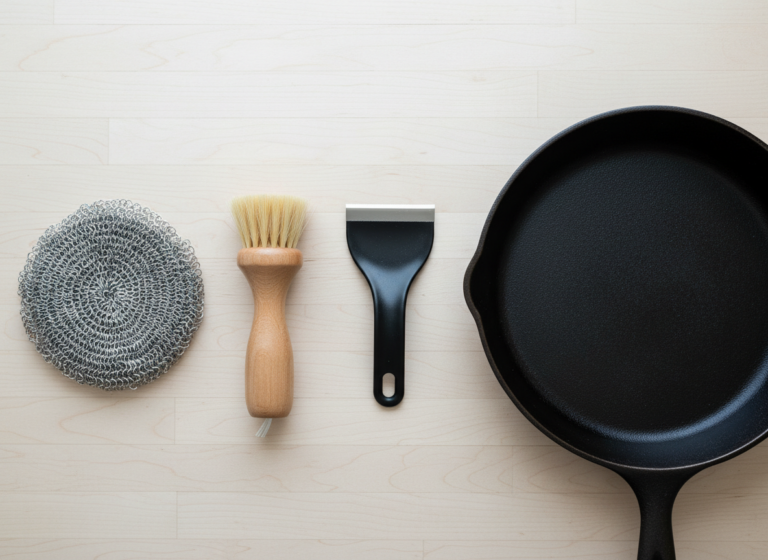
- Wash with warm water and a little soap. One small squirt of dish soap and a stiff brush or a chainmail scrubber is all it takes. Modern dish soap won’t strip a properly baked-on seasoning.
- Loosen anything stuck. Pour in about ½ inch of water, bring it to a simmer for 3 to 5 minutes, then scrape. For a quick dry scrub, a tablespoon of coarse kosher salt and a paper towel works too.
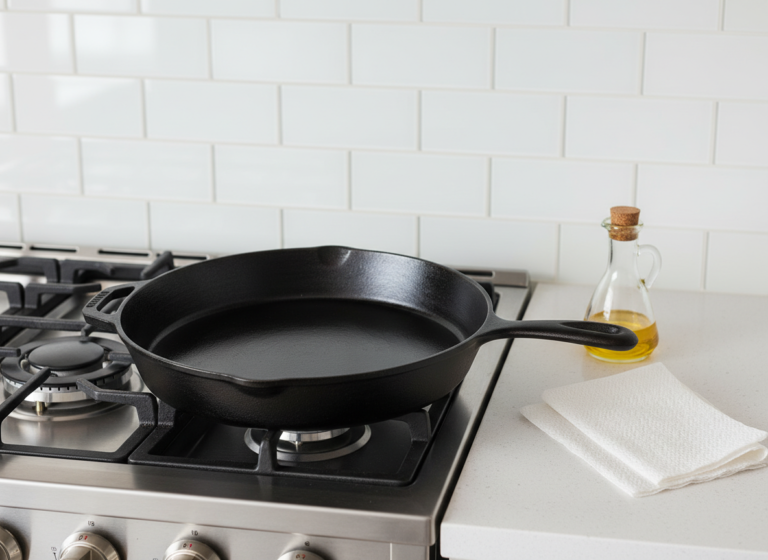
- Dry it with heat. Towel it off right away, then set it on a burner over medium-low for 2 to 3 minutes. It’s done when no damp patches remain and the surface looks evenly dull-dry.
- Oil it lightly. While it’s still warm, add about ½ teaspoon of neutral oil (vegetable, canola or shortening) and rub it over the whole inside with a paper towel. Keep wiping until the pan looks almost dry. It should have a faint sheen, never a greasy film.
Cast Iron Do’s and Don’ts
Do
- Use a little dish soap when the pan is greasy
- Dry it on the stove every single time
- Keep the oil coat paper-thin
- Cook with it often: searing, frying and baking build the seasoning
- Store it dry, with a paper towel between stacked pans
Don’t
- Soak it in the sink, even for an hour
- Put it in the dishwasher
- Let it air-dry on the rack
- Use steel wool for everyday cleaning (save it for rust)
- Store leftovers or tomato sauce in the pan overnight
Seasoning isn’t a coat of oil sitting on the pan. It’s oil baked into a hard layer bonded to the iron. That’s why a quick soapy wash won’t hurt it, but a night in the sink will.
How to Fix Rust on a Cast Iron Skillet
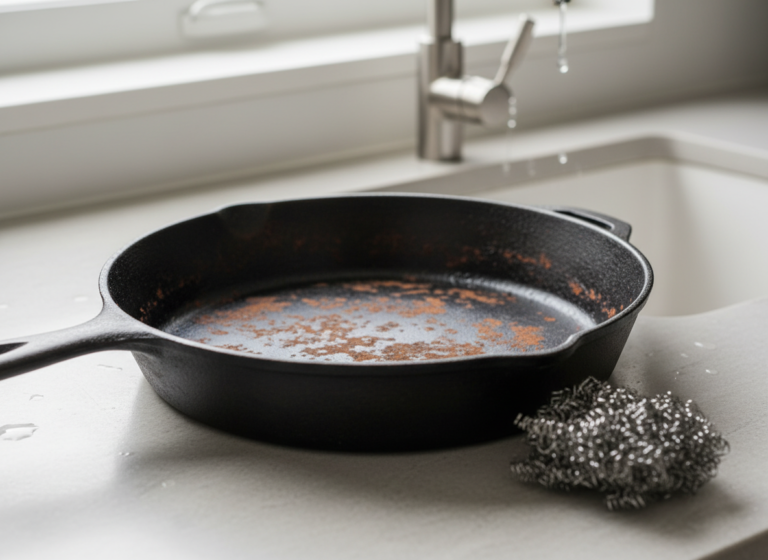
A few small orange specks after a wash only need a scrub, a dry on the burner and a thin coat of oil. For widespread rust or a dull, patchy surface, follow the full restore below. It’s the method Lodge recommends, and it takes about 2 hours, mostly hands-off.
- Scrub off the rust. Use steel wool on every rusty area until no orange remains and the metal looks dull gray.
- Wash and rinse. Use warm, soapy water to remove the rust dust, then rinse well.
- Dry completely. Towel it off, then warm it on a low burner for a few minutes. Bare iron starts to rust again within minutes if it stays wet.
- Oil every surface, very thinly. Rub a small amount of vegetable oil over the inside, outside and handle, then wipe it back until nothing would drip if you tipped the pan.
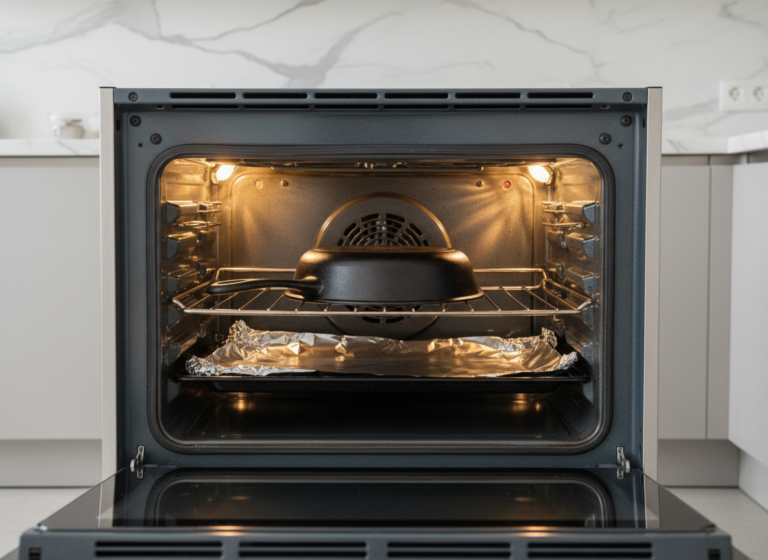
- Bake it upside down. Line the lower rack with aluminum foil, set the skillet upside down on the center rack and bake at 450 to 500°F (230 to 260°C) for 1 hour. Turn on the vent fan: some smoke is normal.
- Let it cool in the oven. Turn the oven off and leave the pan inside until cool. If it still feels sticky, bake it for another hour. If it looks dull, repeat steps 4 to 6.
Troubleshooting Common Cast Iron Problems
| Problem | Likely cause | Fix |
|---|---|---|
| Sticky, tacky surface | Too much oil left on before heating | Bake upside down at 450°F (230°C) for 1 hour; wipe thinner next time |
| Orange spots after washing | Pan left wet or air-dried | Scrub the spots, dry on the burner, oil lightly |
| Black flakes in food | Burnt-on residue or old seasoning flaking | Scrub with a chainmail pad, re-oil; re-season if patchy |
| Eggs and fish stick | Thin seasoning or a cold pan | Preheat 3 to 5 minutes, use a little more fat |
| Dull patches after tomato sauce | Acidic food simmered too long | Wash, dry, oil; keep long acidic simmers for a well-seasoned pan |
| Stale or rancid smell | Too much oil left on in storage | Wash with soap, dry with heat, oil more thinly |
Our Top Picks for Cast Iron Care
A sponge and a paper towel will get you started. These three tools make it faster to clean a cast iron skillet without scratching up the seasoning.
- Lodge Chainmail Scrubbing Pad (about $15–20): stainless steel rings on a silicone core lift stuck-on food without gouging the seasoning. The Kitchn rates it highly; its one limit is grease, so follow with a soapy sponge.
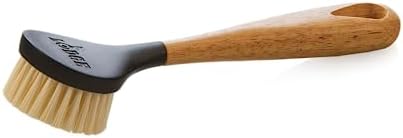
- Lodge 10-Inch Scrub Brush (about $8–12): stiff bristles and a long handle keep your hands away from a hot pan. A long-standing reference in its category.
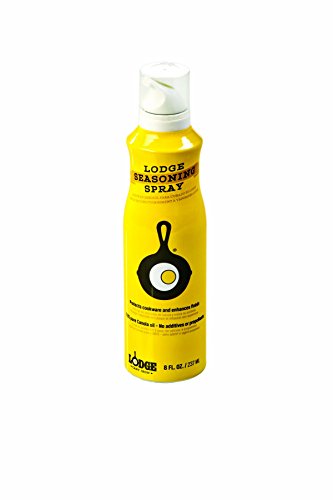
- Lodge Seasoning Spray (about $8–12): canola oil in a spray can, the easiest way to get the very thin, even coat an oven re-season needs.

Research-based picks: based on manufacturer specifications, verified buyer feedback and published reviews. We haven’t tested these specific products ourselves (how we work). Last verified: September 30, 2026.
As an Amazon Associate, we earn from qualifying purchases. Prices are approximate and may change — please verify on Amazon before buying.
Frequently Asked Questions
Can you use soap on cast iron?
Yes. Old soaps contained lye, which could eat into the finish, but modern dish soap is mild. Seasoning is oil that has been heated until it polymerizes into a hard layer, and a quick wash with a little soap doesn’t remove it. Soaking and scouring are what do the damage.
Can a cast iron skillet go in the dishwasher?
No. The long hot-water cycle and harsh detergent strip the seasoning and almost always leave rust behind. Hand-wash it and dry it on the stove instead.
How often should I re-season my skillet in the oven?
Only when it needs it: after rust, or when the surface turns dull, patchy or sticky. The thin coat of oil you add after each wash, plus regular cooking, maintains the seasoning the rest of the time.
Put Your Clean Skillet to Work
The best way to keep a cast iron skillet in shape is to cook in it. These recipes are a great fit for one: Crispy Southern Fried Chicken builds seasoning fast, Crispy French Toast gets its golden edges from even heat, and Easy Shrimp Tacos need a hot pan for a quick sear. For more practical techniques, browse our kitchen hacks and how-tos.
Get Our Free Dessert Recipe eBook
Join the Kitchen Unveiled newsletter and get our free dessert recipe eBook when you sign up. Subscribe now and get your free eBook →
You might also like: How to Meal Prep Like a Pro and Pantry Staples for Delicious Meals.