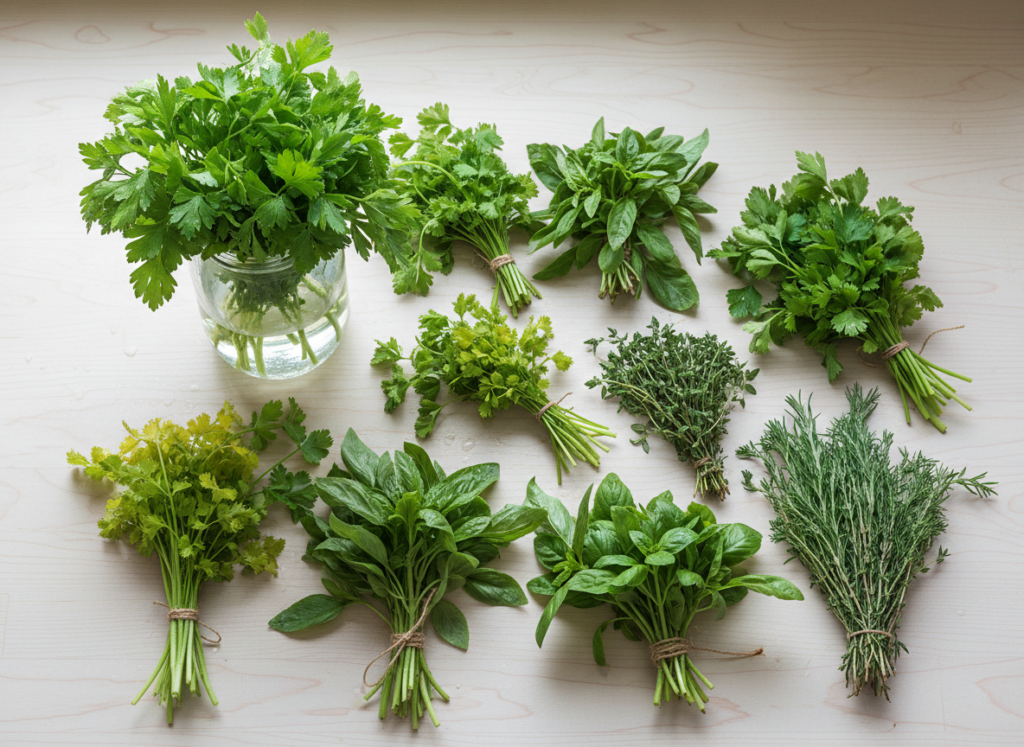
Knowing how to store fresh herbs comes down to one question: is the stem soft and green, or woody and tough? Get that right and a $2 bunch of cilantro lasts well past taco night instead of turning to black slime in the crisper drawer by Thursday. Below you’ll find the two methods that matter, a herb-by-herb chart with realistic storage times, freezing options, and the handful of mistakes that wilt herbs fastest.
Quick Answer
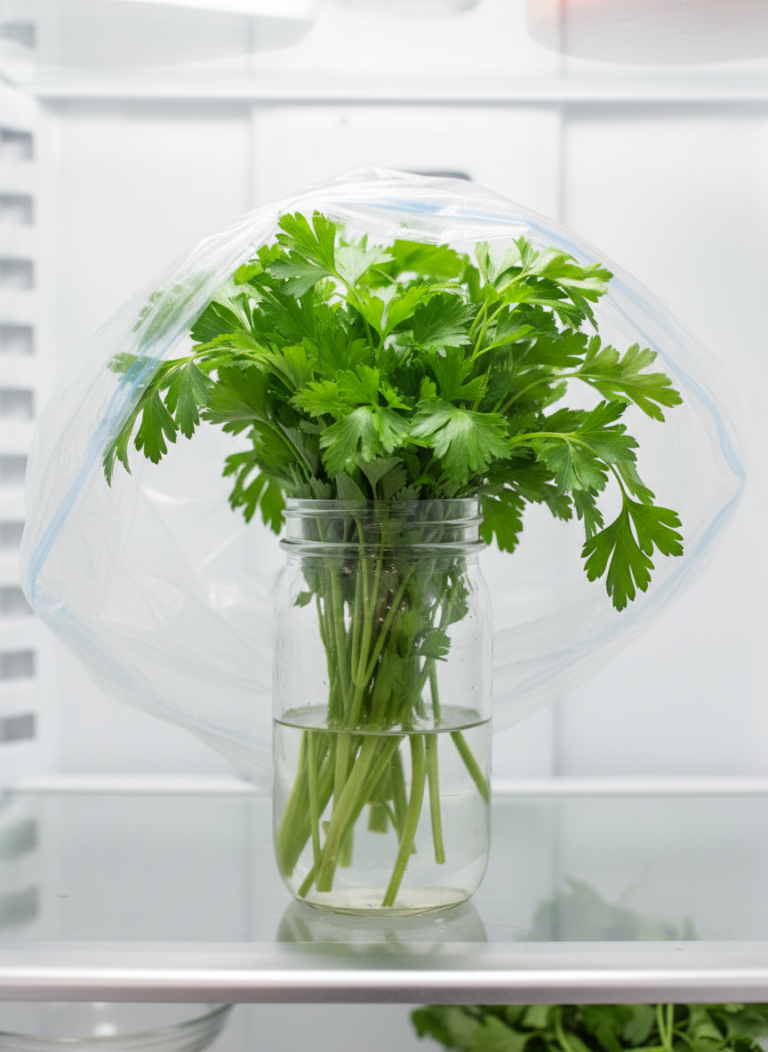
- Tender herbs (parsley, cilantro, dill, mint): trim the stems, stand them in a jar with about 1 inch of water, cover loosely with a bag and refrigerate. Expect roughly 1 to 2 weeks.
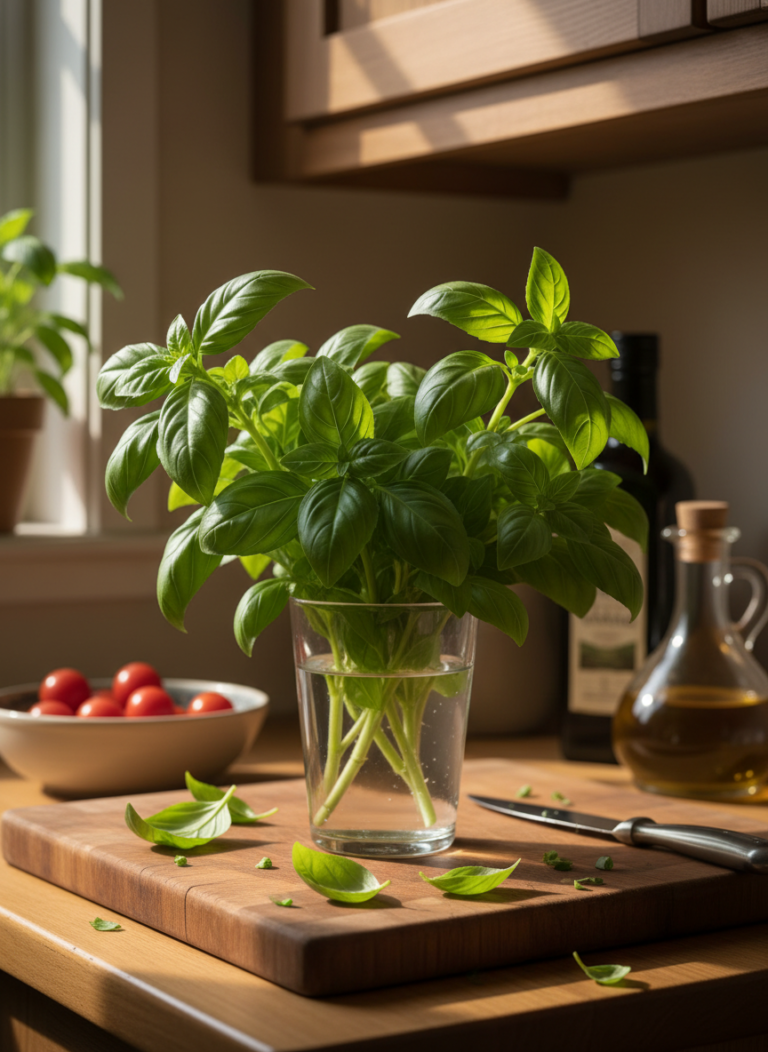
- Basil: same jar, but on the counter, out of direct sun. The fridge blackens its leaves.
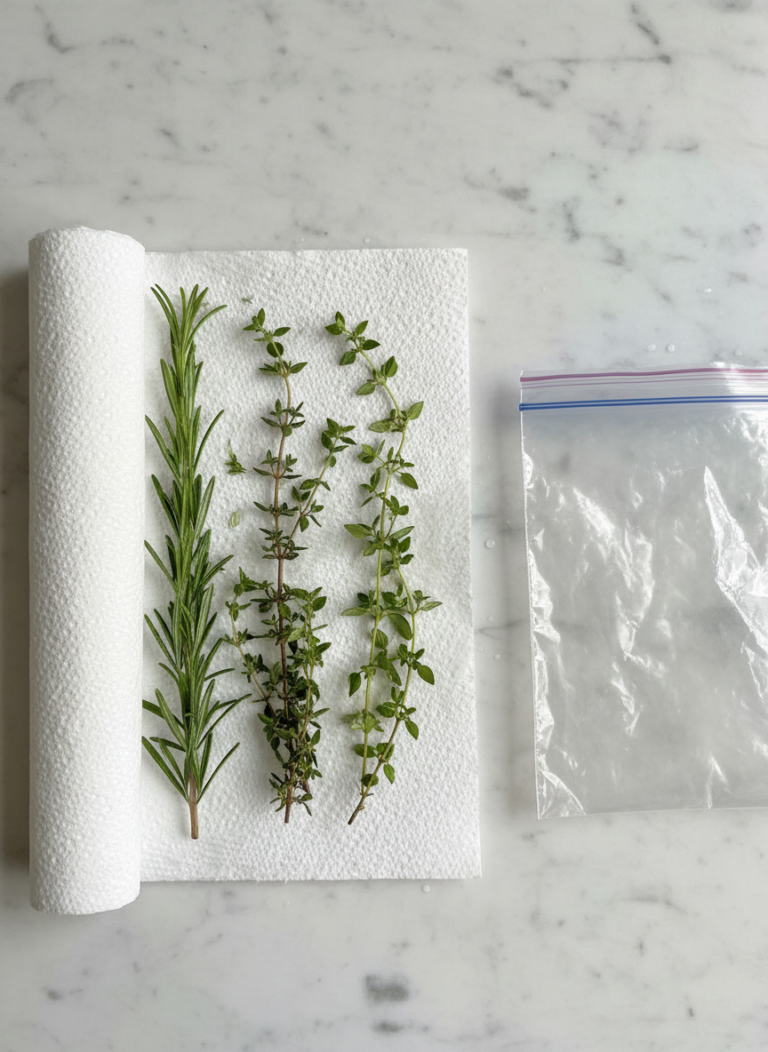
- Woody herbs (rosemary, thyme, sage, oregano): roll them in a barely damp paper towel, seal in a bag or container and refrigerate. Expect roughly 2 to 3 weeks.
- Too many to use? Chop and freeze them in oil or water in an ice cube tray.
Why Fresh Herbs Wilt So Fast
Cut herbs keep breathing and losing water after harvest, and their thin leaves have very little reserve. Too little moisture and they go limp and papery. Too much, especially water pooled on the leaves, and they turn dark and slimy within days.
Every good storage method is simply a way to balance those two problems: keep the stems hydrated or the air around the leaves humid, while keeping the leaves themselves dry. Cold slows everything down, which is why most herbs belong in the fridge. Basil is the big exception, because it suffers chilling injury at typical refrigerator temperatures.
How to Store Fresh Herbs by Type
Tender Herbs: the Bouquet Method
Soft-stemmed herbs like parsley, cilantro, dill, mint and tarragon do best treated like cut flowers. The stems keep drinking, so the leaves stay perky.
- Remove the twist tie or rubber band and pick out any yellow or slimy sprigs.
- Trim about ½ inch off the stems with a sharp knife or scissors.
- Stand the bunch in a jar or glass with about 1 inch of water. Only the stems should touch the water, never the leaves.
- Drape a loose plastic produce bag over the top so humidity stays in but air can still move.
- Refrigerate on a shelf toward the front, not against the back wall, where the coldest air can nip the leaves.
- Change the water every 2 days, or as soon as it looks cloudy.
Basil: the Counter Exception
Basil gets the same jar of water, but it stays on the counter at room temperature, away from direct sunlight and away from the stove. In the fridge its leaves bruise and turn black within a day or two. Leave the bag off, or keep it very loose, so condensation doesn’t form on the leaves.
Woody Herbs: the Damp Towel Method
Rosemary, thyme, sage and oregano have tough stems that don’t drink much water, and their leaves rot if they sit wet. They need gentle, steady humidity instead.
- Dampen a paper towel, then wring it out until it feels barely moist, not wet.
- Lay the sprigs on it in a single layer and roll it up loosely.
- Slide the roll into a zipper-lock bag or a lidded container and press out most of the air.
- Store in the crisper drawer or on a shelf, and check the towel every few days. Re-dampen it if it has dried out, replace it if it feels soggy.
This towel-and-bag method works well for cilantro too. In America’s Test Kitchen’s herb keeper testing, cilantro wrapped this way stayed usable for weeks, almost as long as in a dedicated herb keeper with a water reservoir.
Herb Storage Chart: Method and How Long It Lasts
Use this chart as a starting point. Real shelf life depends on how fresh the bunch was at the store and how cold your fridge runs (aim for 37 to 40°F, or 3 to 4°C).
| Herb | Best method | Typical freshness |
|---|---|---|
| Parsley (flat or curly) | Jar of water, loose bag, fridge | 1 to 2 weeks |
| Cilantro | Jar in fridge, or damp towel in a bag | 1 to 2 weeks, often longer |
| Dill | Jar of water, loose bag, fridge | About 1 week |
| Mint | Jar of water, loose bag, fridge | 1 to 2 weeks |
| Chives | Damp towel in a bag, fridge | About 1 week |
| Basil | Jar of water on the counter, out of sun | About 1 week, longer with fresh water and trimming |
| Rosemary, thyme | Damp towel in a bag, fridge | 2 to 3 weeks |
| Sage, oregano | Damp towel in a bag, fridge | 1 to 2 weeks |
Those numbers are typical, not maximums. In controlled testing, America’s Test Kitchen kept cilantro and thyme fresh for well over a month with careful storage, so a bunch that outlasts the chart isn’t unusual.
Treat soft herbs like cut flowers and woody herbs like delicate greens: water for the stems, a damp towel for the leaves, never a puddle.
Should You Wash Herbs Before Storing Them?
Usually, no. Most guidance, including EUFIC’s, is to store herbs unwashed and rinse them right before cooking, because leftover water on the leaves speeds up rot.
The exception is a gritty bunch, like sandy cilantro or garden-picked herbs. Swish it in a bowl of cold water, lift it out, then dry it completely before storing. A small salad spinner such as the OXO Good Grips Small Salad & Herb Spinner does this in seconds; a few minutes on a clean kitchen towel works too.
How to Freeze Fresh Herbs
Freezing is the answer when you bought a big bunch for one recipe. Frozen herbs lose their crisp texture, so save them for soups, sauces, stews, curries and marinades rather than garnishes.
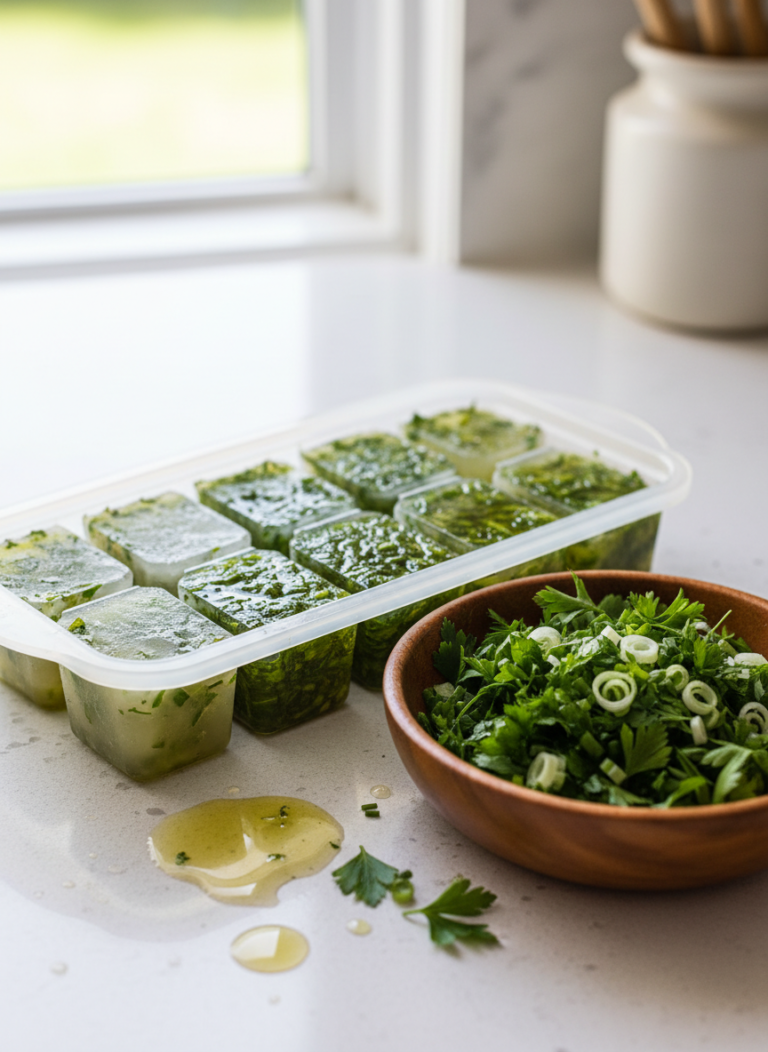
- Wash and dry the herbs thoroughly, then strip the leaves and chop them finely.
- Pack about 1 tablespoon of chopped herbs into each well of an ice cube tray.
- Cover with olive oil (best for sautéing) or water (best for soups and stews).
- Freeze until solid, about 4 hours, then pop the cubes into a labeled freezer bag.
- Drop cubes straight into the pan or pot. No need to thaw.
For best flavor, use frozen herb cubes within about 3 months. A lidded tray like the OXO Good Grips No-Spill Ice Cube Tray keeps freezer odors out of the cubes. Parsley, cilantro, dill and chives freeze best; basil darkens but keeps its flavor for pesto-style sauces.
Food Safety Note: Herbs in Oil
Fresh herbs covered in oil create a low-oxygen environment where botulism bacteria can grow. Never keep a homemade herb-and-oil mix at room temperature. Freeze it, or refrigerate it and use it within 4 days, as recommended in Food Protection Trends.
Mistakes That Wilt Herbs Fast
| Problem | Likely cause | Fix |
|---|---|---|
| Black, slimy leaves | Wet leaves or a soggy towel | Dry herbs fully; wring the towel until barely damp |
| Basil turns black overnight | Stored in the fridge | Keep basil in water on the counter |
| Limp, papery parsley | Left in the store bag, stems dried out | Trim stems, stand in water, cover loosely |
| Leaves frozen and translucent | Stored at the back of the fridge | Move to a front shelf or the door |
| Cloudy, smelly jar water | Water not changed | Refresh every 2 days; pick out soft sprigs |
Two more habits help: keep herbs away from ethylene-heavy produce like apples and bananas, and don’t pack them tight in an airless bag. Crushed leaves bruise and break down first.
Tools That Keep Herbs Fresh Longer
A mason jar and a roll of paper towels already cover the basics. These three tools are worth it if you buy herbs every week or tend to forget them in the back of the fridge.
- Cole & Mason Fresh Herb Keeper — a tall, vented container with a water reservoir; the top pick in America’s Test Kitchen’s herb keeper testing, and the hard shell stops bunches from getting crushed. Some buyers say the hinge feels flimsy.
- OXO Good Grips Small Salad & Herb Spinner — a compact pump spinner that dries washed herbs in seconds; buyers often praise its size, though a few find it pricey for a small spinner.
- OXO Good Grips No-Spill Ice Cube Tray — a silicone-lidded tray for freezing herbs in oil or water without picking up freezer smells; feedback on how tightly the lid seals is mixed.


Product picks are research-based: manufacturer specs, verified buyer feedback and independent reviews such as America’s Test Kitchen’s herb keeper testing. We haven’t tested these specific models ourselves. Last verified: October 9, 2026. How we work.
As an Amazon Associate, we earn from qualifying purchases. Prices are approximate and may change — please verify on Amazon before buying.
Put Your Herbs to Work
The best storage trick is a plan. Cilantro is the star of our shrimp tacos with cilantro-lime sauce and the finishing touch on chicken tikka masala, so one bunch can cover two dinners.
If you prep on Sundays, add herb washing and jarring to the routine in our meal prep guide, and keep dried backups in rotation with our pantry staples list. More practical guides live in Kitchen Essentials.
Fresh Herb Storage FAQ
Why does basil turn black in the fridge?
Basil is a warm-weather plant and is sensitive to cold. At typical refrigerator temperatures its leaves suffer chilling injury, which shows up as dark, water-soaked patches. Research from the UC Davis Postharvest Center notes the damage depends on both temperature and time, so keep basil on the counter in water.
Can you revive wilted herbs?
Often, yes, if they’re limp but not slimy. Trim the stems and soak the herbs in a bowl of ice water for 15 to 30 minutes, then dry them well. Leaves that are dark, mushy or smell off should go in the compost.
Is an herb keeper better than a jar?
Only slightly. In America’s Test Kitchen’s testing, a jar of water and the damp-towel-and-bag method came close to the best herb keeper. A keeper’s real advantages are convenience and a hard shell that protects herbs from being squashed in a crowded fridge.
The Bottom Line
Sort your herbs the moment you get home: tender ones in a jar of water, basil on the counter, woody ones rolled in a damp towel. That five-minute habit turns a bunch that would have wilted in three days into one that lasts one to three weeks, and the freezer catches whatever’s left.
Get Our Free Dessert Recipe eBook
Join the Kitchen Unveiled newsletter and get our free dessert recipe eBook when you sign up. Subscribe now and get your free eBook →
You might also like: How to Meal Prep Like a Pro and Pantry Staples for Delicious Meals.