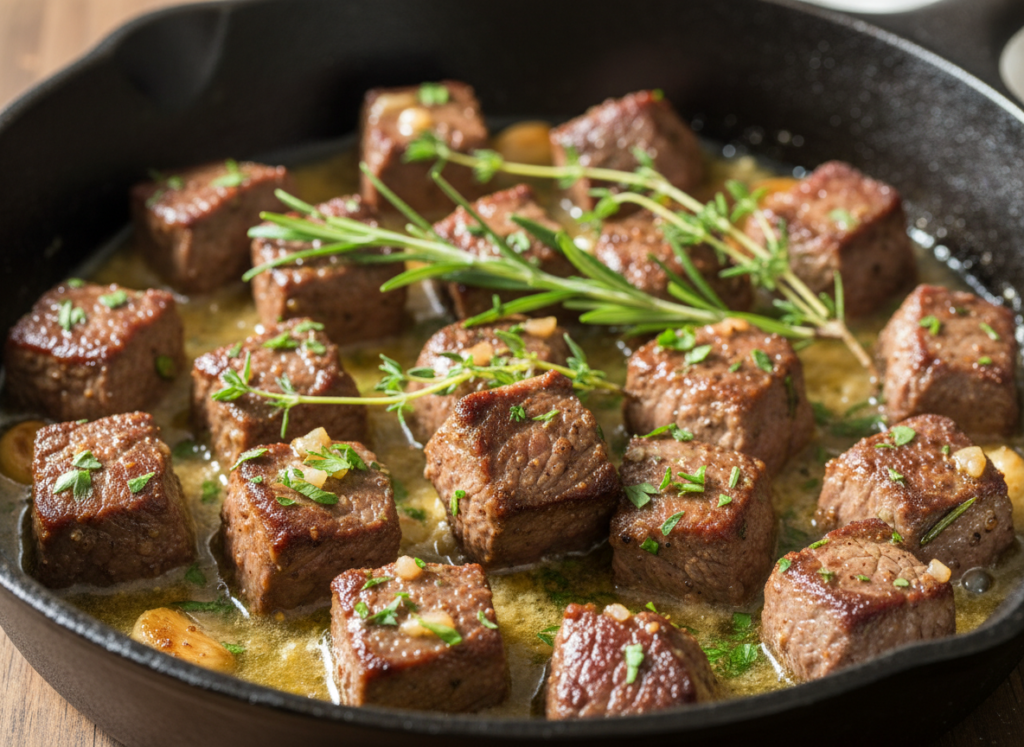
Garlic butter steak bites live or die by one thing: the crust. Cut sirloin into cubes, drop them into a properly preheated 12-inch cast iron skillet, give them room, and each piece comes out deeply browned outside and rosy inside. Skip any of those steps and you get gray, steamed beef sitting in a puddle of juice. This recipe walks through the cast iron sear in detail, then finishes everything in a quick garlic butter that clings to every bite.
At a Glance
- Time: 10 min prep, 15 min cook, 3 min rest (28 min total)
- Serves: 4
- Difficulty: Easy, as long as the pan is hot
- The one thing that makes it work: very dry beef seared in two batches in a fully preheated cast iron skillet, with the butter and garlic added only at the end
Recipe
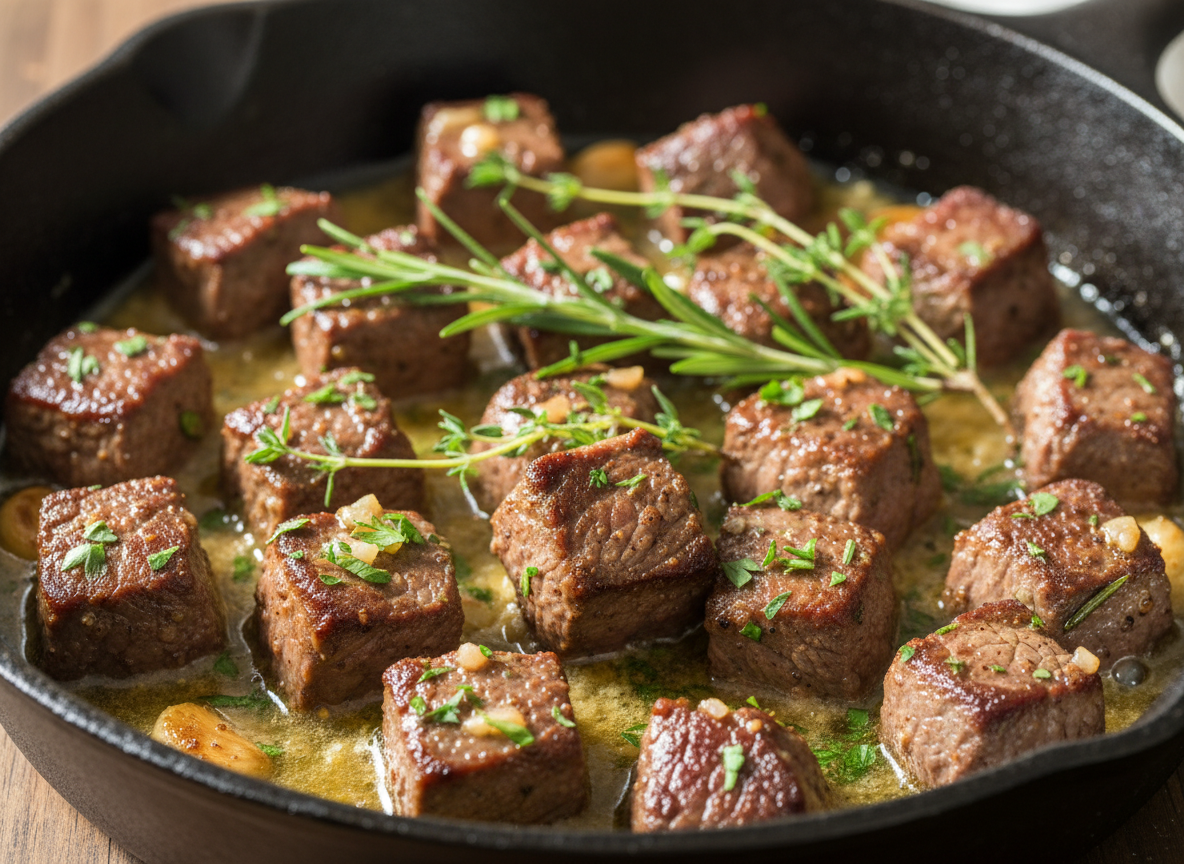
Garlic Butter Steak Bites
Ingredients
Method
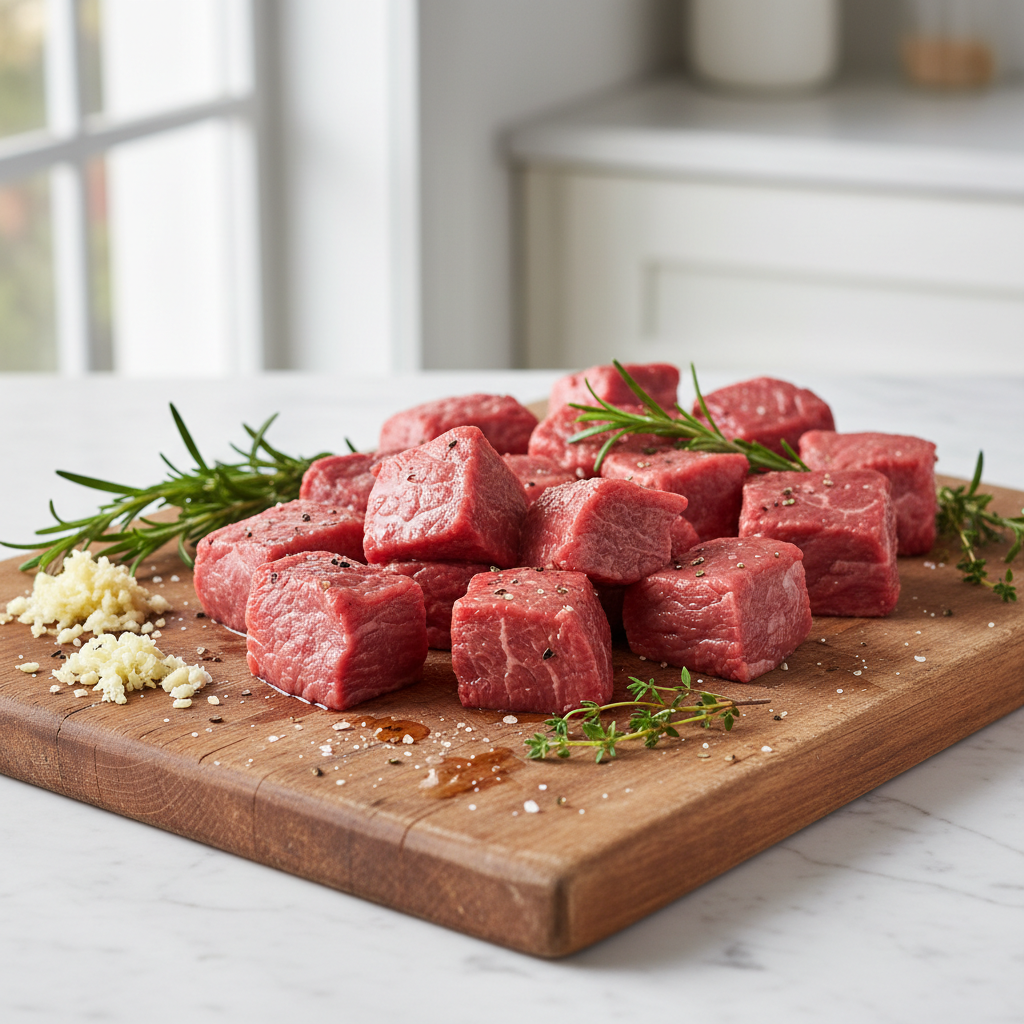
- Dry and season the beef. Spread the cubes on a plate lined with paper towels and blot the tops until no moisture shows. Season all over with the salt and pepper right before cooking.
- Preheat the skillet. Set a 12-inch cast iron skillet over medium heat for 4 to 5 minutes, then raise the heat to medium-high for 1 to 2 minutes. Add the oil and swirl. The pan is ready when the oil shimmers and the first thin wisps of smoke appear.
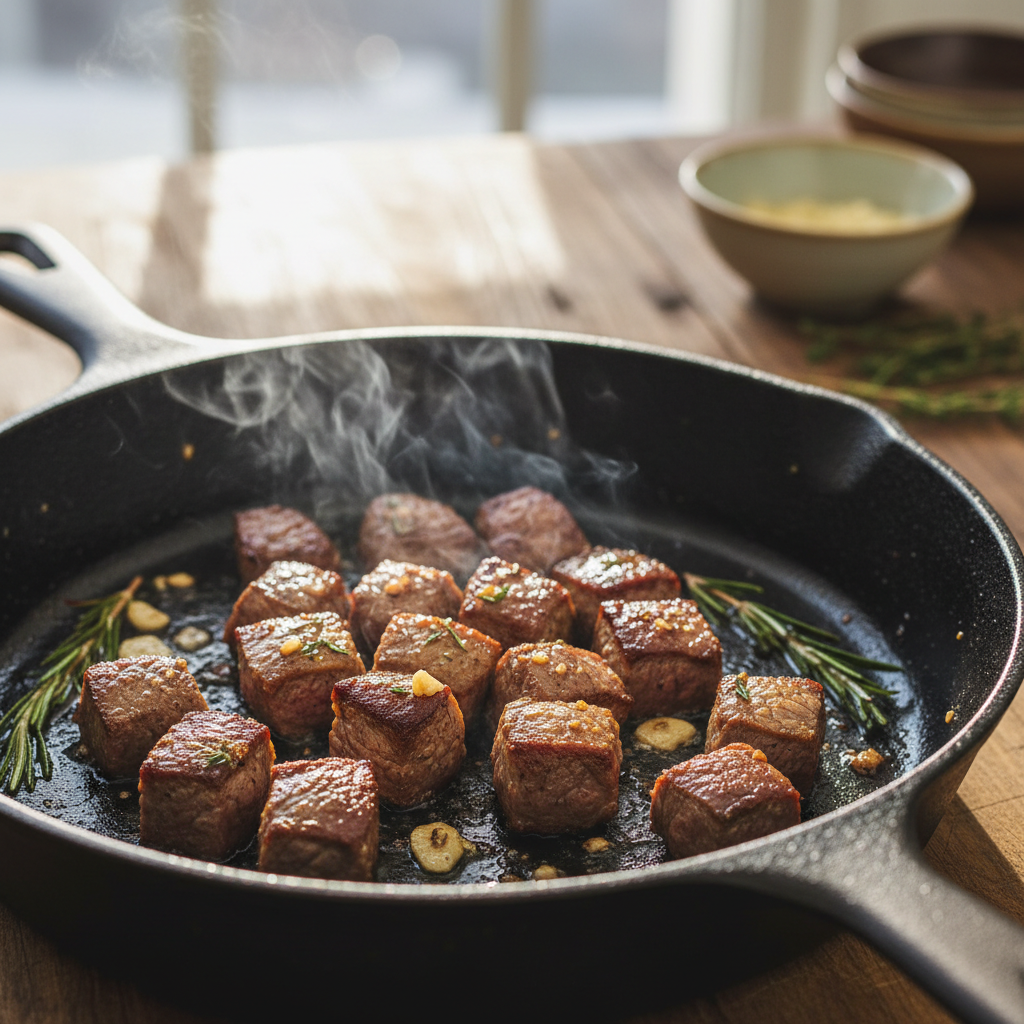
- Sear the first batch. Add half the cubes in a single layer with about ½ inch between pieces. Leave them alone for 2 minutes, until the bottoms are deep brown and release easily from the pan. Turn with tongs and sear 1 to 2 minutes more, browning one or two more sides. Move to a clean plate.
- Sear the second batch. Let the pan reheat for 30 to 60 seconds, until the oil shimmers again (add a few drops of oil if the surface looks dry). Sear the remaining cubes the same way and add them to the plate.
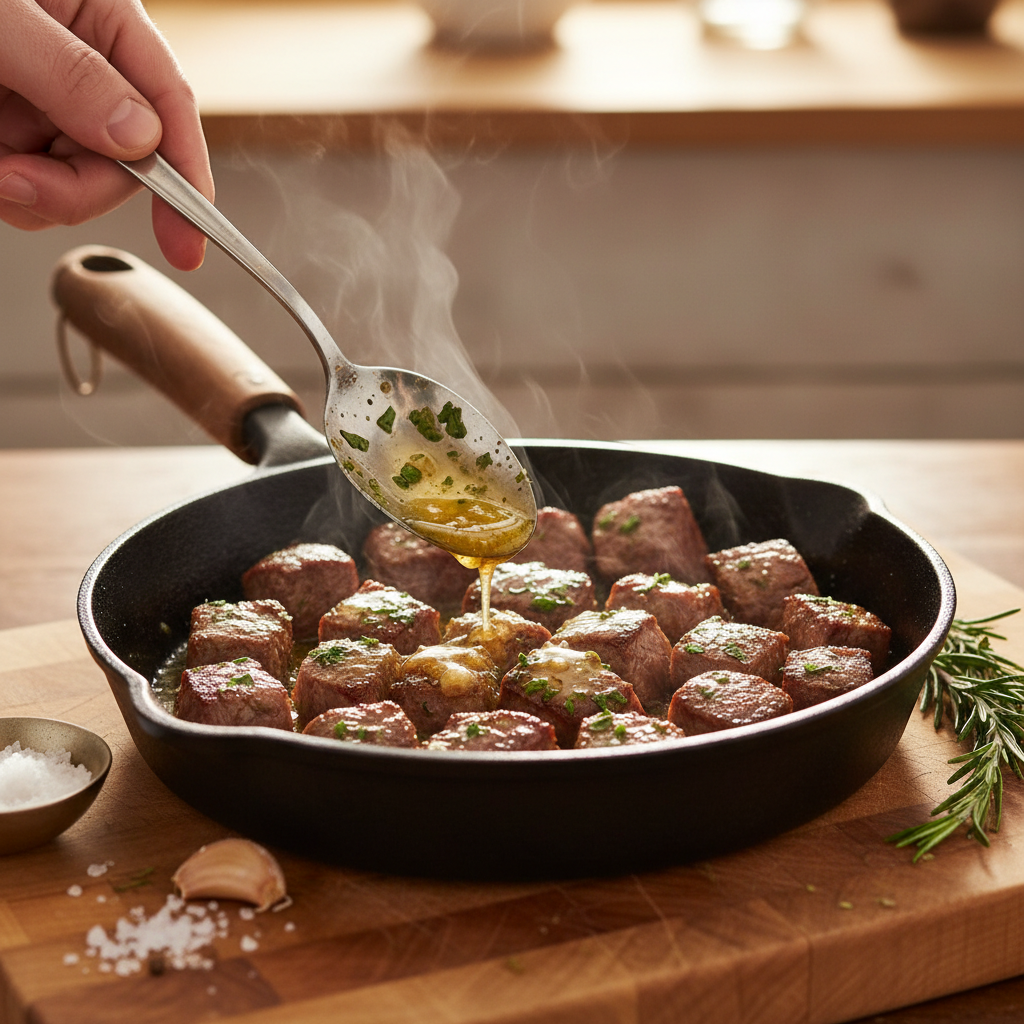
- Make the garlic butter. Turn the heat down to medium-low and let the pan cool for about 30 seconds. Add the butter and swirl until it melts and foams. Stir in the garlic, thyme and pepper flakes (if using) and cook 30 to 60 seconds, until fragrant and pale gold. Don’t let the garlic brown.
- Toss and finish. Return the steak and any juices from the plate to the skillet and toss for 30 to 45 seconds, until glossy. Take the pan off the heat and add the lemon juice (if using) and parsley.
- Check and rest. An instant-read thermometer in the center of a larger cube should read 130 to 135°F (54 to 57°C) for medium-rare, or 145°F (63°C) to meet the USDA guideline. Let the steak bites rest for 3 minutes, then serve with the butter from the pan spooned over them.
✓ Kitchen-tested · Nicole cooked this recipe in our kitchen on October 23, 2026. What this means
Why These Garlic Butter Steak Bites Get a Real Crust
- Cast iron holds its heat. A heavy, preheated skillet doesn’t crash in temperature when cold beef hits it, so the surface browns instead of boiling in its own juice.
- Dry surfaces brown faster. Any water on the meat has to evaporate before browning can start. Blotting the cubes buys you a crust in 2 minutes instead of 5, so the centers stay pink.
- Two batches, not one. A crowded pan traps steam. Half the beef at a time keeps every cube in direct contact with hot metal.
- Butter goes in last. Butter and garlic both scorch at searing temperatures. Adding them after the beef, over lower heat, gives you a nutty sauce instead of bitter specks.
The Cast Iron Sear, Step by Step
Preheat longer than feels necessary
Cast iron heats slowly and unevenly at first, with a hot spot right over the burner. Starting on medium for 4 to 5 minutes lets the heat spread to the edges before you crank it up. A drop of water flicked onto the dry pan should skitter and vanish in a second or two; if it just sits and simmers, wait longer.
Pick an oil that can take the heat
Avocado, vegetable, canola or peanut oil all handle searing temperatures without burning. Olive oil and butter start to smoke and turn bitter well before the pan is hot enough for a fast crust, which is why the butter waits until the end here.
Give every cube its own space
In a 12-inch skillet, ¾ lb of 1-inch cubes is about the limit for one batch. If you hear a loud, steady sizzle, you’re searing. If the sizzle fades to a soft bubbling and liquid pools around the beef, the pan is overloaded: pull a few pieces out and let it recover.
Hands off for the first 2 minutes
Beef sticks to the pan until its crust forms, then lets go on its own. Nudge one cube with silicone-tipped tongs at the 2-minute mark: if it resists, give it 20 more seconds. Turning too early tears the crust and leaves it stuck to the skillet.
A loud, steady sizzle means you’re searing. A soft bubble means you’re steaming, and the crust isn’t coming.
Doneness and Safe Internal Temperatures
Small cubes go from pink to gray fast, so a thermometer helps more here than with a whole steak. Probe the center of one of the larger cubes from the side. The USDA safe minimum for beef steaks is 145°F (63°C) followed by a 3-minute rest; many cooks choose to stop earlier for medium-rare.
| Doneness | Center temperature | What it looks like |
|---|---|---|
| Medium-rare | 130–135°F (54–57°C) | Warm red-pink center, very juicy |
| Medium | 140–145°F (60–63°C) | Pink center, firmer bite |
| USDA guideline | 145°F (63°C) + 3-min rest | Light pink to tan center |
| Medium-well | 150–155°F (66–68°C) | Mostly tan, slightly pink |
The cubes keep cooking a little when they go back into the hot garlic butter, so aim about 5°F below your target at the end of the sear. If a cube is still under temperature after the toss, give the pan another 30 seconds over medium heat.
Mistakes to Avoid
- Cooking straight from a wet package. Surface moisture is the number one reason steak bites turn out gray. Blot them dry every time.
- Cutting uneven pieces. A ½-inch scrap and a 1½-inch chunk can’t finish at the same time. Aim for 1-inch cubes and save thin ends for another meal.
- Adding garlic with the beef. Minced garlic burns in under a minute on a ripping-hot pan. It goes in with the butter, over medium-low heat.
- Using stew meat. Chuck labeled “stew meat” needs long, slow cooking to turn tender. Seared fast, it stays chewy.
- Soaking the skillet afterward. Wipe out the butter while the pan is warm and follow our guide on how to clean a cast iron skillet to keep the seasoning intact.
Substitutions and Variations
| Swap | Result |
|---|---|
| Ribeye or New York strip for sirloin | Richer and more tender; trim large fat pockets so they don’t flare and smoke |
| Beef tenderloin | Very tender but mild; sear 1 minute less per batch |
| Chuck or stew meat | Not recommended: stays tough with a fast sear |
| Salted butter for unsalted | Works; cut the kosher salt to ½ tsp |
| Dried thyme for fresh | Use ¼ tsp and add it with the garlic |
| Stainless steel skillet for cast iron | Works if well preheated, but expect more sticking and less even browning across the pan |
For variations, finish with 2 tbsp grated Parmesan off the heat, add 1 tsp Worcestershire sauce to the butter, or stir in 8 oz of mushrooms seared after the second batch of beef and before the butter.
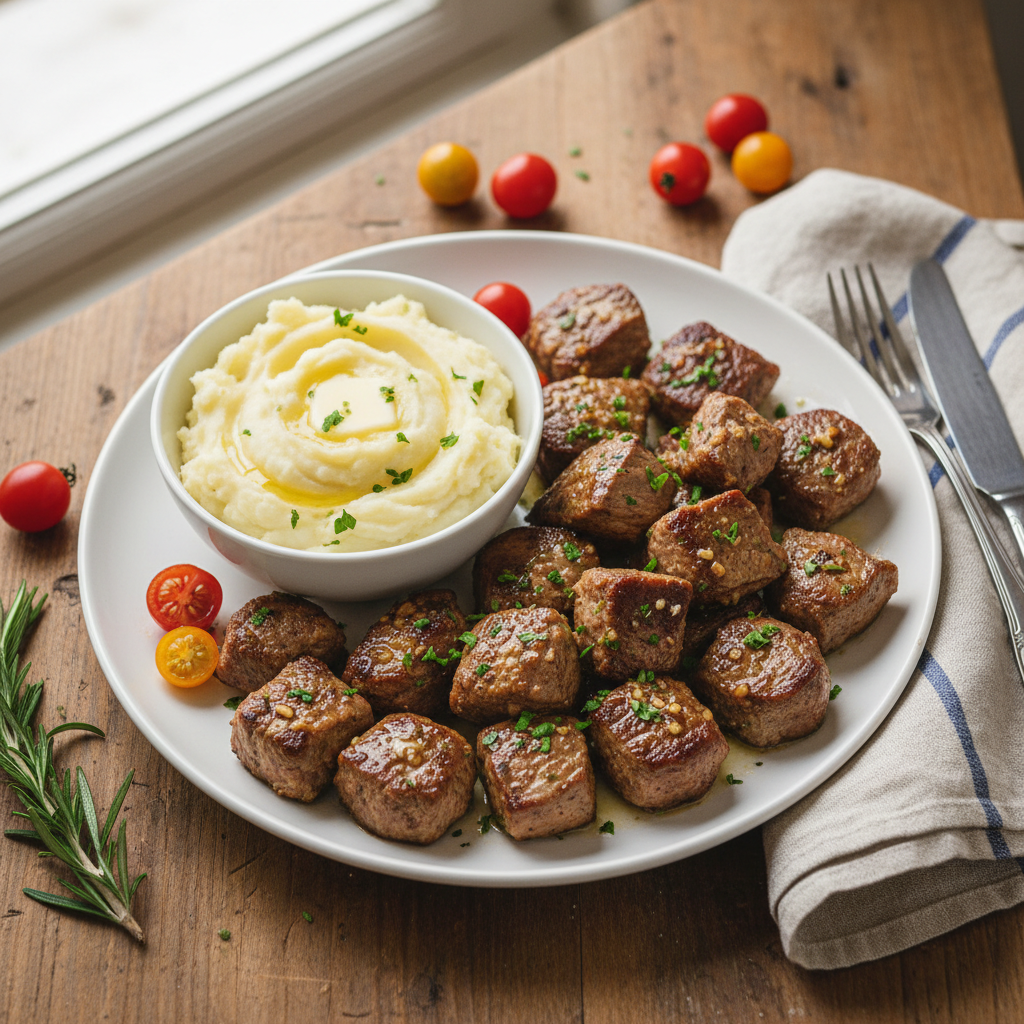
Serving and Storage
- Over mashed potatoes or rice, with the pan butter spooned on top
- With roasted green beans, asparagus or a crisp green salad
- On toothpicks as an appetizer, with the garlic butter in a small bowl for dipping
Refrigerate leftovers in an airtight container within 2 hours of cooking and eat them within 3 to 4 days. Reheat gently in a skillet over medium-low heat with a small piece of butter for 2 to 3 minutes; the microwave tends to overcook the centers.
Our Top Picks for Searing Steak Bites
- Utopia Kitchen 12-Inch Pre-Seasoned Cast Iron Skillet — a budget 12-inch pan with room for a full batch of cubes. Buyers praise its sear on steak; the most common complaint is uneven factory seasoning, so a round of oven seasoning before first use is worth it.
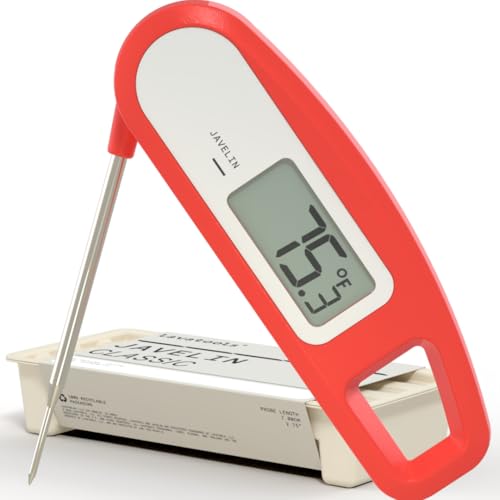
- Lavatools Javelin Instant-Read Thermometer — a fast, compact folding probe for checking the center of a cube before the bites go back into the butter.
- GORILLA GRIP Silicone-Tipped Tongs, Set of 2 — locking stainless tongs that turn small cubes one by one without scratching the seasoning.
Product picks are research-based: manufacturer specs, verified buyer feedback and independent reviews such as AmazingRibs’ thermometer reviews. We haven’t tested these specific models ourselves. Last verified: October 9, 2026. How we work.


As an Amazon Associate, we earn from qualifying purchases. Prices are approximate and may change — please verify on Amazon before buying.
Frequently Asked Questions
Why are my steak bites gray instead of browned?
The pan was too cool, the beef was wet, or there was too much in the skillet at once. All three leave water on the surface, and browning (the Maillard reaction) only gets going once that water is gone. Preheat longer, blot the cubes dry and sear in two batches.
What’s the best cut for garlic butter steak bites?
Top sirloin gives the best balance of flavor, tenderness and price. Ribeye and New York strip are richer but cost more; avoid stew meat and very lean round cuts, which turn chewy when seared quickly.
Can I make steak bites without a cast iron skillet?
Yes. A heavy stainless steel skillet works well if you preheat it thoroughly. Thin nonstick pans lose heat quickly and shouldn’t be heated empty to searing temperatures, so the crust will be lighter.
The Bottom Line
Great steak bites come down to heat management more than ingredients: dry beef, a fully preheated skillet, two uncrowded batches, and butter and garlic only at the end. Get those right and you have a steakhouse-style dinner on the table in under 30 minutes. For more recipes built around the same pan, browse our Cast Iron & Dutch Oven collection.
Get Our Free Dessert Recipe eBook
Join the Kitchen Unveiled newsletter and get our free dessert recipe eBook when you sign up. Subscribe now and get your free eBook →
You might also like: Southern Fried Chicken and Crispy Korean Fried Chicken with Gochujang Sauce.