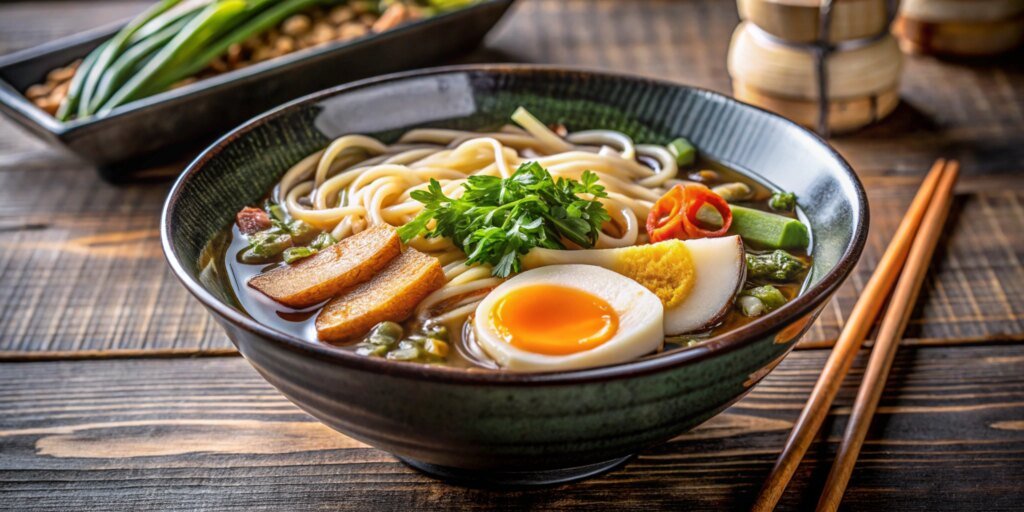
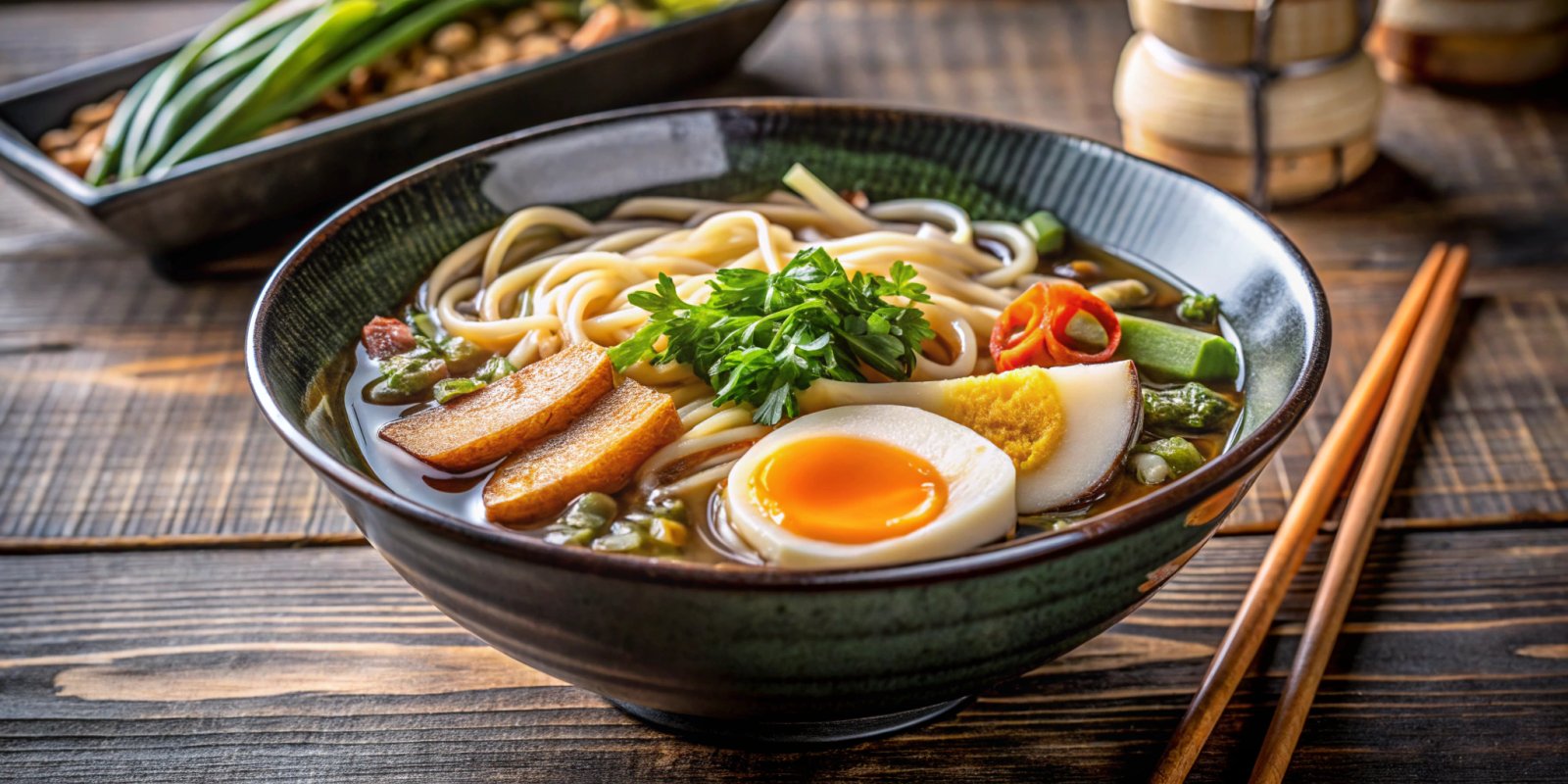
Japanese ramen is more than just a dish—it’s a culinary art form that combines rich broth, chewy noodles, and carefully selected toppings. While instant ramen has its place, making authentic tonkotsu ramen from scratch delivers an unparalleled depth of flavor that’s worth the extra effort. This guide will walk you through the entire process, from crafting the perfect broth to assembling your bowl.
Recipe
Tonkotsu Ramen from Scratch
Ingredients
Method
- Blanch the bones. Cover bones with cold water in a large pot. Bring to a boil and simmer for 5 minutes. This removes impurities.
- Drain and rinse the bones thoroughly under cold water.
- Clean your pot, then return the cleaned bones to it.
- Add all remaining broth ingredients and cover with water (about 4-5 quarts).
- Bring to a boil, then reduce to a low simmer.
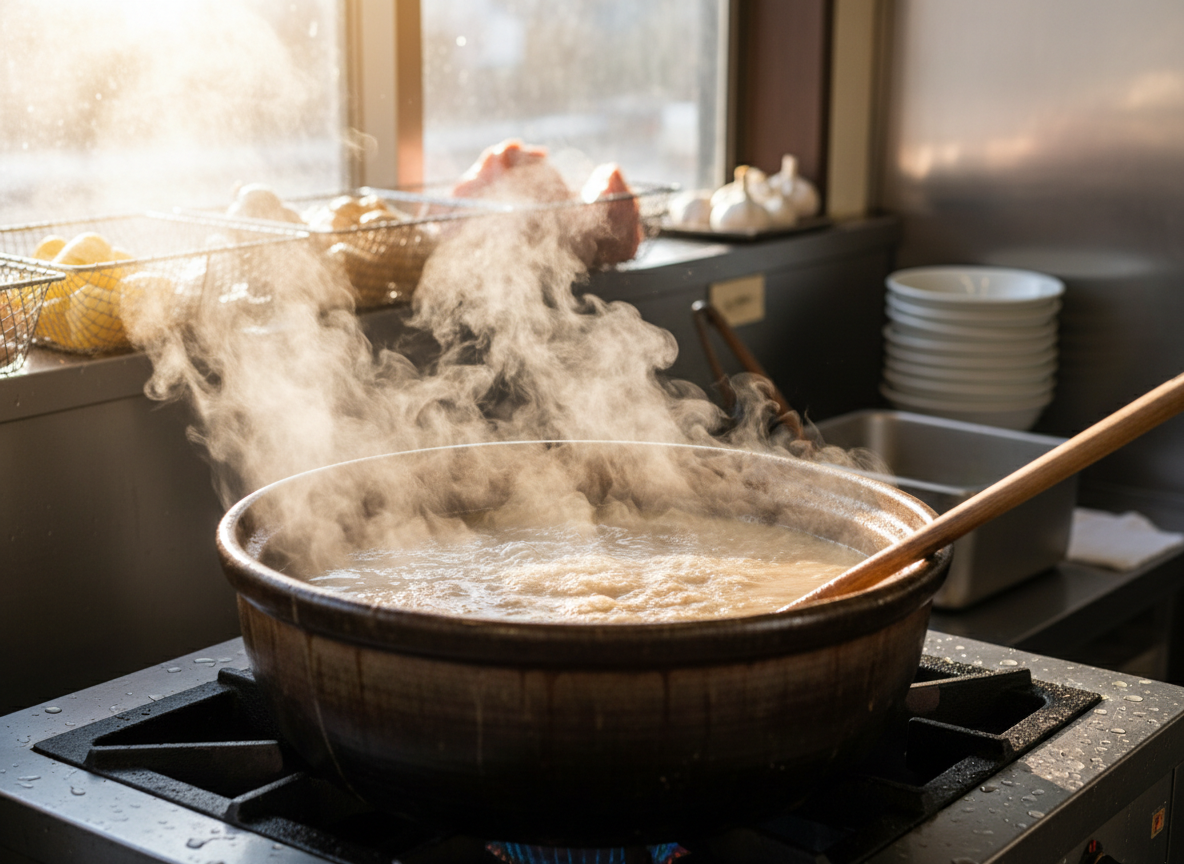
- Simmer for 8-12 hours, occasionally skimming off any scum that rises to the surface.
- Top up with water as needed to keep bones submerged.
- After simmering, strain the broth through a fine-mesh sieve.
- If using baking soda, spread it on a baking sheet and bake at 250°F (120°C) for 1 hour to create an alkaline salt.
- Dissolve the kansui (or baked baking soda) and salt in warm water.
- Place flour in a large bowl and create a well in the center.
- Slowly add the water mixture, stirring with chopsticks or a fork.
- Once the dough starts to come together, knead for 5-10 minutes until smooth.
- Place the dough in a plastic bag and let it rest for at least 1 hour.
- Roll out the dough using a pasta machine, starting with the widest setting and gradually moving to thinner settings.
- Cut the sheets into thin noodles using the pasta machine’s cutting attachment.
- Dust with flour to prevent sticking and set aside until ready to cook.
- Roll and tie the pork belly.
- Sear on all sides.
- Braise in a mixture of the soy sauce, mirin, sake, sugar, ginger, and garlic for 2-3 hours.
- Cool completely before slicing thinly.
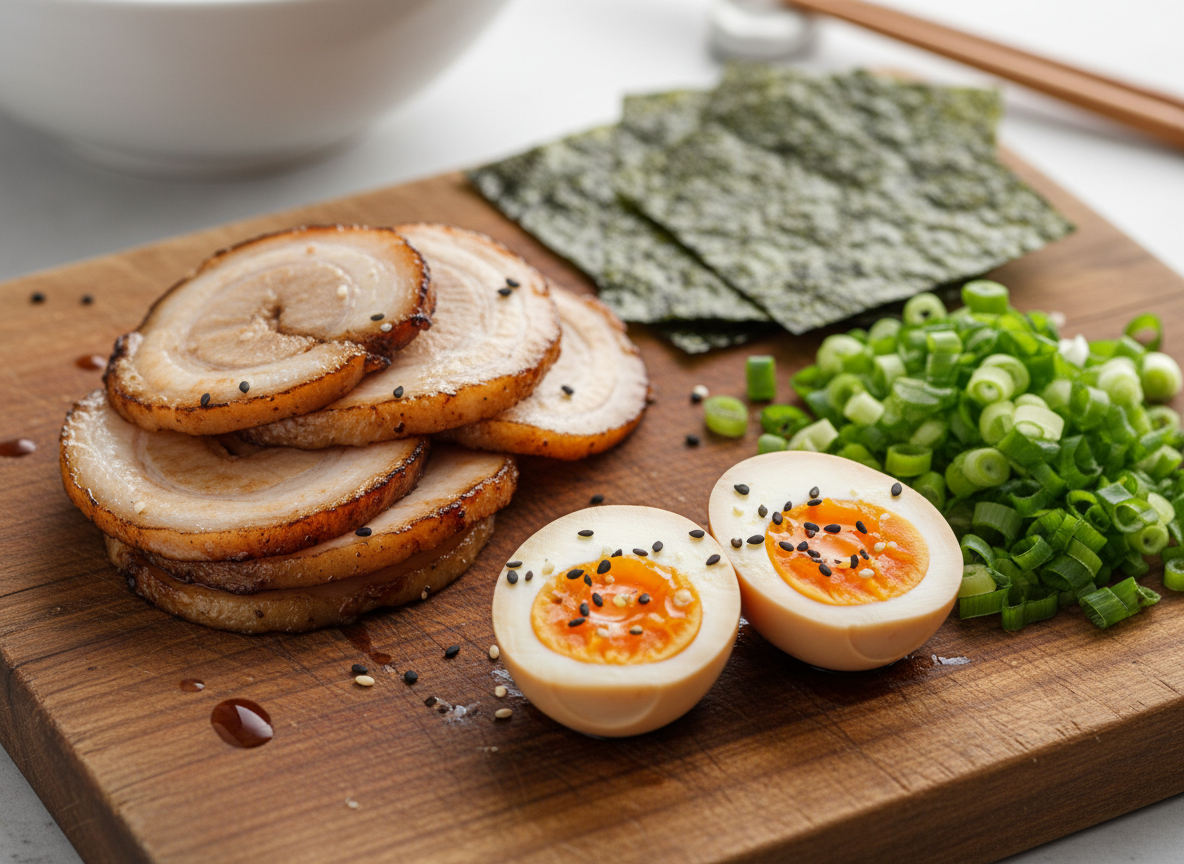
- Soft boil eggs for 6-7 minutes.
- Peel and marinate in a mixture of soy sauce, mirin, and sake for 2-24 hours.
- Combine all tare ingredients in a small saucepan.
- Bring to a simmer and cook for 5 minutes.
- Remove from heat and let steep for 30 minutes.
- Strain and set aside.
- Cook the fresh ramen noodles in boiling water for 1-2 minutes until al dente.
- Warm your serving bowls by filling them with hot water, then emptying.
- Place 1-2 tablespoons of tare in the bottom of each bowl.
- Add a ladle of hot broth and stir to combine with the tare.
- Drain the noodles thoroughly and add to the bowl.
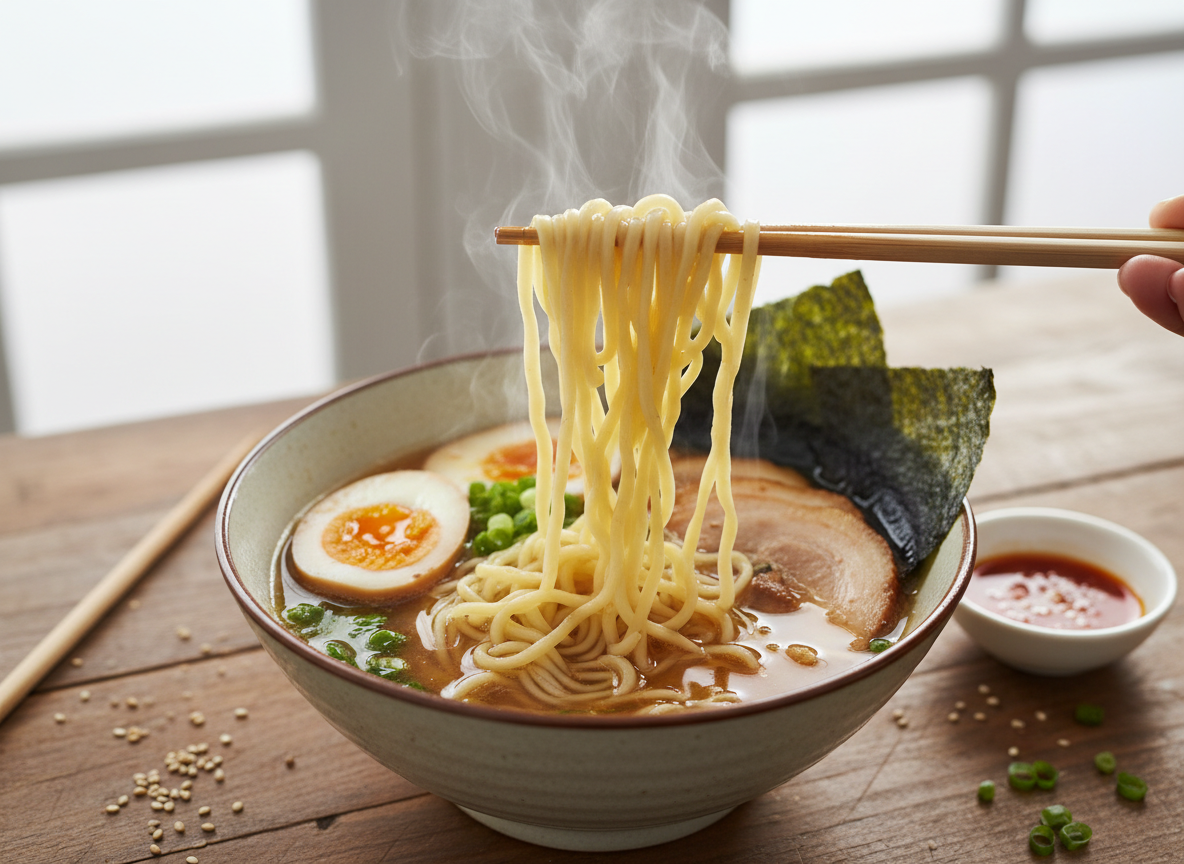
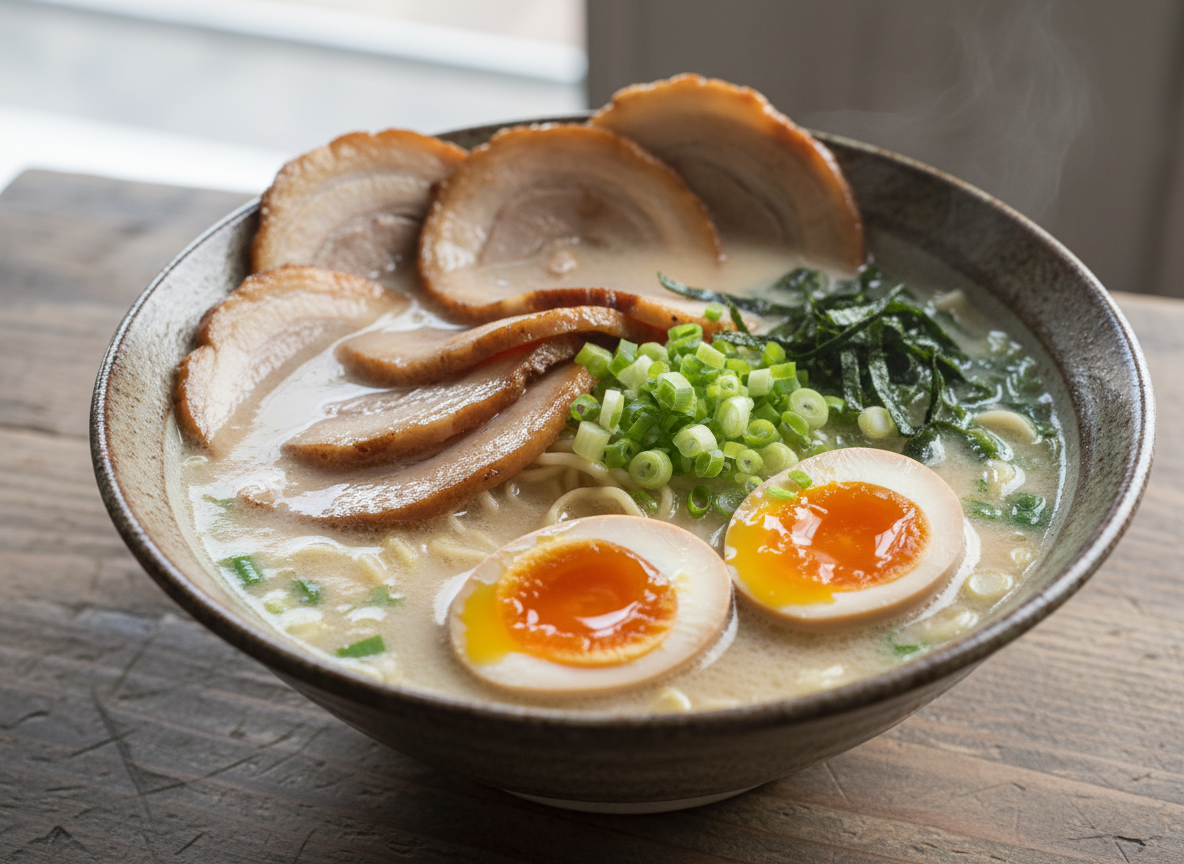
- Arrange toppings artfully on top: 2-3 slices of chashu, half an ajitama egg, menma, green onions, and a sheet of nori.
- Serve immediately while hot.
Notes
Understanding Ramen Styles
Before diving into the cooking process, it’s important to understand the main styles of Japanese ramen:
- Shoyu Ramen – Features a clear, brown broth flavored with soy sauce
- Shio Ramen – Uses a light, clear broth seasoned with salt
- Miso Ramen – Contains a rich, cloudy broth flavored with miso paste
- Tonkotsu Ramen – Features a creamy, pork bone-based broth
This guide will focus on making a traditional tonkotsu ramen, known for its rich, creamy broth and complex flavor profile.
A great bowl of tonkotsu ramen isn’t rushed — the broth alone rewards every hour you give it.
Tips for Ramen Success
- Plan ahead – Good ramen takes time, especially the broth and marinated components.
- Don’t rush the broth – the longer it simmers, the richer the flavor.
- Balance is key – each component should complement, not overpower the others.
- Serve in warm bowls to keep your ramen hot throughout the meal.
- Make components in advance – broth, tare, chashu, and eggs can all be prepared days ahead.
Our Top Picks for This Recipe
- Best stockpot: Farberware Classic Stainless Steel Stockpot, 12-Quart — plenty of room for simmering a rich tonkotsu ramen broth for hours, around $35–45.
- Best ramen bowls: DOWAN Ramen Bowls Set of 2, 20oz — deep enough for a full serving of noodles, broth and toppings, around $25–30.
- Best noodle strainer: Hiware Stainless Steel Spider Strainer Skimmer — lifts noodles straight from the pot into the bowl without losing broth, around $10–13.


As an Amazon Associate, we earn from qualifying purchases. Prices are approximate and may change — please verify on Amazon before buying.
Frequently Asked Questions
How long does authentic tonkotsu ramen broth take to make?
A true tonkotsu broth simmers for 8-12 hours, sometimes longer, to fully extract collagen and fat from the pork bones. Many home cooks split this over two days to make it more manageable.
Can I make ramen broth in an Instant Pot to save time?
Yes — a pressure cooker can reduce the cooking time to about 2-3 hours while still producing a rich, creamy result, though purists say a long stovetop simmer develops slightly more depth.
What noodles should I use for homemade ramen?
Fresh alkaline ramen noodles made with kansui give the most authentic chewy texture. If you can’t find fresh ones locally, dried ramen noodles from an Asian grocery store are the next best option — avoid instant noodle bricks, which cook up too soft.
You Might Also Like
You might also like: Easy Authentic Chicken Tikka Masala and Lazy Day Beef Stew with Minimal Prep.
Making tonkotsu ramen from scratch is a labor of love, but the result is a deeply satisfying bowl that showcases the beauty of Japanese cuisine. While it might seem daunting at first, breaking the process down into manageable components makes it achievable for home cooks. The techniques you learn will enhance your overall cooking skills, and the final product will rival the best ramen shops in your area.
Want more global recipes in your inbox? Subscribe now and get your free eBook →